

Garage Door Auto-Reverse Explainer
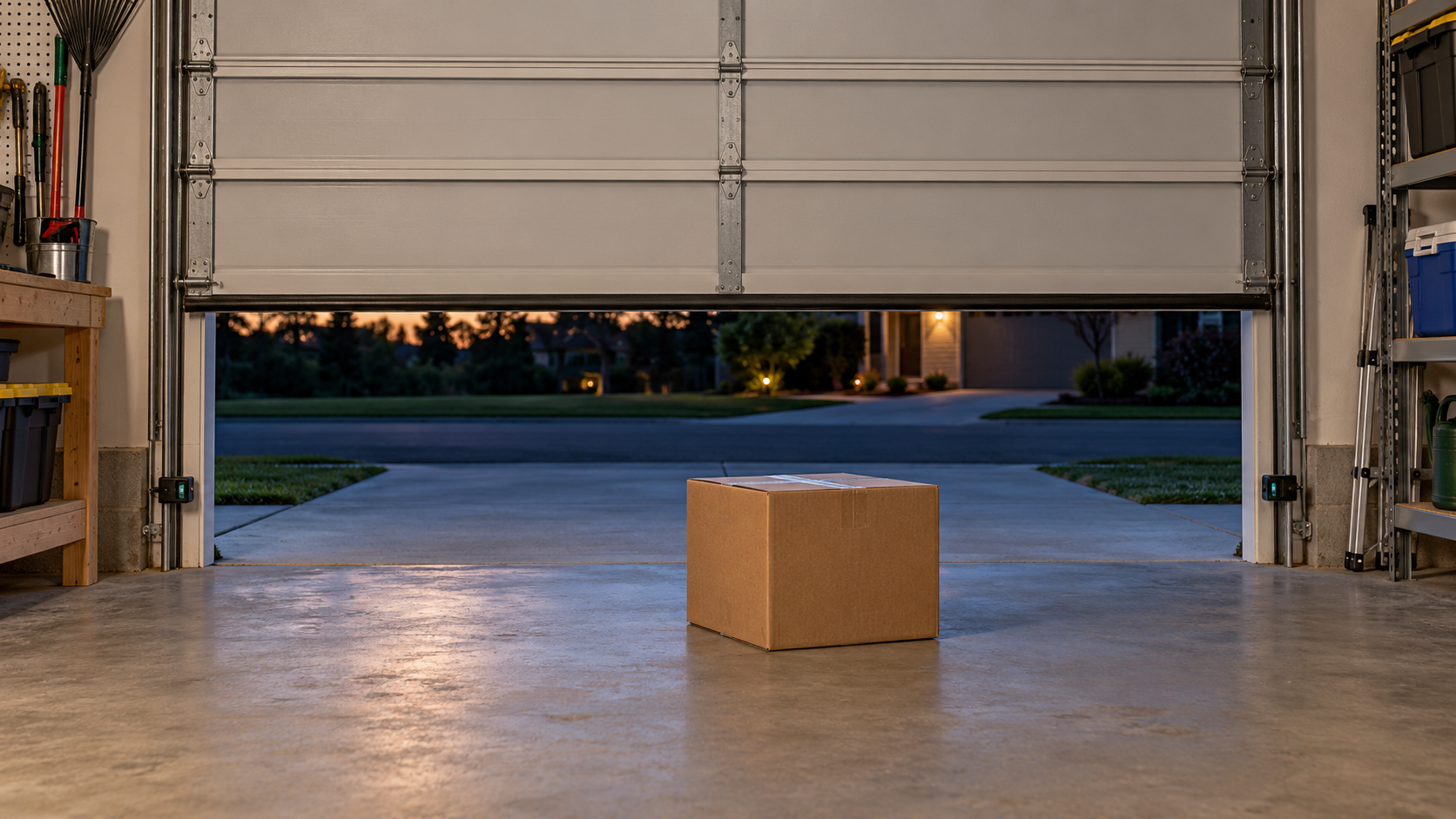
A modern garage door opener uses more than one method to avoid trapping a person or object beneath a closing door. Near the floor, one photoelectric sensor sends an invisible beam across the opening to a receiver on the opposite track. If a person, pet, or object interrupts that beam while the door is closing, the control unit stops and reverses the motor. The opener also monitors resistance or motor force, so contact with an obstruction can trigger reversal even when the object is above the beam.
The photo eyes are mounted low because that position detects small children and objects near the threshold. Indicator lights show whether the sender and receiver are powered and aligned. Dirt, sunlight, a bent bracket, loose wiring, or vibration can prevent the receiver from seeing a steady beam. Many openers will refuse to close normally when that safety circuit is open, though a deliberately held wall control may operate differently for supervised closing. The owner’s manual defines the correct indicators and test procedure.
Force sensing compares the motor’s load with an allowed range. An opener may measure current, speed change, torque, or another signal. When resistance exceeds the calibrated threshold during downward travel, its logic commands the motor to stop and reverse. Travel-limit settings tell the controller where the fully open and closed positions should be. Incorrect limits can make the door press against the floor, reverse before sealing, or stop short, so force and travel adjustments must be made together according to the manufacturer’s instructions.
The opener is not intended to lift the entire door unaided. Torsion or extension springs counterbalance most of the door’s weight, allowing the motor to guide it along the tracks. A broken spring, binding roller, damaged panel, or misaligned track can sharply increase load and confuse safety behavior. Springs and cables store dangerous energy and require trained service. Disconnecting the opener for a balance check should be done only as directed, with the door closed and the path clear.
Routine testing uses a solid object such as a short board laid flat on the floor under the door, plus a separate interruption of the photoelectric beam. A correctly adjusted door should reverse on contact and reverse when the beam is broken. The exact object, placement, and interval come from the opener instructions. Testing is not an invitation to use a hand or body. A door that fails either check should be kept out of automatic service until repaired.
Remote controls add convenience but also start a large moving barrier out of immediate reach. Controls should stay away from children, and users should watch the opening until the door finishes moving. The safety system works as a chain: aligned sensors must report a clear path, motor feedback must remain normal, limits must match the door, and the counterbalance must keep motion smooth. Auto-reverse reduces risk, but regular observation and maintenance are what keep it dependable.
Photoelectric sensors watch a beam across the doorway, while the opener monitors closing force and travel. A blockage or abnormal resistance commands reversal. Key terms include photo eye, sender, receiver, force sensing, travel limit, counterbalance spring, track, and auto-reverse.
Many openers behave that way when the photoelectric circuit is blocked, dirty, misaligned, or damaged. Check the indicators and follow the manual rather than bypassing the sensors.
No. Springs counterbalance most of the door’s weight. A broken spring creates a hazardous heavy door and requires trained repair, not a stronger force setting.
Explore more "Explainers"
Discover additional explainers across politics, science, business, technology, and other fields. Each explainer breaks down a complex idea into clear, everyday language—helping you better understand how major concepts, systems, and debates shape the world around us.