

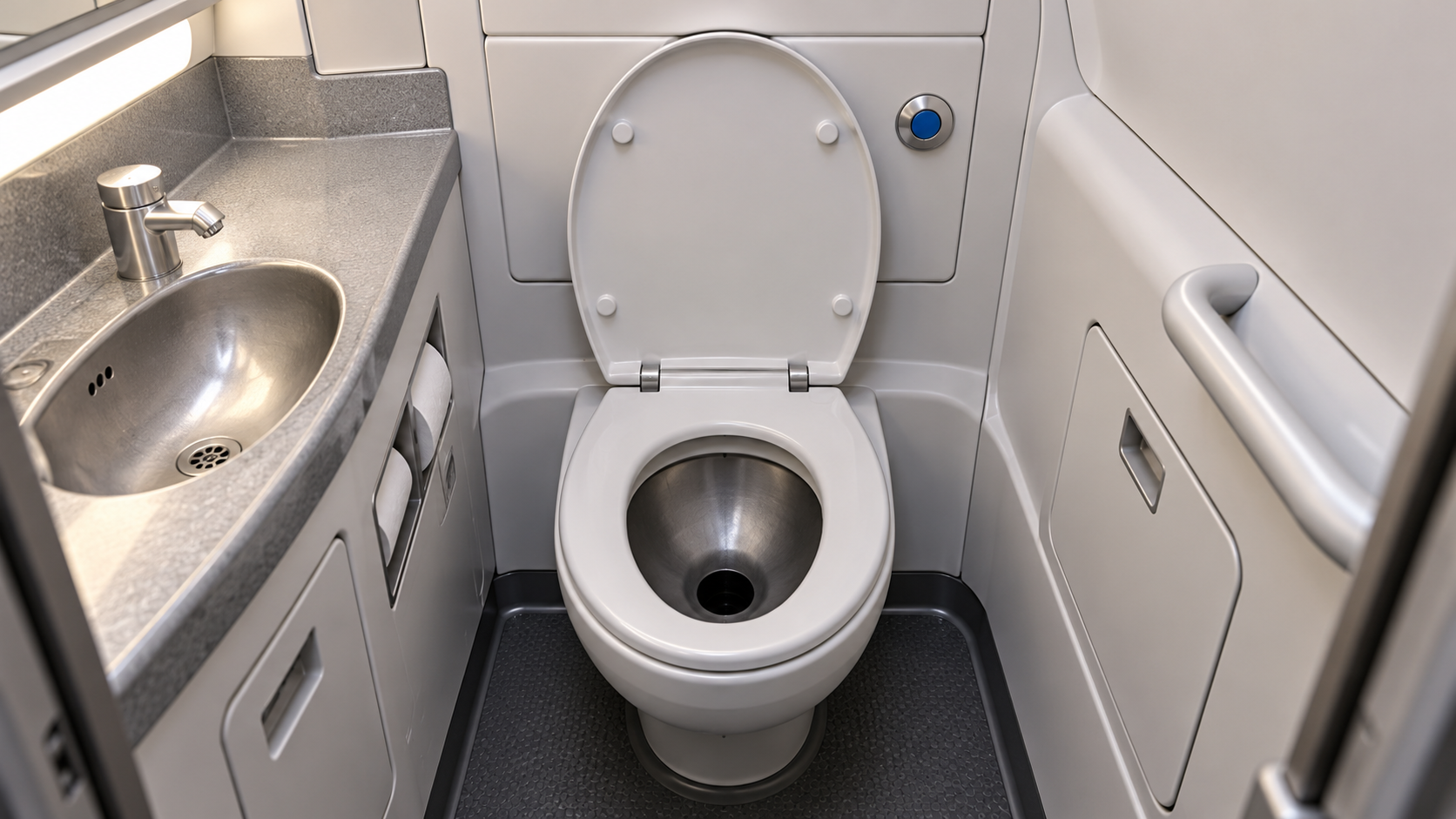
Airplane Vacuum Toilet Explainer
Many modern airplane toilets use vacuum rather than a large gravity flush. Pressing the button sends an electrical signal to a flush control unit. A small amount of potable water or rinse fluid washes the bowl while a flush valve opens below it. The pressure difference between the cabin and the waste piping accelerates air, liquid, and waste through a narrow line toward a sealed holding tank. The characteristic loud rush is mostly rapidly moving air, not a huge volume of water.
At cruising altitude, cabin pressure is higher than the pressure outside the aircraft. The waste system can use that differential to create suction when its valves open. Near the ground, the natural difference is too small, so an electric vacuum blower establishes the required low pressure. The control unit sequences the blower, rinse valve, and flush valve for only a few seconds, then closes the path so the bowl and tank remain isolated from the cabin.
The toilet does not discharge waste into the sky. Material travels through internal plumbing to one or more holding tanks in the fuselage. Level sensors warn the crew or maintenance system as a tank fills, and interlocks may disable flushing before an overflow. After landing, trained ground personnel connect a service vehicle to the exterior drain panel, empty the tank, rinse it, and add the approved servicing fluid. Separate fittings keep potable water and waste servicing apart.
Vacuum systems save weight because each flush uses far less water than a household toilet and small-diameter pipes can move waste over a long route. Weight matters throughout a flight because every carried kilogram requires fuel. The same design also allows lavatories to be placed where gravity alone could not provide a consistently sloped drain. Smooth piping, correct valves, and controlled airflow are essential, because a blockage or leak can affect multiple toilets connected to one tank.
Only the materials permitted by the airline should enter the bowl. Paper towels, diapers, wipes, cups, and other objects can lodge in valves or pipe bends. The blue color sometimes associated with aircraft waste comes from servicing chemicals, not from the flush mechanism itself, and many current vacuum systems use only a small clear rinse. Passengers should not retrieve a dropped object or manipulate panels; the bowl opening connects to moving valves and a maintained sanitation system.
The flush is a timed pneumatic transport event. Rinse loosens material, a valve opens, air pressure supplies most of the moving force, and the holding tank receives the result. At altitude the atmosphere provides the pressure difference; on the ground a blower substitutes for it. Closing valves then restore isolation. That coordination explains both the speed and sound: the system is designed to move a small payload rapidly with air, minimizing the water and weight that an aircraft must carry.
A control unit adds a small rinse, opens the flush valve, and uses cabin pressure difference or a vacuum blower to pull waste into a sealed tank. Key terms include vacuum toilet, rinse valve, flush valve, differential pressure, blower, holding tank, level sensor, and service panel.
No. Waste travels through aircraft piping into a sealed holding tank, which trained ground crews empty through an exterior service connection after landing.
A large pressure difference accelerates air through a narrow opening very quickly. The rushing air produces the brief loud sound while using little water.
Explore more "Explainers"
Discover additional explainers across politics, science, business, technology, and other fields. Each explainer breaks down a complex idea into clear, everyday language—helping you better understand how major concepts, systems, and debates shape the world around us.