

Passenger Oxygen Mask Explainer
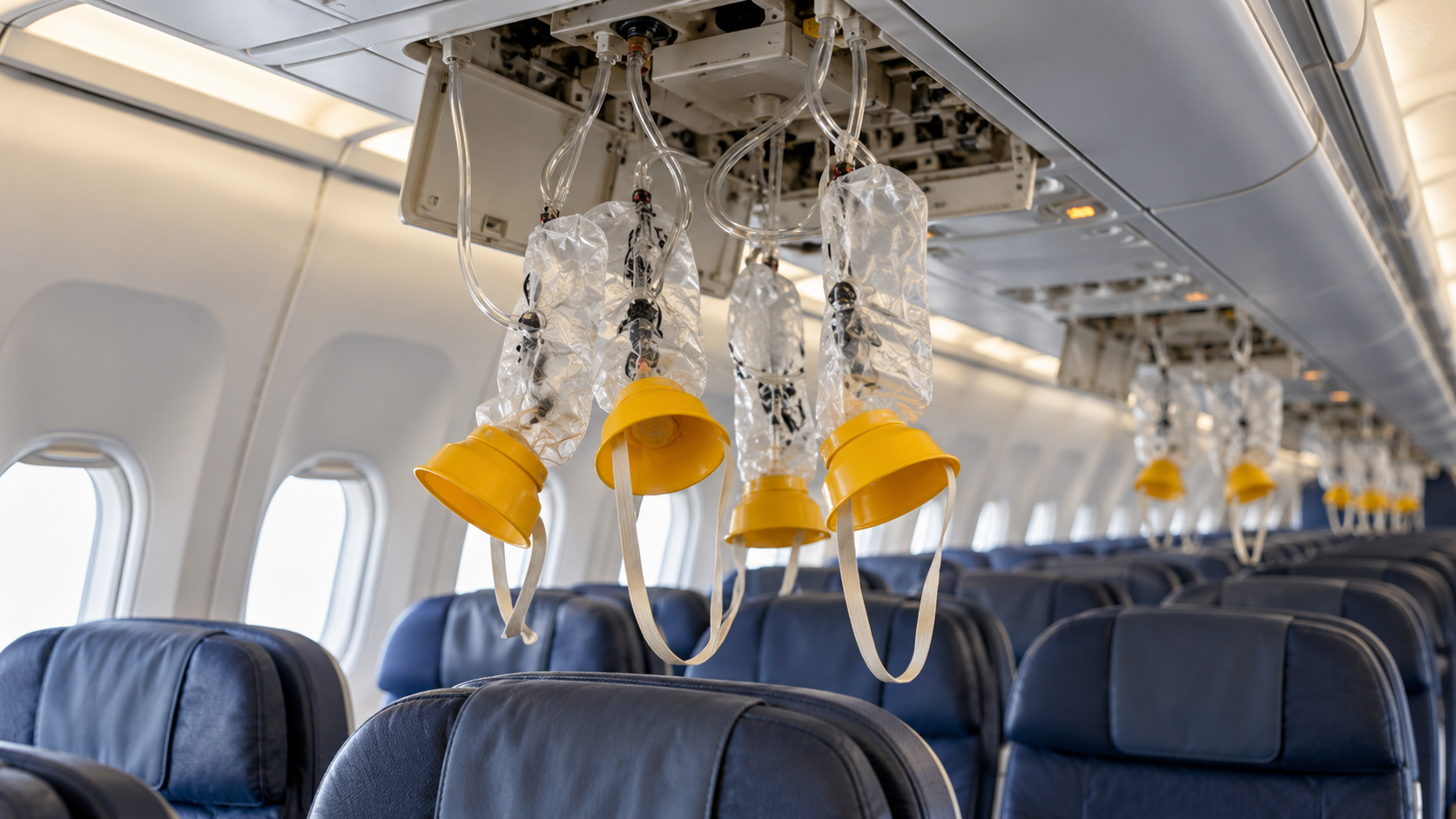
Passenger oxygen masks are a temporary emergency system for a loss of cabin pressure. When cabin altitude exceeds a set threshold or the crew activates the system, compartment doors in the overhead passenger service units open and masks drop on their tubes. Pulling one mask downward removes an activation pin or otherwise starts the oxygen source for that group. On many airliners, a compact chemical oxygen generator then supplies several masks for a limited period while the pilots descend to an altitude where supplemental oxygen is no longer needed.
A common generator contains sodium chlorate mixed with other materials inside an insulated metal canister. An igniter starts a controlled exothermic reaction that releases oxygen. The generator becomes very hot while operating, which is why it is mounted away from passengers and surrounded by protective structure. Once started, the chemical reaction usually cannot be switched off. Other aircraft use centralized compressed-gas cylinders, but the passenger experience—pull, place, and breathe—remains similar even though the source differs.
Oxygen flows through tubing to the mask and its flexible reservoir bag. The bag may not inflate fully with every breath because flow, breathing pattern, and bag valves interact; visible inflation is not required for the system to be working. A small flow indicator in the tubing may change color when oxygen moves. Cabin air can mix with supplied oxygen through valves, so the mask is not necessarily a sealed reservoir of pure oxygen. A snug placement over nose and mouth makes the limited supply more effective.
The instruction to secure your own mask before helping others reflects the effects of hypoxia. At high cabin altitude, useful consciousness and judgment can decline quickly, sometimes without a strong feeling of breathlessness. A person who delays may become unable to help anyone. Putting the mask on promptly, tightening the elastic, and breathing normally buys time for the aircraft to descend. The system is sized for that emergency profile, not for an entire flight at cruise altitude.
Chemical generators have fixed service lives and strict handling rules because heat, ignition components, and reactive material are involved. Airlines inspect doors, latches, tubing, masks, and generator dates under approved maintenance programs. Passengers should not open service panels, pull a mask except during an emergency or crew instruction, or place items around a hot generator housing. Smoke or unusual odor during activation may come from the generator reaction, but crew instructions remain the priority.
The dangling mask is only the visible end of a tightly timed system. Cabin sensing releases it, the passenger’s pull activates the source, chemistry or stored pressure produces oxygen, and tubing meters that oxygen during descent. A mask dropping does not itself guarantee flow until it is pulled. That detail explains the demonstration wording and the need for immediate action: the system is deliberately simple for a stressed passenger, but each physical step completes a necessary link.
A mask drops when the system activates, and pulling it starts the oxygen source for its group. Many airliners use a hot chemical generator. Key terms include cabin altitude, service unit, activation pin, chemical generator, reservoir bag, flow indicator, hypoxia, and emergency descent.
On many systems, pulling removes a pin or trips a mechanism that starts the shared oxygen generator. A mask can hang down before oxygen begins flowing.
Not necessarily. Flow may be present even when the bag does not expand visibly. Place the mask securely and follow crew instructions.
Explore more "Explainers"
Discover additional explainers across politics, science, business, technology, and other fields. Each explainer breaks down a complex idea into clear, everyday language—helping you better understand how major concepts, systems, and debates shape the world around us.