

Chocolate Tempering Explainer
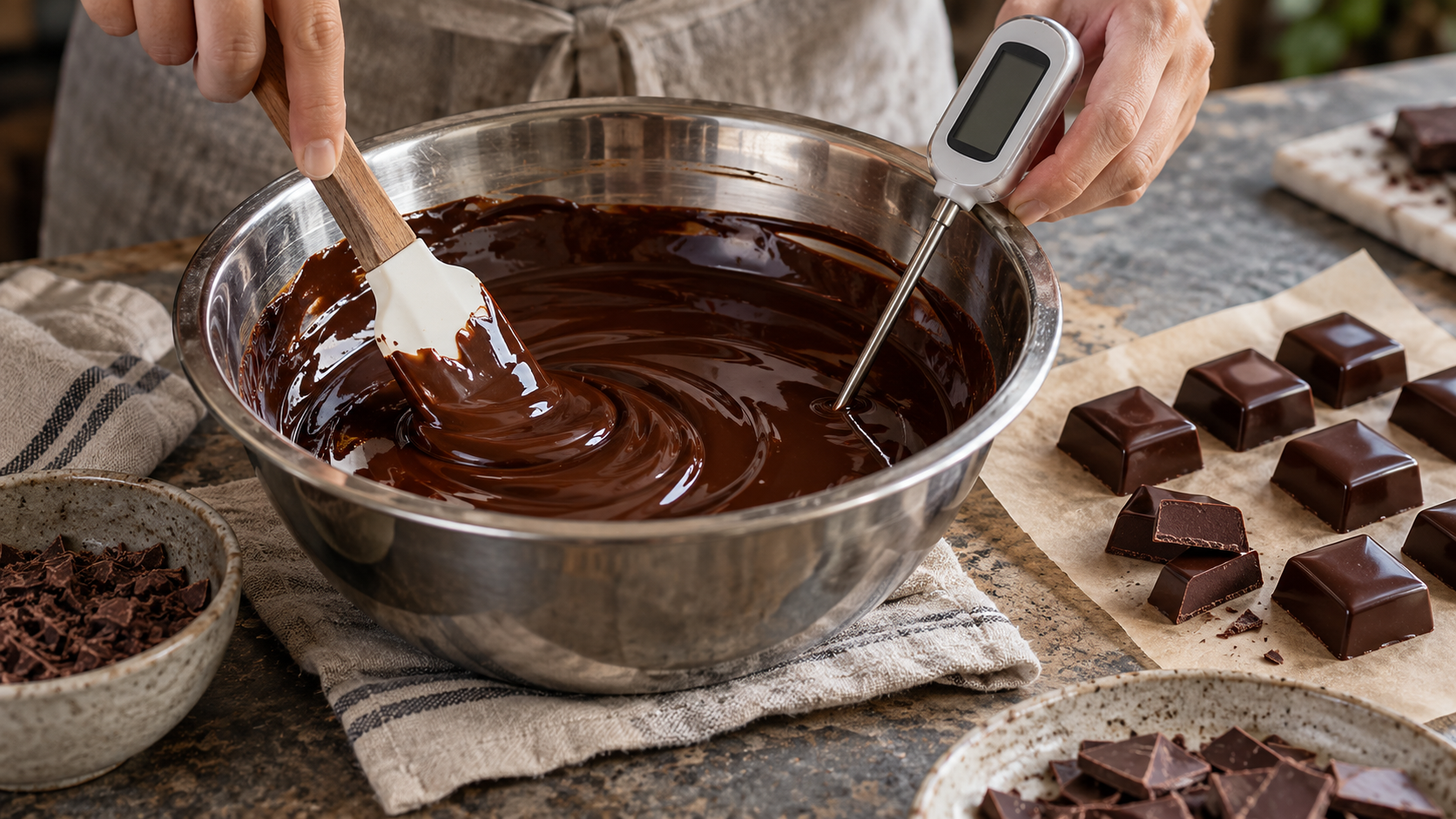
Chocolate tempering is a temperature-controlled process that encourages cocoa butter to solidify in a stable crystal form. Cocoa butter can arrange its fat molecules into several structures, called polymorphs, that melt and behave differently. Chocolate that simply melts and cools may form a mixture of unstable crystals, producing a dull surface, soft texture, poor contraction, or pale fat bloom. Tempering removes unwanted crystal memory, creates useful seed crystals, and keeps them while the chocolate is molded or coated.
The first stage warms chocolate enough to melt the existing cocoa butter crystals. The chocolate is then cooled while stirred, allowing new crystals to begin forming throughout the liquid. A final gentle warming melts lower-melting unstable forms while retaining enough desirable seed to organize the rest as it sets. Exact working temperatures depend on dark, milk, or white chocolate and on the manufacturer’s formulation, so professional instructions use product-specific ranges rather than one universal number.
One common method adds finely chopped tempered chocolate to melted chocolate. The solid pieces supply stable seed crystals while stirring distributes them and lowers temperature. Another method spreads part of the chocolate on a cool stone surface, then returns it to the bowl. Automated tempering machines perform the same thermal sequence with controlled agitation. Whichever method is used, water must be kept out: a small amount can make sugar particles stick together and cause the fluid chocolate to seize.
Stable crystallization changes several practical properties. A well-tempered shell contracts slightly as it cools, helping it release from a rigid mold. Its smooth crystal network reflects light evenly, giving gloss, and supports a clean fracture with an audible snap. It also resists melting on contact better than poorly crystallized chocolate, though it still melts near body temperature. Tempering does not improve stale or scorched chocolate and cannot remove bloom already caused by incompatible fillings or storage swings.
A small test reveals whether enough good seed is present. A thin smear on parchment or a knife should begin setting within a few minutes at a cool room temperature and become firm, even, and glossy rather than streaked. If it remains tacky or develops gray marks, the chocolate may be too warm, underseeded, or out of temper. During work, gentle heat and frequent stirring keep the mass fluid without melting all of the seed crystals.
Finished pieces should cool in a stable, dry environment and then be stored away from heat, humidity, odors, and sharp temperature changes. Refrigeration can create condensation when chocolate returns to a warm room, while excess warmth encourages fat migration and bloom. Tempering is best understood as crystal management, not merely melting: heat clears the old structure, controlled cooling builds seeds, and careful rewarming selects the crystal population that gives chocolate its familiar polished surface and crisp bite.
Tempering melts old cocoa butter crystals, forms new seeds during cooling, and gently warms away unstable forms while keeping desirable seed. Key terms include cocoa butter, polymorph, seed crystal, working temperature, contraction, snap, and fat bloom.
A small amount of water can dissolve surface sugar and make particles clump into a thick seized mass. Dry tools and steam control are essential.
A thin sample should set quickly, firmly, and evenly at a cool room temperature. Slow, streaky, or tacky results indicate the crystal balance needs correction.
Explore more "Explainers"
Discover additional explainers across politics, science, business, technology, and other fields. Each explainer breaks down a complex idea into clear, everyday language—helping you better understand how major concepts, systems, and debates shape the world around us.