

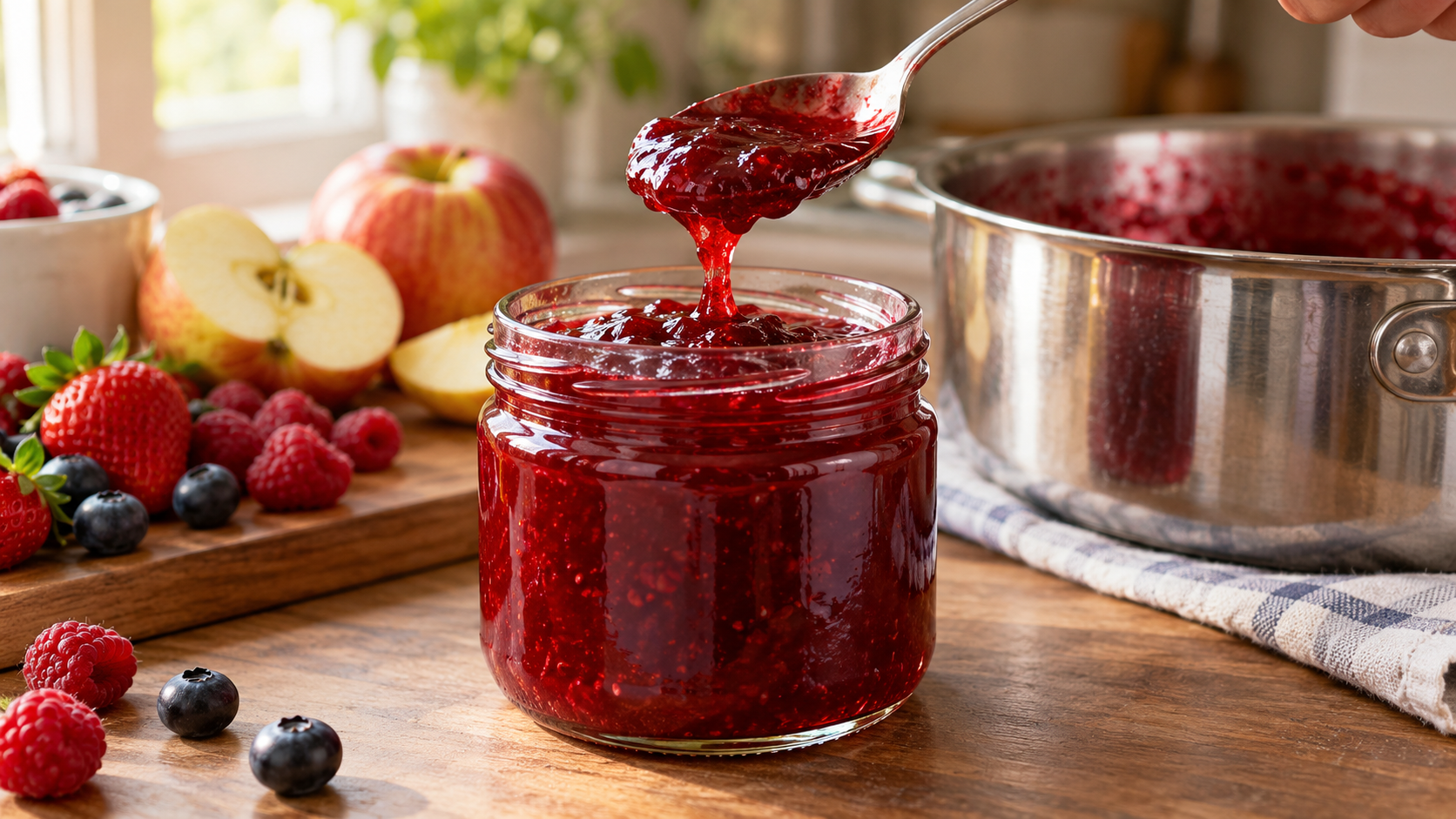
Pectin Jam Gel Explainer
Pectin is a group of complex carbohydrates found in plant cell walls, especially in fruit peels, cores, and less-ripe tissue. During jam or jelly making, dissolved pectin molecules can join into a three-dimensional network. That network traps sweetened fruit liquid in its spaces, producing a soft gel that holds its shape yet spreads. The molecules will not connect properly under every condition, so recipes coordinate pectin type, acidity, soluble sugar, boiling time, and final concentration.
In a traditional high-methoxyl pectin recipe, sugar ties up water that would otherwise keep pectin chains separated, while acid reduces electrical repulsion between the chains. Heating dissolves ingredients and concentrates the mixture. As the cooked product cools, pectin segments approach and form junction zones, creating the network. Fruit naturally supplies some pectin and acid, but amounts differ with variety and ripeness, which is why tested recipes may add bottled pectin and measured acid.
Low- or no-sugar products usually use a different pectin. Low-methoxyl pectin can form junctions with calcium ions, so it does not rely on a very high sugar concentration in the same way. The package may include a calcium component and specific mixing order. Substituting one type for another, changing sugar substantially, or doubling a batch can upset the chemistry and heating pattern. A tested formulation is important not only for texture but, in canned products, for safe processing and jar size.
The gel point is reached only after enough water has boiled away and ingredients are balanced. Home cooks may use a temperature target adjusted for altitude, a spoon or sheet test, or the exact timed boil in a commercial pectin recipe. Foam on top is mostly trapped air and does not indicate the interior has gelled. Hot jam is naturally fluid; its final texture develops during undisturbed cooling, and some pectin products take longer to reach their full set.
A runny batch may result from too little pectin, insufficient acid, incorrect sugar, undercooking, overlarge quantities, or fruit that diluted the recipe. An overly stiff or grainy gel may come from too much pectin, overcooking, sugar crystallization, or poor dissolution. Remaking instructions depend on the pectin and recipe and should be followed exactly. Adding dry pectin directly to a thick sweet liquid often creates lumps because the outside hydrates before the inside disperses.
Jam setting is therefore not simply cooling melted sugar. It is a molecular network forming in a concentrated fruit mixture. Pectin supplies the long chains, acidity and sugar or calcium allow useful connections, boiling establishes concentration, and cooling locks in structure. Natural variation makes improvisation unpredictable, while a tested recipe turns those variables into a repeatable texture. The same explanation also clarifies why a perfectly flavored fruit syrup may remain pourable: sweetness alone is not a pectin gel.
Dissolved pectin chains connect into a network that traps fruit liquid. Traditional pectin needs the right sugar and acid balance; low-sugar types often use calcium. Key terms include pectin, gel, junction zone, acidity, concentration, calcium, gel point, and cooling.
The pectin network strengthens as the concentrated mixture cools. Judging the final set immediately after boiling can be misleading.
Not safely or predictably. Traditional pectin depends on a specific sugar balance. Use a tested low-sugar recipe and the pectin type it specifies.
Explore more "Explainers"
Discover additional explainers across politics, science, business, technology, and other fields. Each explainer breaks down a complex idea into clear, everyday language—helping you better understand how major concepts, systems, and debates shape the world around us.