

Window Sash Balance Explainer
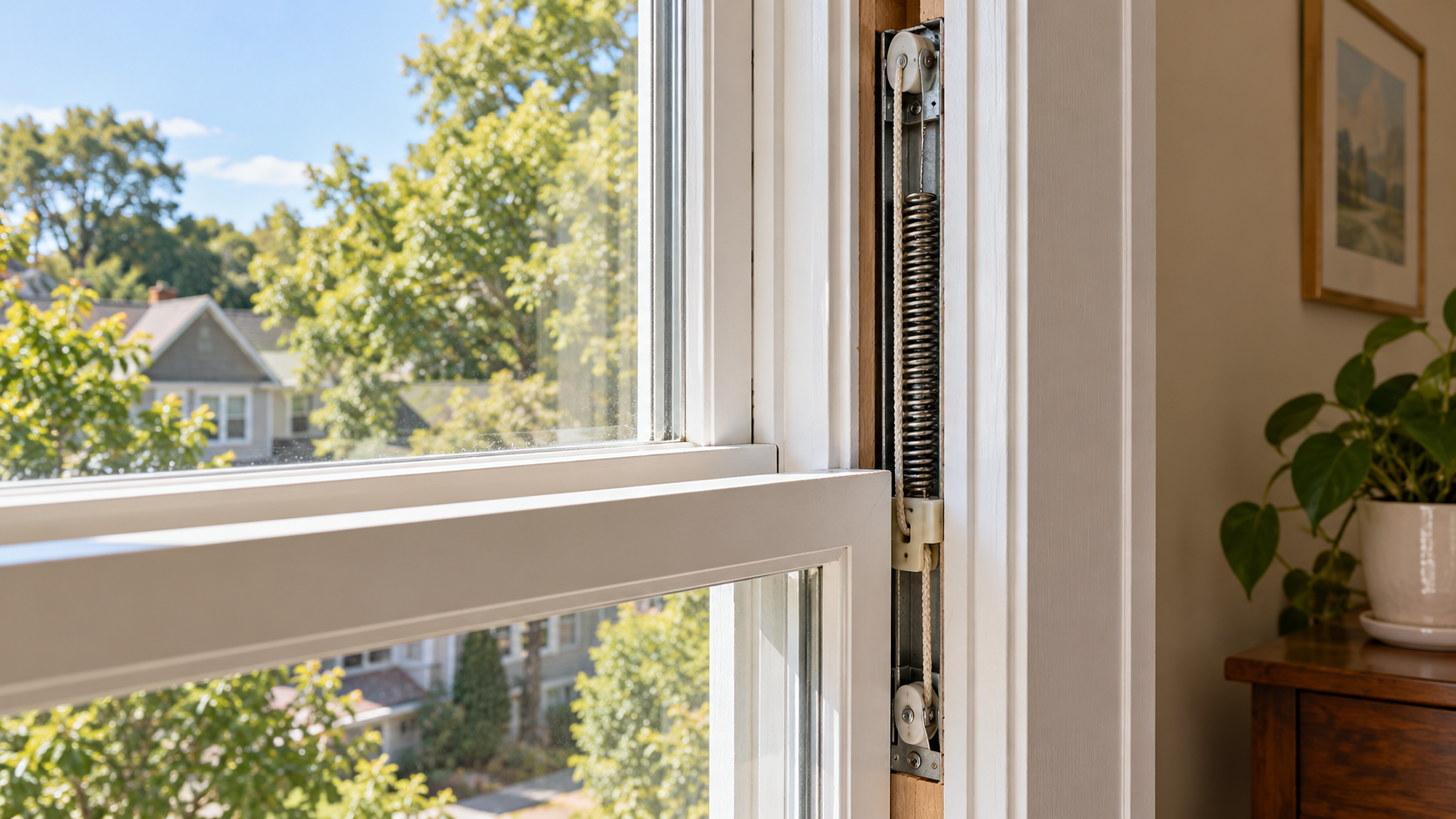
A movable window sash is heavier than it feels because a hidden balance system supports much of its weight. In many modern windows, a spring assembly sits inside each side channel. The sash connects to those balances through cords, shoes, hooks, or pivot bars. As the sash moves downward, the springs store energy. When the sash rises, that energy supplies an upward force, so the user lifts only the difference between the sash weight and the balance force.
Block-and-tackle balances combine an extension spring with a small pulley system. Pulling the sash changes the cord length through the pulleys and stretches the spring inside a metal channel. The pulley arrangement increases useful cord travel and can tailor the force delivered at the sash. Constant-force balances use a preloaded strip of spring steel that coils and uncoils from a housing. Spiral balances twist a spring through a rod. The designs differ, but all trade stored elastic energy against gravity.
Balances usually work in matched pairs because each side must carry a similar share. The moving ends ride in tracks or connect to shoes that also guide a tilting sash. Friction in the weather seals and track helps damp motion, but it should not be the main support. Manufacturers rate balances for a weight range, sash size, and travel length. A spring that is too weak lets the window drift down; one that is too strong makes closing difficult and can pull the sash upward.
The supporting force may change across the stroke, so designers choose spring geometry that keeps the window manageable from bottom to top. Pulleys, preloading, or constant-force coils flatten the force curve. Stops keep moving parts within their intended range. The glass, frame extrusion, locks, and added screens all contribute to the load. Replacing only one side with a different rating can rack the sash, increase friction, and shorten the life of both the new and old balance.
A sash that drops, rises by itself, binds, or sits crooked needs inspection. Broken cords, detached shoes, fatigued springs, debris, and bent channels are common causes. Balance springs can store significant energy, so removal procedures are specific to the window design. The sash should be supported before a connection is released, and large or heavy units are best serviced with help or by a qualified technician. Lubricant should not be applied unless the maker permits it.
The balance does not make the sash weight disappear; it supplies an opposing force over the same travel. That near-equilibrium is why the window can stop at many positions without a separate prop. Good operation depends on two correctly rated assemblies, straight tracks, secure connections, and modest friction. When those parts cooperate, a heavy glazed panel becomes a controlled object that one person can raise, lower, and leave open with ordinary hand force.
A spring system stores energy as the sash moves and returns an upward force that offsets much of the glass and frame weight. Key terms include sash, channel, spring, cord, pulley, shoe, preloading, and counterbalance.
Matched balances keep left and right lifting forces similar. Mixing a new unit with a tired or differently rated one can twist the sash and create binding.
The installed balance may be rated too strongly for the sash, or friction and attachments may have changed. The upward spring force is exceeding the downward load.
Explore more "Explainers"
Discover additional explainers across politics, science, business, technology, and other fields. Each explainer breaks down a complex idea into clear, everyday language—helping you better understand how major concepts, systems, and debates shape the world around us.