

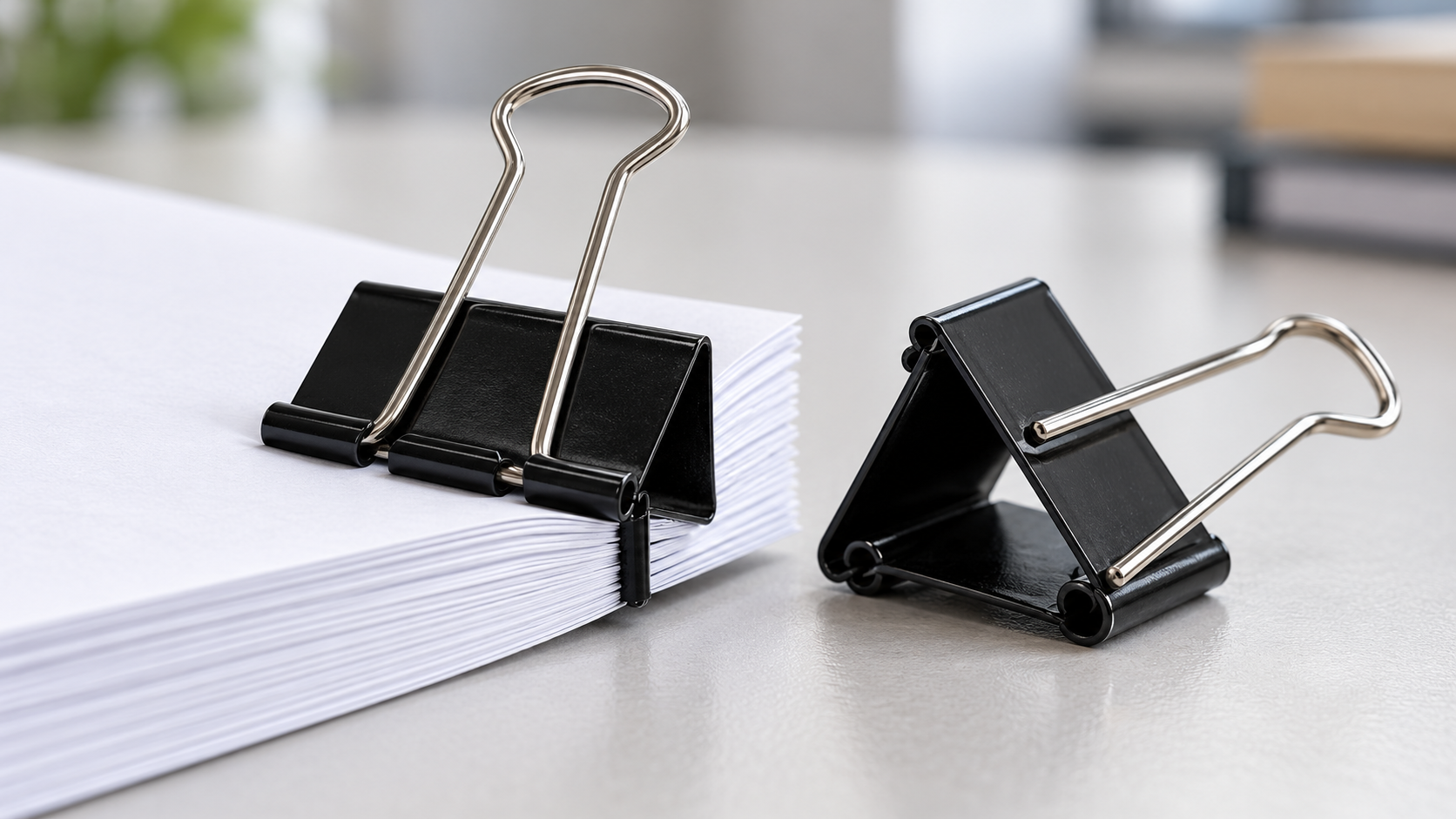
Binder Clip Spring Mechanism Explainer
A binder clip grips paper because its black metal body is a preloaded spring. A single strip of spring steel is bent into a triangular shape with two broad sides ending in narrow jaws. In its relaxed manufactured form, those jaws press toward one another. Sliding paper between them forces the sides apart, and the elastic metal responds by pushing the jaws back against the stack.
The wire handles make that strong spring manageable. Each handle pivots in curled loops along one jaw. Squeezing the two handles together applies force far from the jaw pivots, creating leverage. The broad sides flex and the jaws separate far enough to accept paper. Releasing the handles removes the opening torque, allowing stored elastic energy in the bent body to close the jaws again.
The triangular body spreads stress through a curved back rather than concentrating it at a conventional hinge. Its side panels behave like leaf springs. Spring steel can flex within its elastic range and repeatedly return close to its original shape. The folded lips stiffen the jaw edges and provide sockets for the handle ends. Paint or another coating protects the steel and reduces marking, but the metal shape supplies the clamping force.
After the clip is attached, the handles can fold flat against the paper or pivot over the back. Many can also be removed by squeezing their wire legs together and slipping them from the rolled sockets. Removing or folding the handles changes bulk, not the basic grip. The paper load remains held because the spring body is still trying to restore its narrower jaw spacing.
Capacity is limited by geometry and material stress. An oversized stack opens the body farther than intended, reduces useful contact at the jaw edge, and may permanently deform the spring. Very small stacks can show dents because force is concentrated along a narrow line. Rust, cracks near bends, and handles that pull from damaged sockets are signs that the clip should be replaced rather than trusted with a heavy bundle.
The clip therefore separates the tasks of opening and holding. Long wire handles provide temporary mechanical advantage for the fingers, while the bent steel body supplies continuous closing force after the fingers leave. The jaws do not need screws, teeth, or a separate coil spring. Their grip comes from controlled elastic deformation built into one compact piece of folded sheet metal.
Squeezing the wire handles flexes a spring-steel body and opens its jaws; releasing them lets the preloaded body clamp the paper. Key terms include spring steel, jaw, leaf spring, elastic range, pivot, lever arm, preload, and rolled socket.
Their length provides leverage, allowing finger force applied far from the pivot to overcome the stiff spring body with a comfortable squeeze.
Usually yes. Squeezing the two legs of one handle inward lets them leave the jaw sockets while the bent metal body continues clamping the stack.
Explore more "Explainers"
Discover additional explainers across politics, science, business, technology, and other fields. Each explainer breaks down a complex idea into clear, everyday language—helping you better understand how major concepts, systems, and debates shape the world around us.