

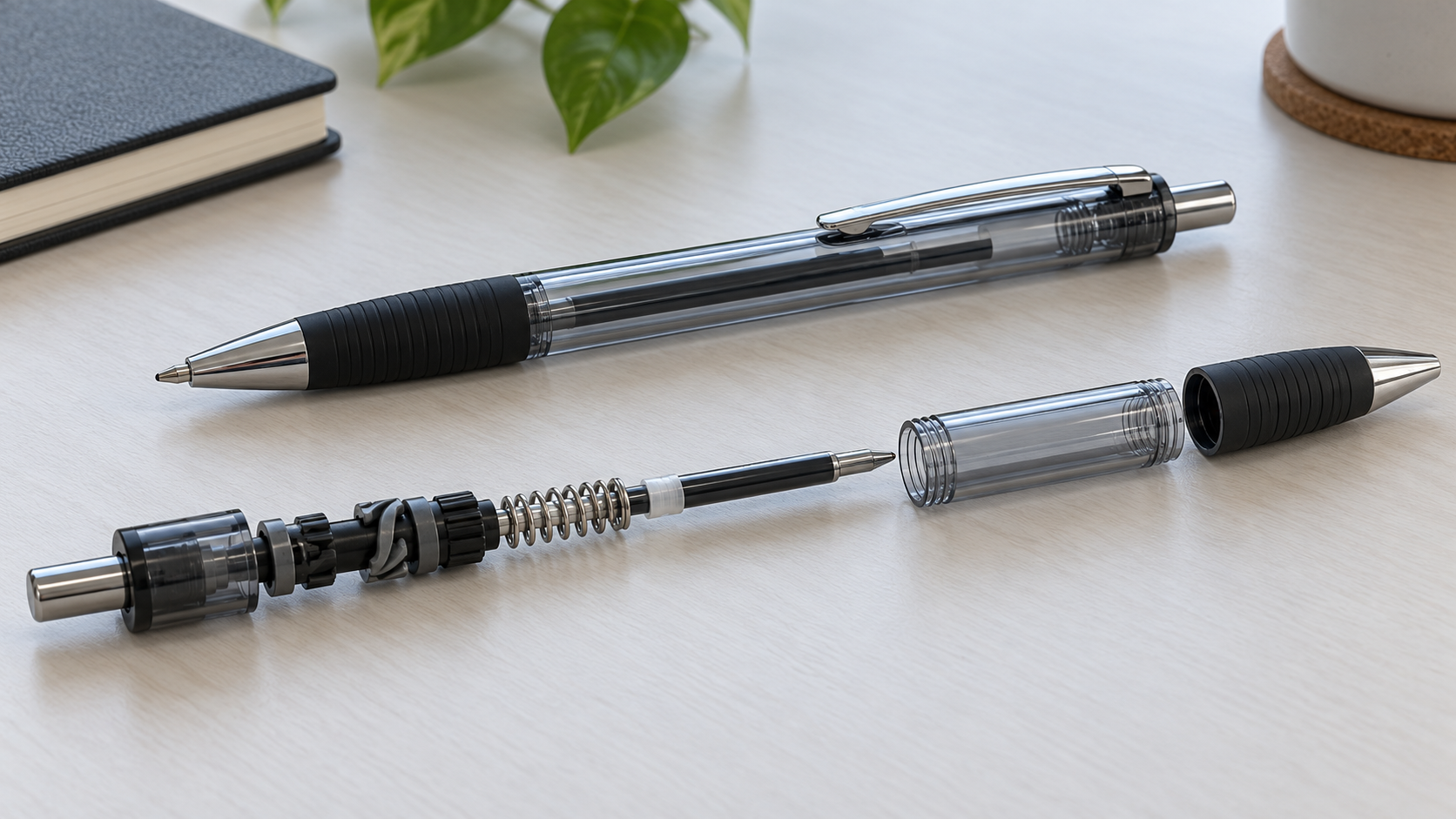
Retractable Click Pen Mechanism Explainer
A retractable click pen changes between two stable positions with repeated presses of one button. The ink refill sits inside the barrel above a compression spring near the tip. Pressing the plunger drives the refill forward and compresses that spring. A small cam assembly near the top then decides whether the refill will remain extended for writing or be released so the spring can pull it back inside.
The familiar alternating action comes from shaped teeth and sloping tracks. As the plunger moves down, one cam part pushes another past a set of ridges. The sloped faces make the moving part rotate by a fraction of a turn. When finger pressure ends, the spring pushes upward. Depending on the new angular position, the cam either catches on a high ledge or slips into a deeper channel.
On the first press, the cam rests on the high ledge, holding the refill forward even though the spring is pushing back. On the next press, the plunger lifts the cam off that ledge and rotates it into a release path. The spring then expands and retracts the refill. The mechanism therefore stores energy in the spring but stores its state in the cam position.
Small clearances matter. The refill must slide freely without wobbling enough to make the tip feel loose. The cam teeth need enough engagement to resist writing pressure, yet their faces must glide under modest thumb force. Molded plastics are common because they can form complicated tracks economically and run quietly. A metal or plastic spring guide keeps the compression spring centered so it does not buckle against the barrel.
A pen that will not stay extended may have worn cam teeth, a cracked plunger, a refill that is too short, or debris blocking full travel. A tip that stays out may come from a jammed spring or incompatible refill. Forcing the button can round the locking edges. Replacing the refill with the length and shoulder shape specified for the pen usually preserves the designed stroke.
The clicker is thus a compact two-state machine. The thumb supplies a short linear motion, angled tracks convert part of that motion into rotation, and the rotating cam selects a catch or release path. The compressed spring keeps the parts engaged and returns the refill when the catch is removed. That sequence produces the click, the visible tip movement, and the reliable alternation between writing and storage.
A plunger compresses a spring and advances the refill while a rotating cam alternately catches on a ledge or enters a release track. Key terms include plunger, refill, compression spring, cam, track, detent, stroke, and latch.
Sloped cam faces turn straight button travel into a small angular step, positioning the locking teeth differently for the next spring return.
Refill length and shoulder position set the mechanism's travel. A mismatched refill may never reach the cam's catch or may prevent full retraction.
Explore more "Explainers"
Discover additional explainers across politics, science, business, technology, and other fields. Each explainer breaks down a complex idea into clear, everyday language—helping you better understand how major concepts, systems, and debates shape the world around us.