

Two-Piece Canning Lid Vacuum Explainer
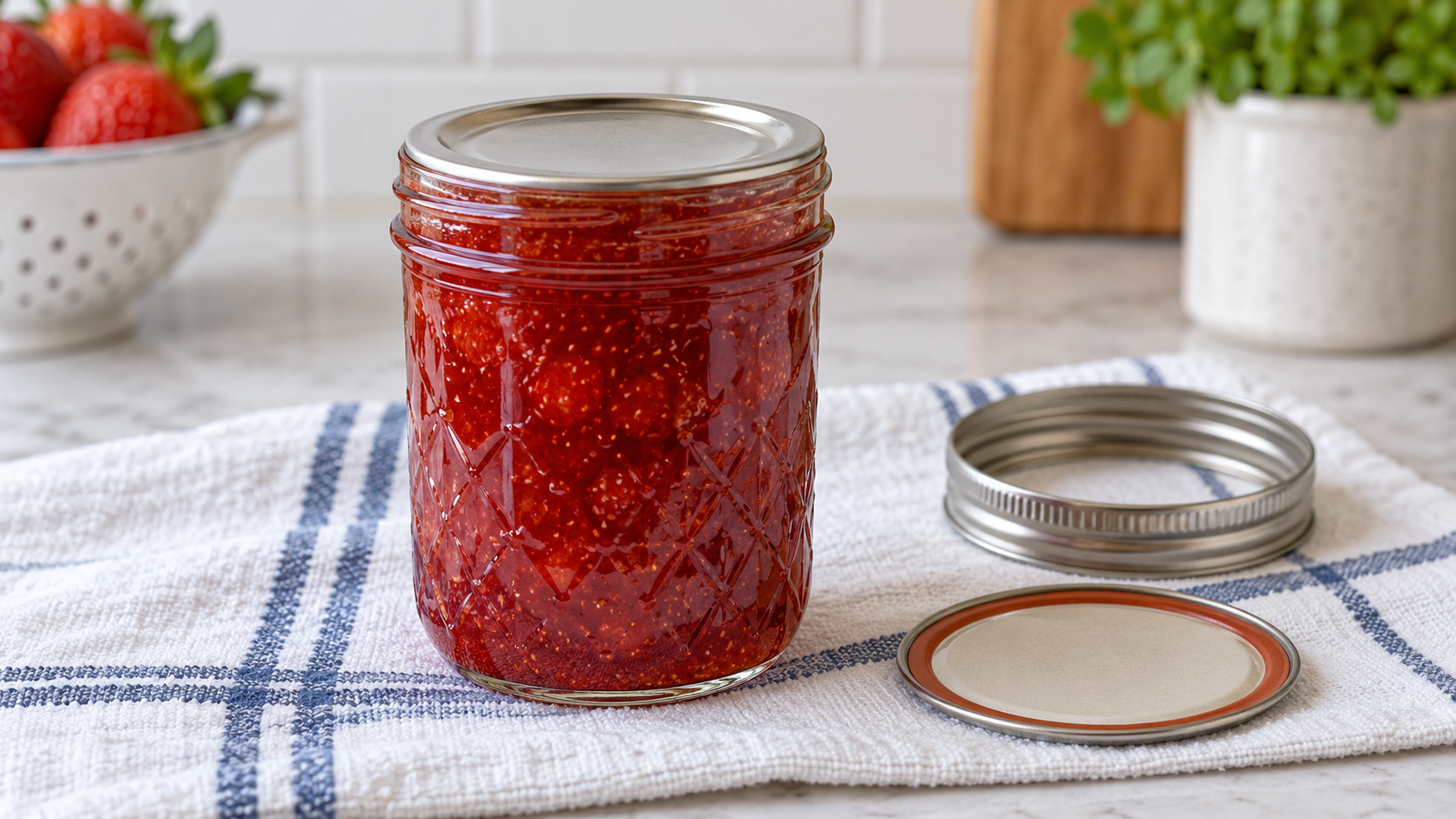
A two-piece home-canning closure uses a flat metal lid with a sealing compound around its underside and a threaded band that holds the lid in position during processing. As the filled jar heats in an approved canning process, food, water vapor, and headspace gas expand. Air and steam can vent from beneath the lid edge because the band is tightened only as directed, not clamped permanently shut.
The heat softens the sealing compound so it conforms to the clean glass rim. When the processed jar is removed and cools undisturbed, steam condenses and the jar contents contract. Pressure inside falls below room pressure. Higher atmospheric pressure outside pushes the lid downward, while the gasket bonds against the rim. The center becomes slightly concave and often makes a popping sound as it flexes down.
The screw band is an installation aid, not what maintains the cooled seal. After the recommended 12 to 24 hours of cooling, the band is removed before testing and storage under National Center for Home Food Preservation guidance. A properly sealed flat lid remains attached by the pressure difference and gasket contact. Removing bands also makes a broken seal easier to notice and avoids trapping moisture that encourages rust.
Headspace and rim condition influence success. Too little headspace can let food boil out and foul the sealing surface; too much may leave excessive air that the scheduled process does not exhaust. Chips, food residue, damaged lids, old gasket compound, or incorrect band tightening can create leak paths. Hot lids should not be retightened because that can disturb or cut the softened seal.
A vacuum seal does not prove that food was processed safely. The seal can form at temperatures and times insufficient to destroy dangerous organisms. Only a current research-tested recipe, correct jar and lid, specified preparation, proper canner, altitude adjustment, and full processing time address safety. An unsealed or suspect jar must be handled according to current preservation guidance, never tasted to judge safety.
The finished closure is a pressure-assisted gasket joint. Processing drives gas outward and conditions the lid compound; cooling reduces internal pressure; atmosphere presses the flexible lid onto the rim. The concave center provides a visible sign that vacuum is present, but the safe food-preservation system includes far more than the lid. Reliable sealing and adequate heat processing are related requirements, not interchangeable evidence.
Heating vents air and softens the gasket; cooling contracts the contents and lets outside air pressure press the lid onto the rim. Key terms include headspace, venting, sealing compound, vacuum, atmospheric pressure, concave lid, screw band, and tested process.
No. A vacuum can form without enough heat to control dangerous organisms. Safety requires a current tested recipe and the complete specified process.
The vacuum and gasket hold a good lid. Removing bands helps reveal seal failure, permits cleaning, and prevents hidden moisture from rusting the hardware.
Explore more "Explainers"
Discover additional explainers across politics, science, business, technology, and other fields. Each explainer breaks down a complex idea into clear, everyday language—helping you better understand how major concepts, systems, and debates shape the world around us.