

Insulated Cooler Heat-Transfer Explainer
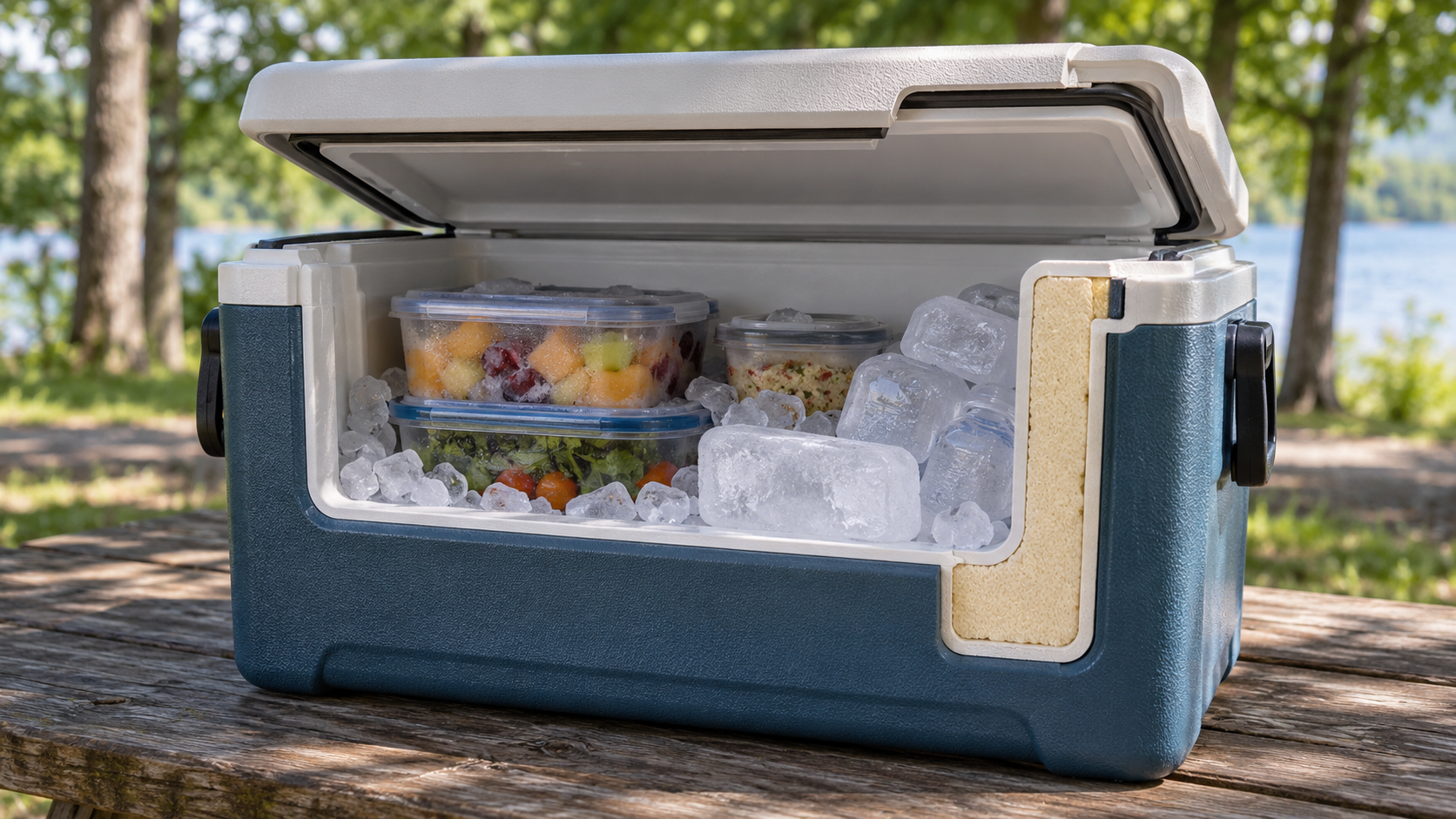
An insulated cooler does not create cold. It slows heat entering from warmer air, sunlight, the ground, and anything placed inside. Its rigid outer shell and inner liner are separated by a layer of foam containing many small gas pockets. Gas conducts heat poorly when it cannot circulate freely, so the foam reduces conduction through the walls. Ice inside absorbs incoming energy as it melts, holding the contents near its melting temperature while ice remains.
The lid is often the largest interruption in the insulated box. A thick lid and close-fitting rim reduce heat conduction and limit the exchange of cold interior air with warm outside air. Gaskets or latches improve the fit on some models. Every opening replaces some cool air, admits warm humid air, and exposes contents to radiation and convection, so frequent searching shortens the time the stored ice can absorb heat.
Packing changes performance. Food and drinks that are already cold do not consume as much of the ice’s cooling capacity as warm items. Larger blocks of ice have less surface area relative to their volume and generally melt more slowly, while smaller ice fills gaps and contacts containers well. A well-filled cooler contains less air that can be exchanged when the lid opens. Separate drink and food coolers can reduce repeated access to perishables.
Sunlight warms the outer shell, and a hot vehicle floor can conduct heat into the base. Shade, a reflective cover, and an insulating barrier beneath the cooler reduce those gains. Water from melted ice still remains cold and can improve contact with sealed containers, although whether to drain it depends on the cooler instructions and the need to keep food packaging dry. Meltwater should never be allowed to contaminate unsealed food.
A cooler delays warming rather than guaranteeing safety for a fixed number of hours. Outdoor temperature, wall thickness, lid fit, ice quantity, opening frequency, and the initial temperature of contents all matter. Perishable food is kept at 40 degrees Fahrenheit or below, using a refrigerator thermometer when needed. If the cooler has no ice and food has spent unsafe time above the safe range, appearance or smell cannot reliably prove it is safe.
The cooler works as a resistance-and-storage system. Foam slows the pathways by which heat crosses the enclosure, the lid limits air replacement, and the ice provides thermal mass plus the large energy demand of melting. Good packing and shade reduce the load placed on that system. The result is not perfect insulation but a slower rate of heat gain, giving cold food a longer safe interval when temperature is monitored and the lid remains closed.
Foam walls and a fitted lid slow heat transfer, while ice absorbs incoming energy as it melts. Key terms include conduction, convection, radiation, insulation, gas pocket, thermal mass, phase change, and gasket.
Warm items would otherwise draw substantial heat from the ice. Starting cold reserves more of the ice’s melting capacity for heat entering from outside.
No. Conditions vary, so perishable food must be kept at 40°F or below and checked rather than judged only by elapsed time or appearance.
Explore more "Explainers"
Discover additional explainers across politics, science, business, technology, and other fields. Each explainer breaks down a complex idea into clear, everyday language—helping you better understand how major concepts, systems, and debates shape the world around us.