

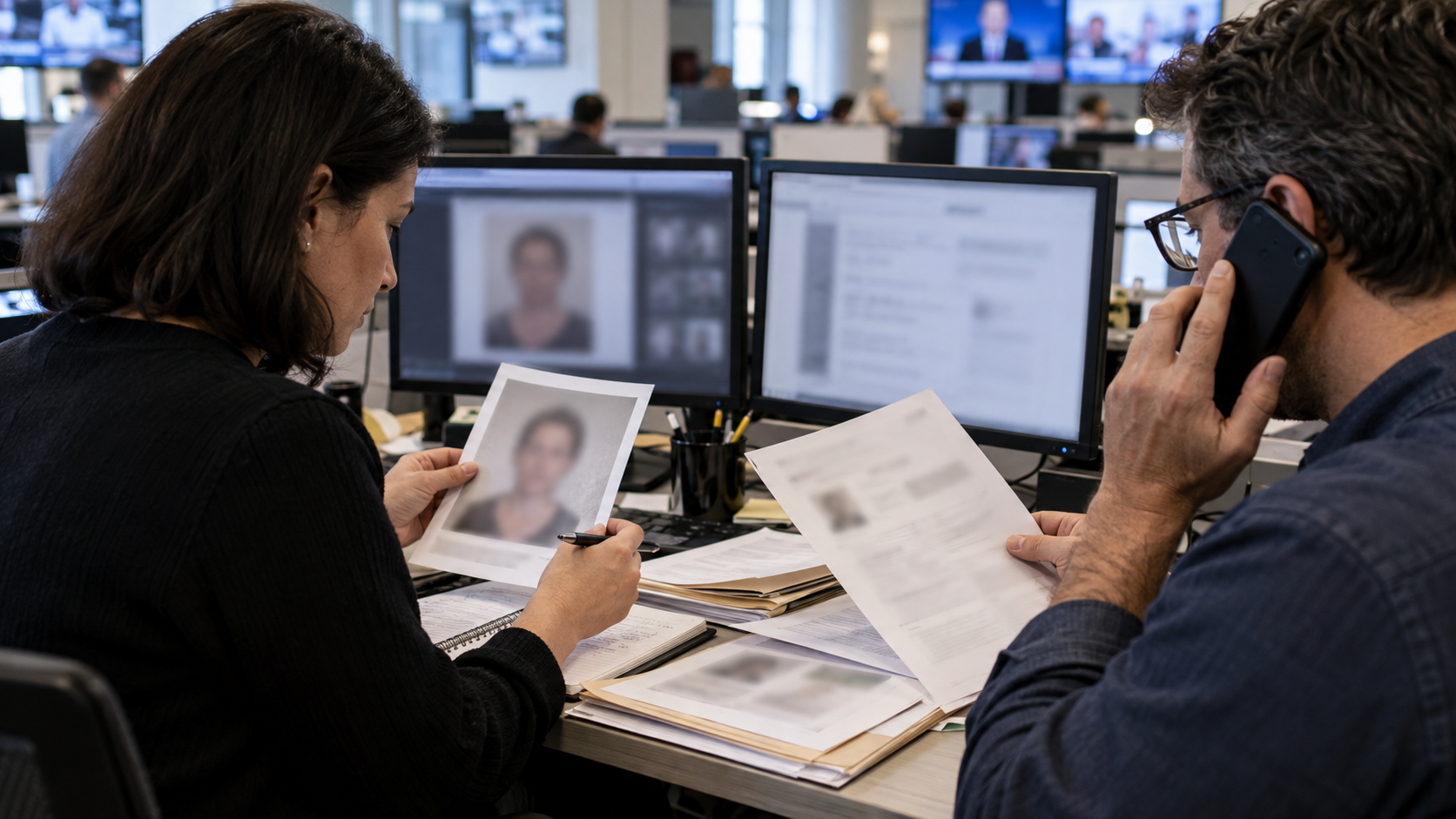
Identity Verification Explainer
When a story depends on who a person is, a newsroom must confirm that the name, image, account, quotation, and role all refer to the same individual. Identity verification is more than checking a spelling or finding a matching social-media profile. Reporters build confidence by combining direct contact with independent records and contextual evidence, while editors consider whether naming the person is necessary and fair. The standard rises when a mistaken identification could expose someone to danger, stigma, arrest, or lasting online attention.
The process often starts with the person directly. A reporter asks for a full name, spelling, age when relevant, job or organizational role, location, and a reliable way to reconnect. The conversation can reveal details that an impersonator may not know, but a phone call or message is not proof by itself. Journalists compare the answers with information produced independently, such as official directories, professional licenses, court records, company filings, public statements, school or organizational webpages, or earlier verified reporting. Sensitive identification documents may sometimes be reviewed privately, but unnecessary personal numbers and addresses should not be copied or published.
Digital identities require extra care because accounts can be copied, hacked, renamed, or generated to resemble a real person. A verification badge may help establish control of a platform account, yet it does not prove every claim posted from that account. Reporters examine account history, known contact channels, original uploads, timestamps, relationships, and whether the person can provide material that predates the current story. They may call an organization through a publicly listed number rather than relying on contact details supplied in a message. Photographs are compared cautiously because appearance alone can produce false matches.
Context matters as much as the name. Two people can share the same name, title, city, or employer, and records can be outdated. Newsrooms therefore cross-check several identifiers and ask whether the person was actually in a position to know or do what the story describes. When allegations are involved, the subject should have a meaningful opportunity to respond. Editors also distinguish confirming identity from endorsing credibility: a real person can still be mistaken, exaggerate, or deliberately mislead, so the information that person provides needs its own corroboration.
Privacy and harm shape the final decision. A newsroom may verify someone internally yet withhold or limit identifying details for a minor, victim, medical patient, vulnerable witness, or confidential source. Descriptions should be specific enough for readers to assess reliability without exposing information that has no public-interest value. If the evidence remains uncertain, the responsible choices are to delay, describe the limitation clearly, or omit the identification. Careful identity work protects both accuracy and people: it prevents the wrong individual from being attached to an event while helping audiences understand who supplied the information and why that source is relevant.
No. Names, workplaces, locations, and even photographs can overlap or be outdated. Reporters compare several independent identifiers and use a trusted contact route before concluding that records, accounts, and statements belong to the same person.
The newsroom can delay publication, seek stronger corroboration, describe the uncertainty clearly, or leave the identification out. Guessing is especially risky when a false match could expose someone to accusation, harassment, or lasting reputational harm.
Internal verification establishes that the source is real and relevant. Publication is a separate judgment that weighs public interest against privacy, safety, source protection, and the potential harm of revealing unnecessary details.
Explore more "Explainers"
Discover additional explainers across politics, science, business, technology, and other fields. Each explainer breaks down a complex idea into clear, everyday language—helping you better understand how major concepts, systems, and debates shape the world around us.