

Managing Editor Explainer
A managing editor is a senior newsroom leader who turns broad editorial priorities into an organized daily operation. The title varies among publications, but the role commonly connects top editors with assignment desks, section editors, reporters, photographers, producers, and audience teams. A managing editor may help decide which stories receive attention, who is available to report them, and what must happen before publication. The job combines journalism judgment with practical management: people, deadlines, budgets, standards, and unexpected events all have to fit into one workable plan.
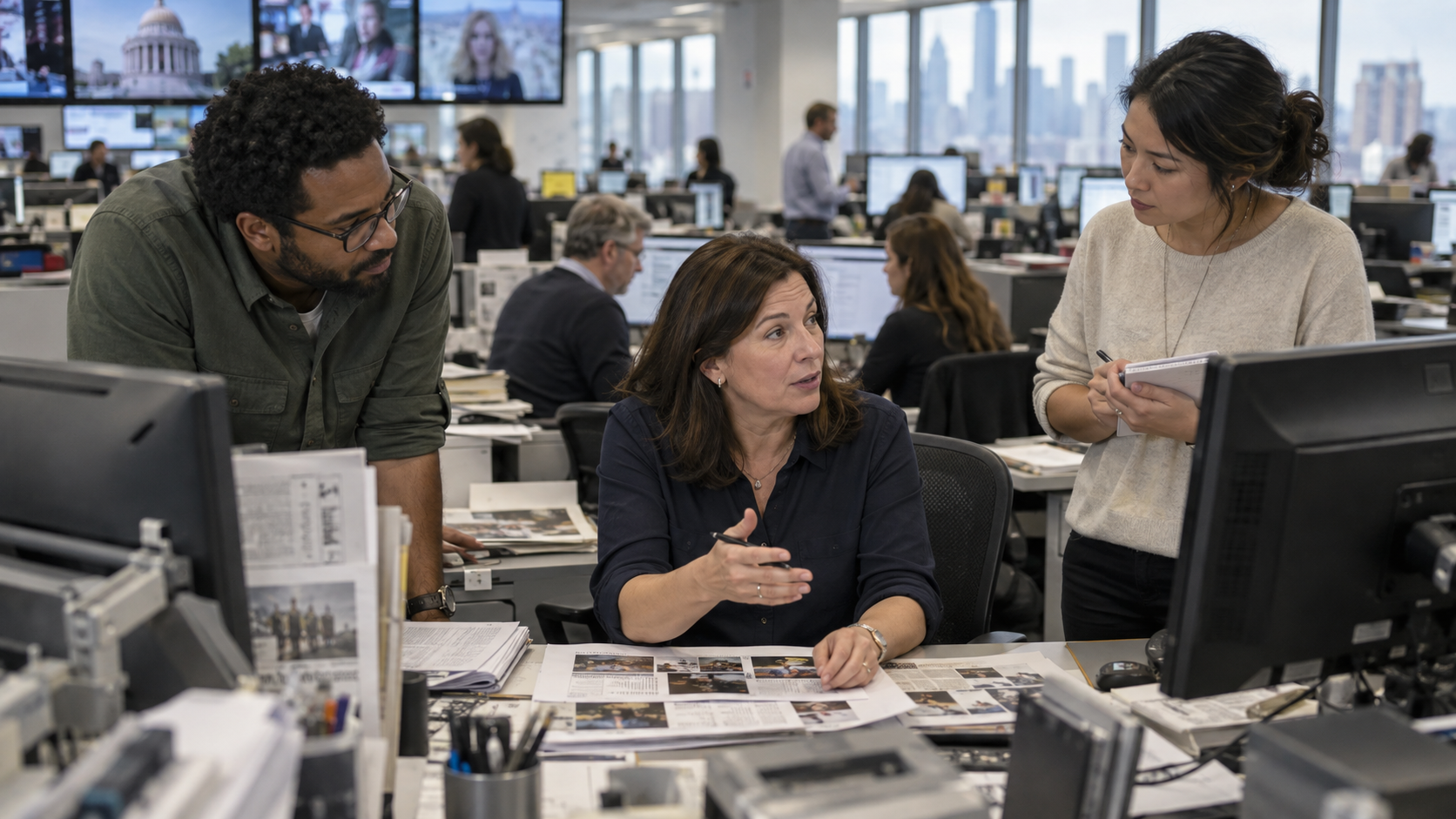
At the start of a news cycle, the managing editor often reviews the developing agenda with other editors. Scheduled events, enterprise projects, investigations, follow-ups, and breaking news compete for limited time. The editor asks which stories matter most to the audience, whether the newsroom has enough reporting, visual, legal, or data support, and where coverage gaps remain. This does not mean choosing every headline personally. It means building a process in which desks understand priorities, assignments have clear owners, and important work does not disappear between teams.
During reporting and editing, the managing editor monitors progress and resolves obstacles. A story may need another source, stronger context, a response from someone criticized, a clearer graphic, or additional review because the allegations are serious. The editor can shift staff, extend a deadline, narrow a story, or hold it until the reporting is ready. In fast-moving coverage, the role also helps prevent duplication and keeps multiple updates consistent. Accuracy and fairness still belong to every journalist involved, but a managing editor creates the conditions that let those standards survive deadline pressure.
The position differs from an editor in chief, although responsibilities sometimes overlap. An editor in chief usually has final responsibility for the publication’s editorial direction and public identity. A managing editor is more closely associated with executing that direction across everyday workflows. The role also differs from an assignment editor, who may focus on deploying reporters and crews for a particular desk or shift. In a small newsroom, one person may perform all three functions; in a large organization, several managing editors may oversee separate platforms, departments, or time periods.
Good managing editors communicate decisions clearly and invite reporters to raise concerns early. They protect time for original reporting while recognizing when urgent public information must take priority. They also learn from corrections, missed stories, workload problems, and coverage that failed to serve parts of the community. Much of their work remains invisible to readers, yet it shapes what the audience receives. The role is ultimately about coordination with editorial purpose: helping a newsroom publish verified, useful journalism consistently without treating speed, volume, or internal hierarchy as substitutes for sound judgment.
Usually not. The editor in chief generally sets overall editorial direction, while the managing editor coordinates the staff and workflows that carry it out.
Often, especially on sensitive or high-impact coverage, although much of the job involves supervising editors, allocating resources, and resolving workflow problems.
The editor helps set priorities, assign staff, coordinate updates, arrange needed reviews, and keep fast-moving coverage accurate and consistent.
Explore more "Explainers"
Discover additional explainers across politics, science, business, technology, and other fields. Each explainer breaks down a complex idea into clear, everyday language—helping you better understand how major concepts, systems, and debates shape the world around us.