

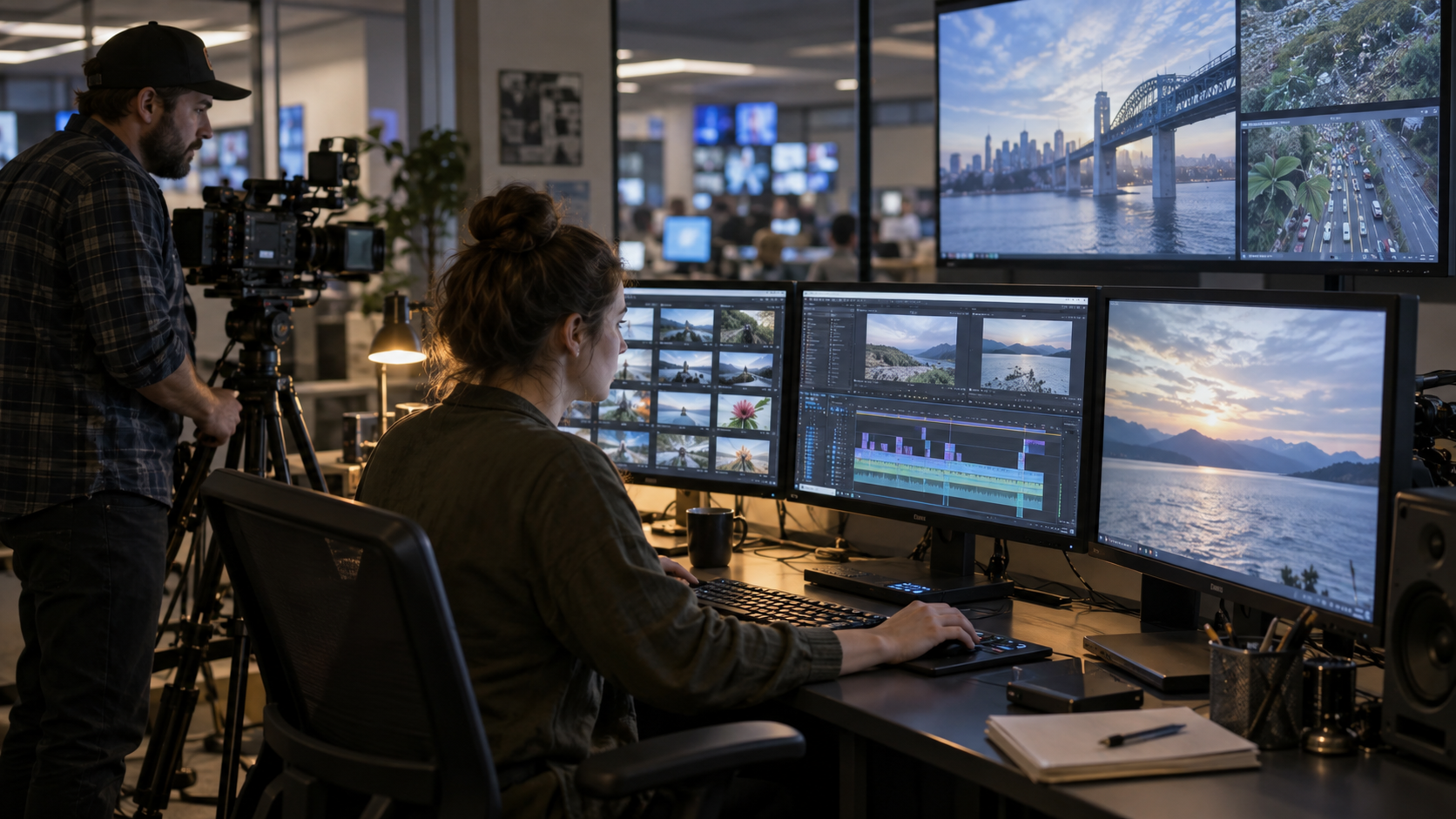
B-Roll in News Explainer
B-roll is supporting video used alongside the main sound or action in a news report. If an interview is the primary footage, or A-roll, B-roll may show the location, people performing relevant work, documents, equipment, streets, weather conditions, or other details that help viewers understand what is being discussed. Editors often place this material over narration or parts of an interview, creating a smoother visual sequence than a single continuous shot. Despite the technical name, B-roll is not decoration alone; its content and timing can influence how audiences interpret the story.
Journalists gather B-roll with the same obligation to be accurate as any other reporting material. A camera crew may record wide views that establish a place, medium shots that show activity, and close details that clarify a process. Reporters and photographers note when and where the footage was made and who or what appears in it. Newsrooms may also receive video from agencies, officials, companies, witnesses, or the public. Before using that material, editors need to check its origin, date, location, alterations, and connection to the event being reported.
Context matters because an image can be genuine yet misleading in a particular sequence. Old footage of a crowded hospital should not illustrate a current health story in a way that implies it was recorded today. A generic shot of police lights should not suggest that an identifiable person was arrested. File or archival video can be useful, but it should be labeled when viewers might otherwise mistake it for current coverage. Captions, narration, and editing choices should explain important limits rather than allowing a dramatic image to create a claim the reporting cannot support.
B-roll also shapes pace and comprehension. A sequence can show how a machine works, orient viewers inside a neighborhood, or let them examine evidence while a reporter explains it. Editors choose shots that match the spoken information and leave enough time for the audience to understand what is visible. Repeating sensational images can exaggerate their importance, while rapid cuts may obscure detail. Responsible editing avoids staging newsworthy actions merely to obtain a cleaner shot and avoids altering the sequence in a way that changes the meaning of what happened.
In digital reporting, the term can apply to video prepared for television packages, documentaries, explainers, social clips, and live-stream recaps. Some B-roll is carefully planned; other material is captured because it may provide context later. The useful question is not whether footage looks polished, but whether it is relevant, verified, and honestly presented. When those conditions are met, B-roll gives viewers visual evidence and orientation that words alone may not provide. When they are ignored, supporting footage can quietly become the most misleading part of a report.
A-roll usually carries the main interview, narration, or action. B-roll supplies supporting views that add evidence, place, detail, or visual continuity.
Yes, when it remains relevant and is clearly labeled if viewers could otherwise mistake archival or file footage for current video.
Sequencing can imply cause, timing, identity, or importance. Editors must avoid combinations that create a meaning the verified facts do not support.
Explore more "Explainers"
Discover additional explainers across politics, science, business, technology, and other fields. Each explainer breaks down a complex idea into clear, everyday language—helping you better understand how major concepts, systems, and debates shape the world around us.