

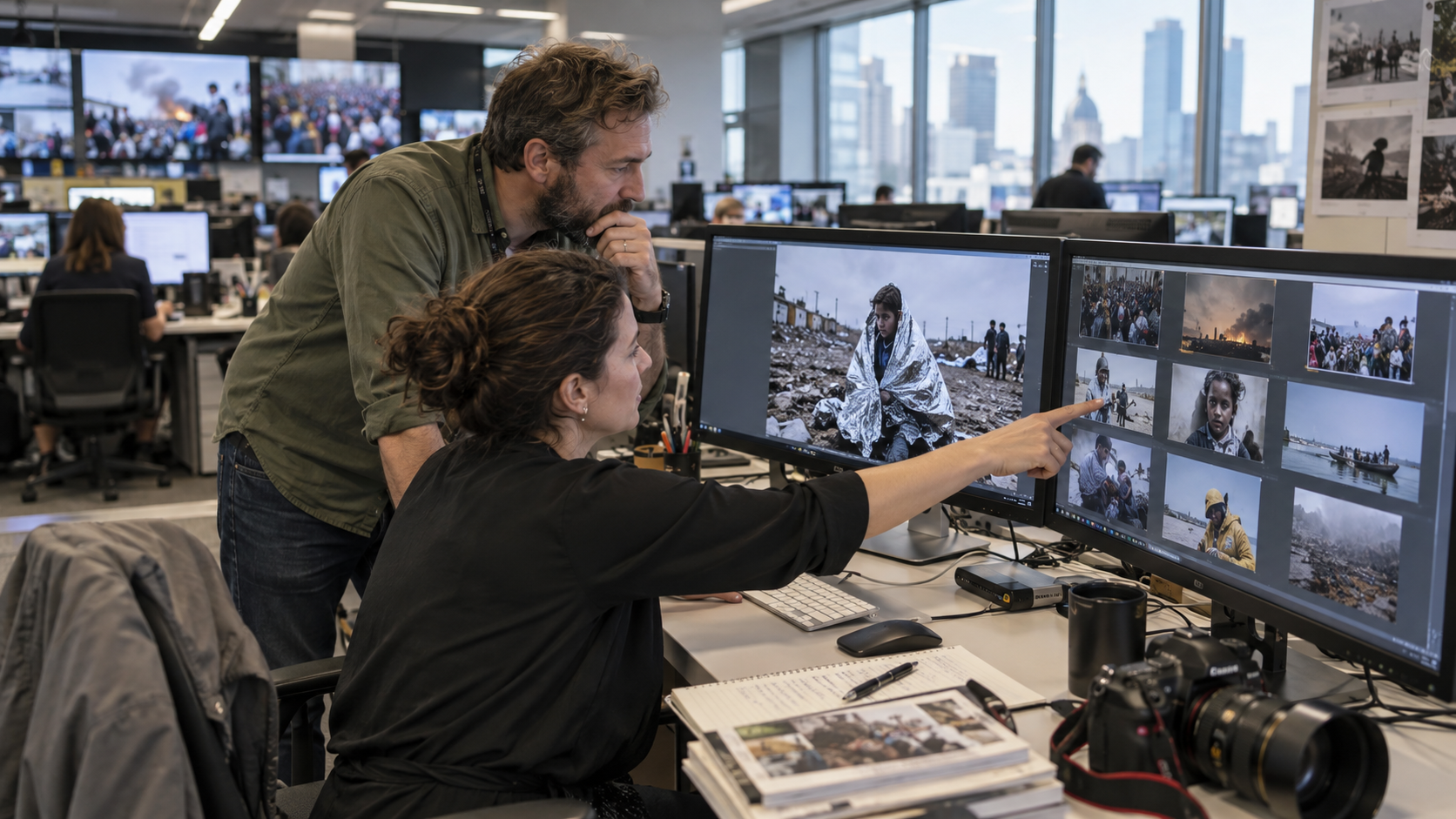
Photo Editor Explainer
A photo editor helps a newsroom plan, verify, select, and present visual journalism. The role may include assigning photographers, reviewing incoming images, coordinating with reporters, choosing pictures for publication, and making sure captions accurately explain what viewers see. Photo editors work with staff photographers, freelancers, wire services, archives, and material submitted by witnesses or organizations. Their decisions shape both the factual record and the emotional tone of a story, so visual impact must be balanced with accuracy, context, dignity, and public value.
Before an assignment, the editor discusses the reporting goal, location, timing, access, safety, and expected visual needs. A photographer may need credentials, protective equipment, travel support, or guidance about vulnerable subjects. The editor avoids demanding a predetermined image that could encourage staging or distort what is happening. Instead, the assignment identifies the questions and events the visual reporting should document. During breaking news, the editor may coordinate several photographers and track which areas have been covered.
Selection is more than choosing the most dramatic frame. Editors check when and where an image was made, who appears in it, what happened immediately before and after, and whether the photograph fairly represents the story. They compare original files, transmission records, photographer notes, and other evidence when authenticity is uncertain. Cropping, color adjustment, and tonal changes should follow newsroom standards and must not alter the factual meaning of the scene. Generative additions, removals, or composites cannot be presented as documentary evidence.
Captions are part of the journalism. They identify people and places, describe the action, provide the date, credit the photographer, and add context that the image alone cannot supply. A photo editor checks spellings, titles, directions, and whether an apparent action is being inferred rather than observed. Sensitive photographs involving death, injury, children, private grief, or humiliation require additional judgment. The editor considers consent, newsworthiness, potential harm, cultural context, warnings, and whether a less graphic image can inform the audience equally well.
Digital presentation adds decisions about thumbnails, galleries, mobile crops, accessibility text, image sequencing, and social platforms. A crop that works on a full page may become misleading when reduced to a small card. Editors also correct captions and replace images when new information changes the understanding of a scene. The best photo editing treats pictures as reported evidence rather than decoration. It supports photographers, challenges assumptions, preserves context, and helps audiences see important events without sacrificing truth or human dignity for visual intensity.
Some do, but the central role is usually assigning, reviewing, verifying, selecting, captioning, and presenting visual journalism produced by others.
Routine crops and tonal adjustments may be allowed under newsroom standards, but changes must not alter the factual meaning or add and remove content.
Photographers often supply initial information, while photo or copy editors check names, dates, locations, context, and wording before publication.
Explore more "Explainers"
Discover additional explainers across politics, science, business, technology, and other fields. Each explainer breaks down a complex idea into clear, everyday language—helping you better understand how major concepts, systems, and debates shape the world around us.