

Reporter Track Explainer
Reporter track is the recorded narration a journalist uses to guide viewers through a television news package. It connects video, interviews, graphics, and natural sound into a coherent story. Unlike a live standup, track is usually recorded away from the camera and placed on the editing timeline. Viewers hear the reporter’s voice while seeing pictures that illustrate, support, or sometimes complicate the words.
Good track begins with reporting and a clear structure. The writer decides what facts must be spoken, what information the pictures can communicate, and where an interview clip should carry the story. Sentences are written for the ear: short enough to follow, specific enough to be meaningful, and paced so important names or numbers do not rush past. The narration should add context rather than describe every obvious action on screen.
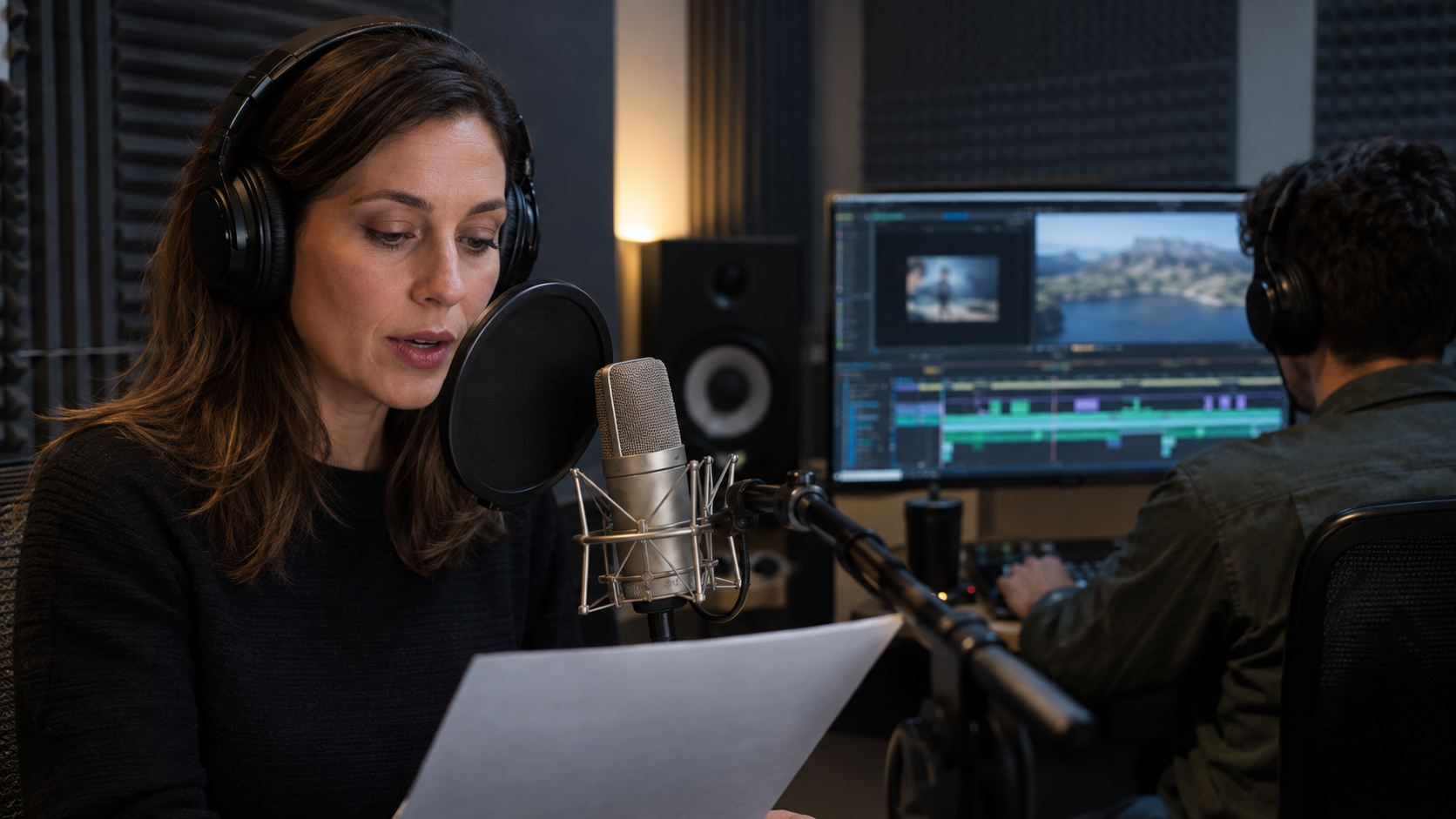
Recording commonly happens in a voice booth, newsroom station, or quiet field location. The reporter keeps a steady distance from the microphone, listens through headphones, and reads with natural emphasis instead of an artificial announcing voice. Editors watch for clipped words, background noise, breaths, and sudden changes in tone. When a correction is needed, they record enough surrounding words to make the replacement sound continuous.
Track and pictures must remain truthful together. An editor should not place generic or old video under narration in a way that suggests it shows the event being described. If footage is illustrative, supplied, staged, or from another time, the script and labeling may need to say so. Reporters also leave space for natural sound and complete interview thoughts; constant narration can flatten a scene and crowd out evidence the audience should hear directly.
During the final mix, speech must be understandable without overwhelming every other sound. Producers check timing, pronunciation, attribution, and whether the last recorded words match the package outcue in the rundown. A strong reporter track feels almost invisible: it moves the story forward, explains what the camera cannot, and gives viewers reliable orientation while pictures and sources provide much of the experience and proof.
Usually not. It is voice narration recorded separately and edited beneath pictures, graphics, and other sound.
Video and natural sound can communicate directly; track is most useful when it adds facts, context, or transitions.
Yes. Journalists often record corrections or alternate lines, then edit them carefully so the narration sounds continuous.
Explore more "Explainers"
Discover additional explainers across politics, science, business, technology, and other fields. Each explainer breaks down a complex idea into clear, everyday language—helping you better understand how major concepts, systems, and debates shape the world around us.