

IFB Earpiece Explainer
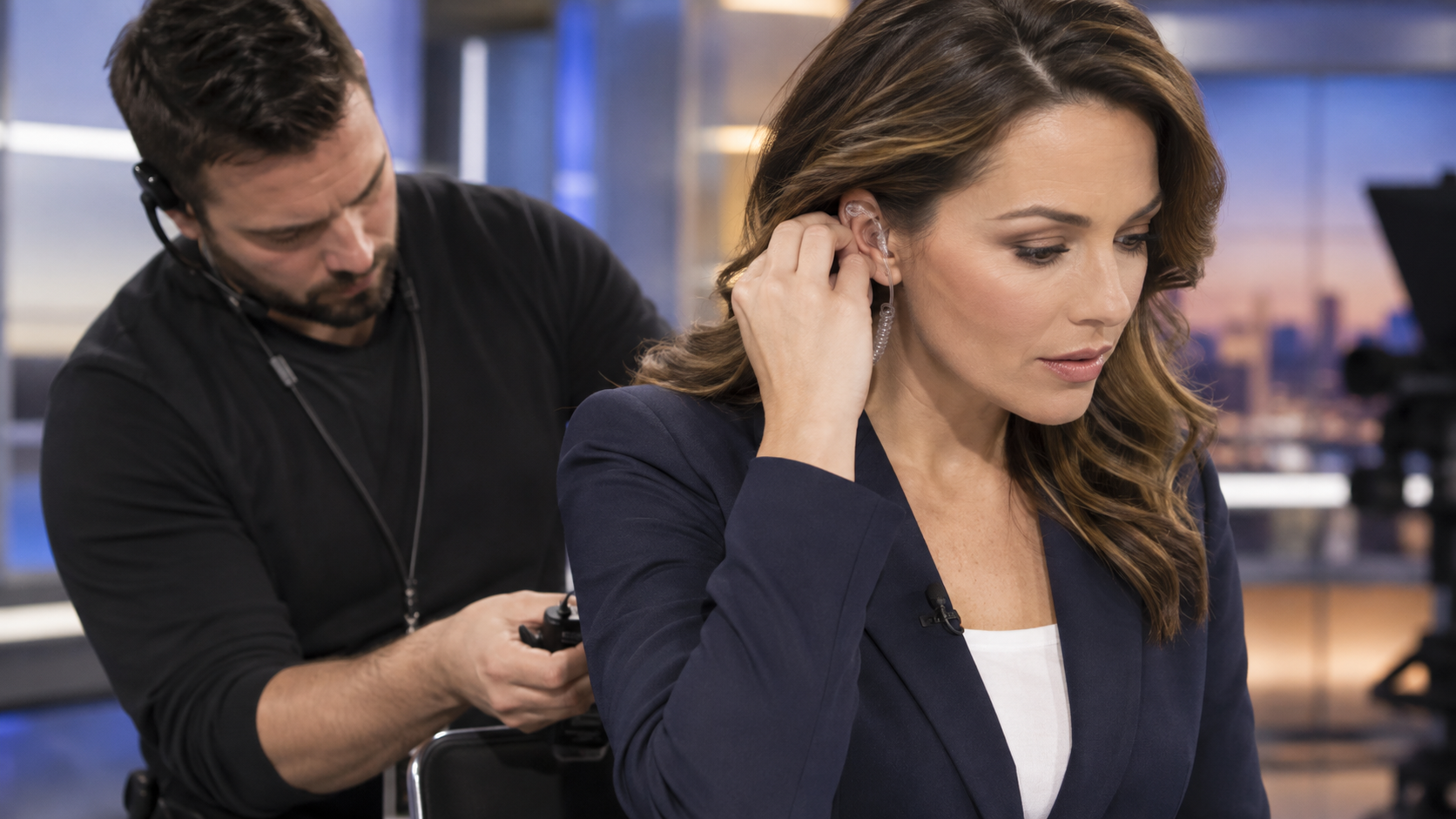
An IFB is the earpiece anchors, reporters, and guests use to hear a return feed during a television broadcast. The initials are commonly associated with interruptible foldback: program audio is sent back to the person on camera, and a producer or director can interrupt that feed with instructions. The clear coiled tube often visible behind an anchor’s ear is only the final part of a larger wired or wireless system.
Through the IFB, talent may hear the anchor in the studio, a remote guest, recorded material, countdowns, and control-room cues. A field reporter uses it to know when a question has ended and when to begin speaking. The mix must be useful without becoming overwhelming. Too much program audio, several voices at once, or excessive volume can make it difficult to concentrate and may create hearing risks.
Before going live, crews test the receiver, cable, earpiece fit, battery, and correct audio channel. The reporter confirms that both the program and producer can be heard. A backup earpiece and alternate communication path are kept nearby. In remote locations, delay must be considered because the return audio may arrive later than the camera signal.
Instructions should be short and unambiguous. Producers avoid talking over important answers unless a correction, time cue, or safety warning is necessary. Talent should never repeat private control-room conversation on air and should say clearly when the feed is lost. If the IFB fails, agreed hand signals, a phone connection, or the reporter’s prepared closing can keep the segment moving.
The device is small, but it connects the person viewers see to the rest of the production. Used well, an IFB helps coordinate questions, timing, transitions, and breaking updates without drawing attention to itself. It does not replace preparation: the anchor or reporter still needs verified facts, a clear plan, and the judgment to continue safely when the earpiece provides incomplete or confusing information.
Usually program audio plus brief instructions, timing cues, or corrections from the control room.
No. It is a broadcast communication receiver designed to deliver a controlled return feed.
The crew can use hand signals, a phone or intercom backup, or a prepared ending while technicians restore the feed.
Explore more "Explainers"
Discover additional explainers across politics, science, business, technology, and other fields. Each explainer breaks down a complex idea into clear, everyday language—helping you better understand how major concepts, systems, and debates shape the world around us.