

How a Technical Director Controls the Live Picture
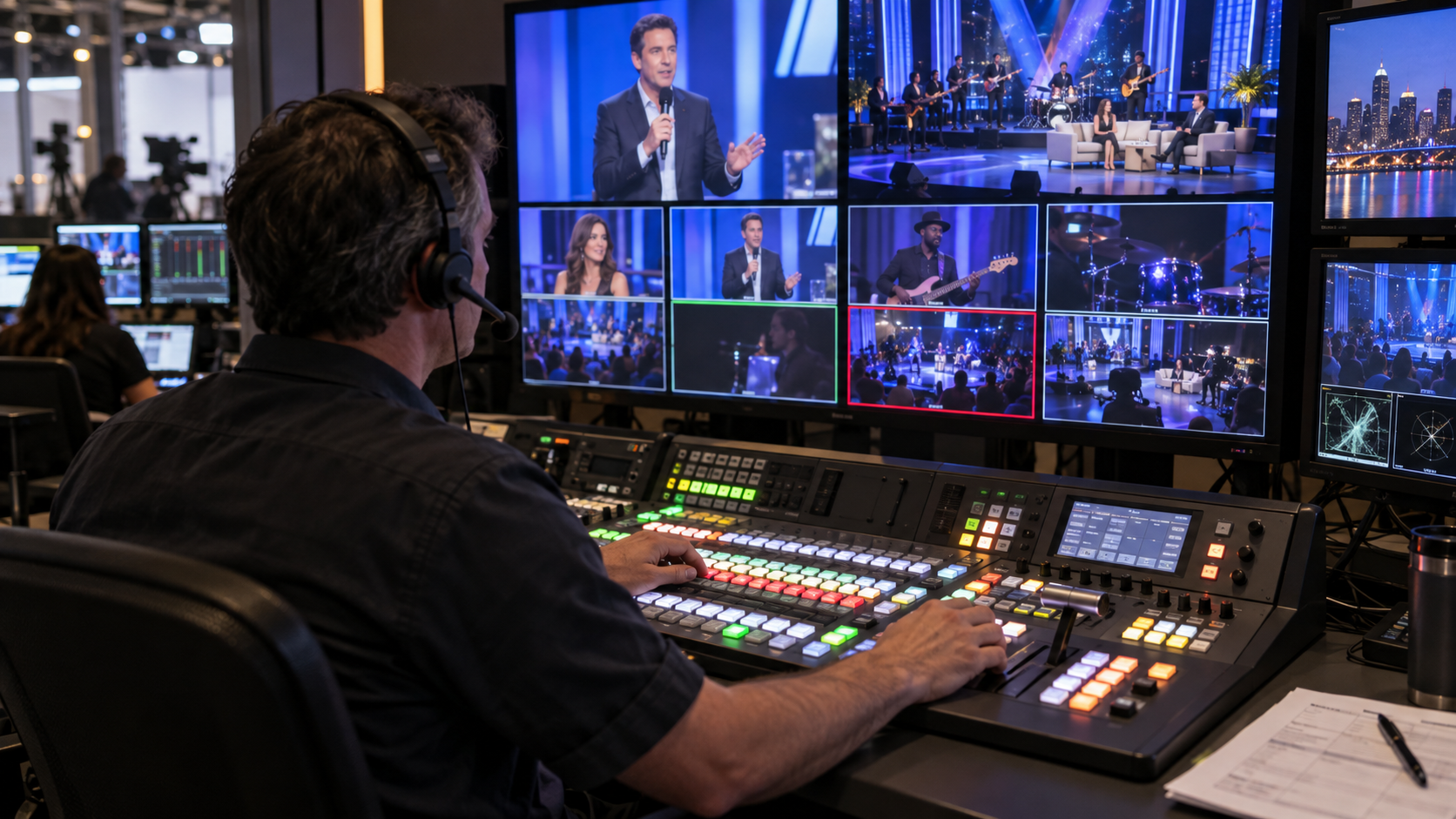
A television technical director operates the production switcher in the control room. The switcher selects which camera, video source, graphic, or effect is sent to air. Following the director’s cues, the technical director presses the controls that turn a planned sequence into the continuous program viewers actually see.
Before a broadcast, the technical director helps prepare the switcher and confirms that sources are routed correctly. Camera feeds, remote guests, recorded packages, graphics, and studio monitors must be available in the expected places. The operator may build transitions or layered effects that will be needed during the show.
During the program, speed and precision are critical. When the director calls for a camera or graphic, the technical director must execute the change at the correct instant. A wrong selection can put an unready camera, black screen, or private control-room feed on air, so the operator listens closely while watching multiple displays.
The technical director also responds when the plan fails. If a video does not start or a remote signal disappears, the operator can quickly select a safe source while the director and producer decide what comes next. Familiarity with the equipment makes that recovery nearly invisible to the audience.
In smaller productions, one person may combine directing and switcher operation. Larger shows divide the responsibilities so the director can concentrate on the overall presentation while the technical director executes the details. In either arrangement, the role connects editorial instructions with the technology that delivers the broadcast.
Not usually. The director calls the visual sequence, while the technical director operates the switcher that carries out those cues.
It is the control surface and system used to select and combine cameras, graphics, video, and other sources.
The function is always necessary, but on smaller productions the director or another crew member may perform it.
Explore more "Explainers"
Discover additional explainers across politics, science, business, technology, and other fields. Each explainer breaks down a complex idea into clear, everyday language—helping you better understand how major concepts, systems, and debates shape the world around us.