

Hansard Explainer
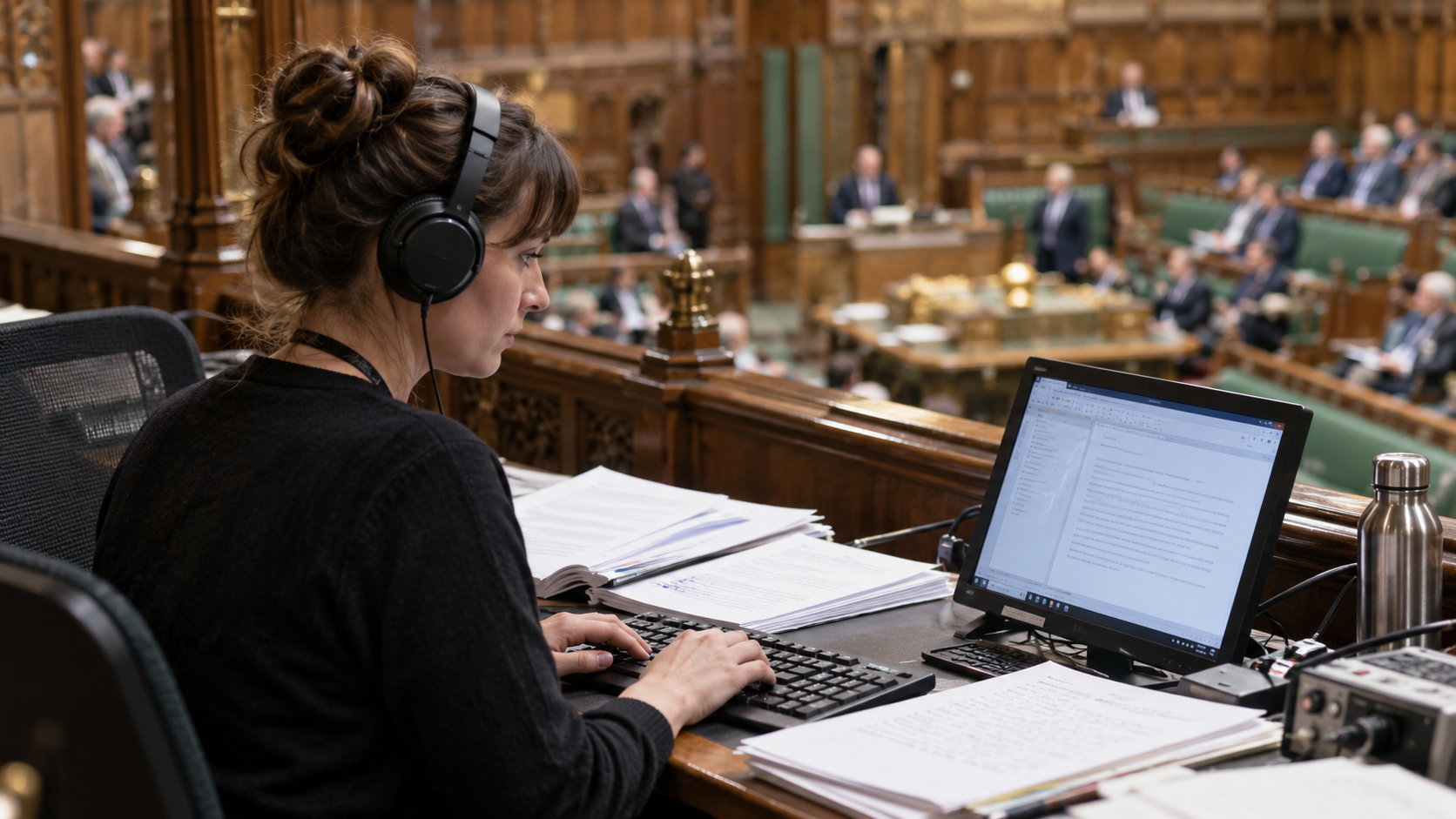
Hansard is the official report of parliamentary debates and proceedings in the United Kingdom. It allows readers to examine what was said in the Commons and Lords rather than relying only on a news summary or a short video clip. The record includes speakers' contributions and information about parliamentary decisions, with related reporting for other proceedings. It is an important resource for following public policy because statements made in Parliament can influence debates long after the exchange that first brought them to attention.
Hansard is described as substantially verbatim rather than an untouched transcription of every sound. Repetitions and obvious errors may be removed in ways that preserve meaning. That editorial approach makes spoken exchanges readable while maintaining a faithful account of their substance. Readers should therefore understand the record as an official report prepared according to parliamentary reporting standards. Its authority as a record of proceedings does not mean that it independently verifies every statistic, accusation, or interpretation voiced by an individual speaker during a political debate.
Suppose a minister answers a question about a program's costs. Hansard helps establish the wording of the answer, the question that prompted it, and relevant follow-up exchanges. A reader can compare that account with a written answer, departmental publication, or later correction. This fuller context can change the interpretation of a statement that appeared simple in a headline. A claim about one period or definition may have been presented publicly as though it applied more broadly, making the original exchange particularly useful to check.
The record also helps track responsibility over time. Members can refer back to earlier assurances, researchers can follow the development of an argument, and the public can see how ministers responded to criticism. Corrections and the distinction between different kinds of parliamentary material remain important when constructing that history. A debate contribution is not itself the final text of legislation, and a reported assertion is not a judicial finding. Use Hansard to identify who said what, when, and in which proceeding, then examine the underlying evidence or legal document when the question goes beyond the parliamentary exchange.
Hansard provides an official report of parliamentary debate and related proceedings.
Its substantially verbatim approach improves readability while preserving the meaning of contributions.
The question and surrounding exchanges can be essential to interpreting a quoted answer.
A reliable record of an assertion does not independently establish that the assertion is true.
Later corrections and related written material can clarify the record over time.
Debate reporting should be distinguished from enacted legislation, underlying evidence, and judicial findings.
Explore more "Explainers"
Discover additional explainers across politics, science, business, technology, and other fields. Each explainer breaks down a complex idea into clear, everyday language—helping you better understand how major concepts, systems, and debates shape the world around us.