

Practical Effects Explainer
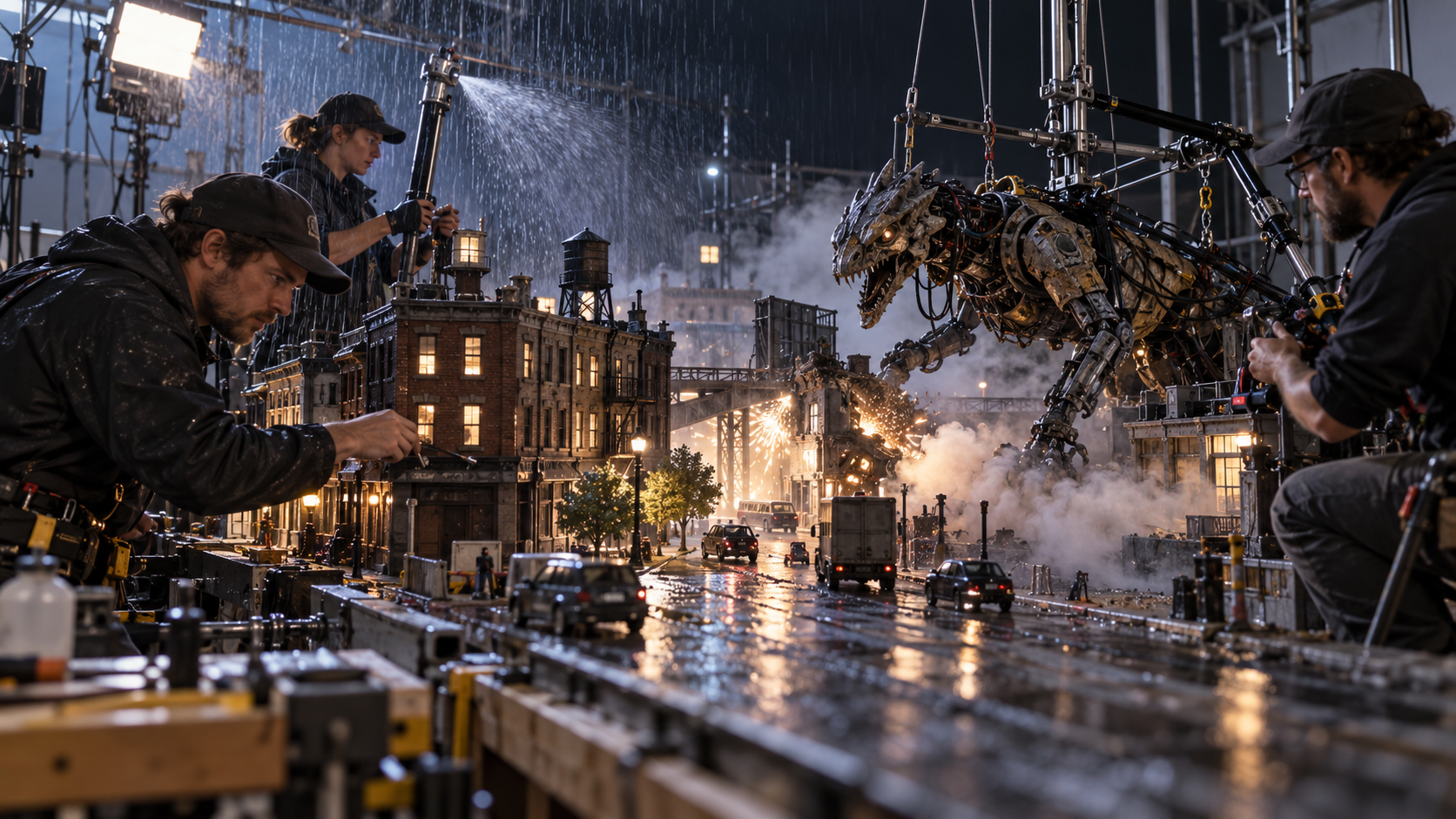
Practical effects are physical effects produced for the camera during photography. They include mechanical creatures, prosthetic makeup, miniatures, breakaway objects, controlled weather, pyrotechnics, wires, squibs, and many other techniques. The category overlaps with special effects and is often contrasted with computer-generated imagery, although modern productions routinely combine both. What makes an effect practical is not that it is old-fashioned or completely untouched later, but that a real element, event, or performance is created on set and photographed as part of the shot.
Design begins with the story requirement and the camera's point of view. An effect only needs to work from the angles, distances, speeds, and lighting conditions in which it will be seen. Miniatures may use carefully chosen scale, lensing, and frame rates so water, smoke, debris, or movement feel full-sized. Creature rigs divide complex motion among puppeteers and mechanical controls. Breakaway props are engineered to fail predictably. Tests reveal whether materials, timing, and photography sell the illusion before cast and crew enter the finished setup.
Physical presence gives performers and cinematographers something concrete to react to. Light reflects naturally from a creature suit or miniature, dust interacts with the set, and the camera records small irregularities that can be difficult to invent. Practical work also imposes constraints: rigs occupy space, resets take time, weather may drift, and mechanisms can have limited movement. Those limits sometimes inspire staging, but they require detailed planning because a costly effect may allow only a few safe attempts.
Safety governs the work. Licensed specialists, stunt coordinators, armorers where applicable, medics, fire authorities, and other professionals establish procedures according to the effect and jurisdiction. Distances, materials, protective equipment, communication, and abort conditions are rehearsed. The apparent danger in the frame is not a guide to the actual risk on set; editing, camera placement, scale, remote operation, and controlled components can create intensity while keeping people separated from hazards. Digital tools often extend practical effects rather than replace them. Wires and supports can be removed, multiple elements combined, backgrounds enlarged, and a partial creature completed. Conversely, a physical reference may guide lighting and movement for a mostly digital result. The practical-versus-digital debate can obscure this collaboration. A better question is which combination gives filmmakers the control, safety, repeatability, texture, and performance they need for a particular shot. The most convincing result may contain several methods that the audience cannot cleanly separate. A practical way to read or discuss Practical Effects is to separate the basic definition from the choices made in a particular example. Practical effects create a physical event, object, transformation, or environment for the production camera to photograph. Then identify who sets the relevant rules, which parts are creative decisions, and which parts follow from law, contracts, technology, or production limits. Examples that look similar on the surface can operate differently because their purpose, audience, timing, and surrounding agreements are different. Safety planning defines who controls the effect, how it is rehearsed, where people may stand, and when the attempt must stop. It is also useful to check whether a source is describing a formal industry category, an informal critical label, or one organization's current practice. Those distinctions prevent a memorable anecdote from becoming a false universal rule. The date and market matter too: tools, distribution systems, and standard agreements change, while older examples can preserve assumptions that no longer apply everywhere. When a claim sounds absolute, compare it with a second type of source and look for the conditions under which it is actually true. Finally, compare the visible result with the less visible work that produced it. Hybrid shots use practical photography, compositing, cleanup, and computer-generated elements together, assigning each method the work it handles best. That approach keeps the explanation grounded while leaving room for reasonable disagreement about borderline cases.
Practical effects create a physical event, object, transformation, or environment for the production camera to photograph.
Designers build for specific angles and timing; an illusion can be highly convincing on screen even when the off-camera rig is visible.
Miniature scale affects materials and motion, so camera speed, lens choice, lighting, smoke, water, and debris must be coordinated carefully.
Safety planning defines who controls the effect, how it is rehearsed, where people may stand, and when the attempt must stop.
Physical elements provide interactive light and tactile reactions, but they may be slower to reset or less flexible than digital revisions.
Hybrid shots use practical photography, compositing, cleanup, and computer-generated elements together, assigning each method the work it handles best.
Explore more "Explainers"
Discover additional explainers across politics, science, business, technology, and other fields. Each explainer breaks down a complex idea into clear, everyday language—helping you better understand how major concepts, systems, and debates shape the world around us.