

Concert Touring Explainer
Concert touring is the repeated presentation of a live show across multiple venues. The visible performance may last only a few hours, but the tour is a traveling production system that coordinates artists, musicians, crew, equipment, venues, promoters, ticketing, security, transportation, lodging, and local labor. Tours range from one performer carrying instruments in a van to stadium productions moving several stages in fleets of trucks. Scale changes the logistics, yet every tour must align people and gear with a fixed public start time.
Routing connects dates so travel is physically possible and audiences are large enough to support the shows. Agents, managers, promoters, and buyers negotiate offers that may include guarantees, percentages, expenses, and venue terms. Holds reserve possible dates while the itinerary develops. Planners consider drive time, border crossings, rest, equipment capacity, market spacing, and venue availability. A route that looks efficient on a map can fail if overnight travel, labor calls, or customs procedures leave too little time to build the next show safely.
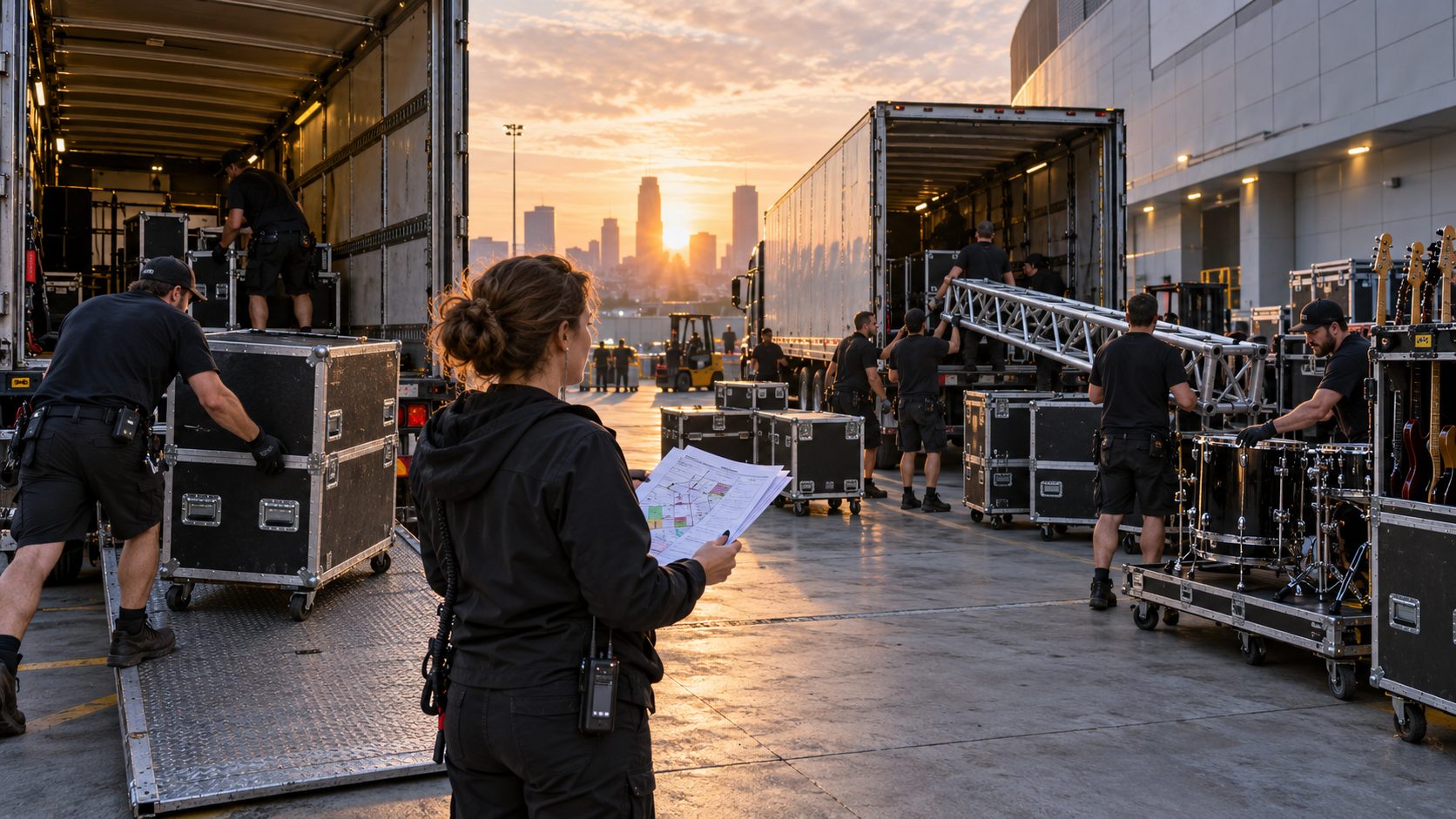
Advance teams exchange technical riders, stage dimensions, power needs, staffing plans, security information, hospitality details, and schedules with each venue. On show day, touring and local crews unload, build, focus, test, rehearse, perform, and pack the production. Large tours may leapfrog equipment so one stage is being built while another hosts the show. Smaller tours adapt a core design to different rooms. Consistency comes from documentation and leadership, not from every venue being identical.
Tour economics combine substantial revenue with substantial risk. Ticket income may be divided under the show agreement, while merchandise, sponsorship, concessions, parking, and premium products follow separate arrangements. Expenses include transport, wages, insurance, production rental, commissions, taxes, lodging, catering, and many other items. A sold-out date can still have disappointing margins if costs are high. Weather, illness, weak sales, damaged equipment, or a canceled connection can disrupt a carefully balanced plan. The audience experiences one local night, but the production is designed across the whole run. Set lists may evolve, physical staging must remain safe after repeated assembly, and performers need recovery time. Sustainable touring increasingly considers routing efficiency, reusable materials, energy, and freight. The craft is therefore both artistic and operational: a tour succeeds when the traveling system delivers enough reliability that the performance can still feel immediate, specific, and alive in each city. A practical way to read or discuss Concert Touring is to separate the basic definition from the choices made in a particular example. Booking agents and promoters assemble offers and dates, while managers and production leaders test whether the route and economics are workable. Then identify who sets the relevant rules, which parts are creative decisions, and which parts follow from law, contracts, technology, or production limits. Examples that look similar on the surface can operate differently because their purpose, audience, timing, and surrounding agreements are different. Load-in and load-out are tightly sequenced operations involving touring crew, local stagehands, venue staff, vendors, and safety supervision. It is also useful to check whether a source is describing a formal industry category, an informal critical label, or one organization's current practice. Those distinctions prevent a memorable anecdote from becoming a false universal rule. The date and market matter too: tools, distribution systems, and standard agreements change, while older examples can preserve assumptions that no longer apply everywhere. When a claim sounds absolute, compare it with a second type of source and look for the conditions under which it is actually true. Finally, compare the visible result with the less visible work that produced it. A reliable touring system protects the artistic show, giving performers room to respond to a new audience without reinventing the production daily. That approach keeps the explanation grounded while leaving room for reasonable disagreement about borderline cases.
Booking agents and promoters assemble offers and dates, while managers and production leaders test whether the route and economics are workable.
Routing balances audience demand with travel time, rest, borders, venue calendars, and the speed at which equipment can be moved and rebuilt.
The advance process gives each venue technical, labor, security, hospitality, and schedule information before the touring party arrives.
Load-in and load-out are tightly sequenced operations involving touring crew, local stagehands, venue staff, vendors, and safety supervision.
Gross ticket sales are not profit; guarantees, splits, commissions, transport, labor, production, taxes, insurance, and cancellations all affect the result.
A reliable touring system protects the artistic show, giving performers room to respond to a new audience without reinventing the production daily.
Explore more "Explainers"
Discover additional explainers across politics, science, business, technology, and other fields. Each explainer breaks down a complex idea into clear, everyday language—helping you better understand how major concepts, systems, and debates shape the world around us.