

Fan Conventions Explainer
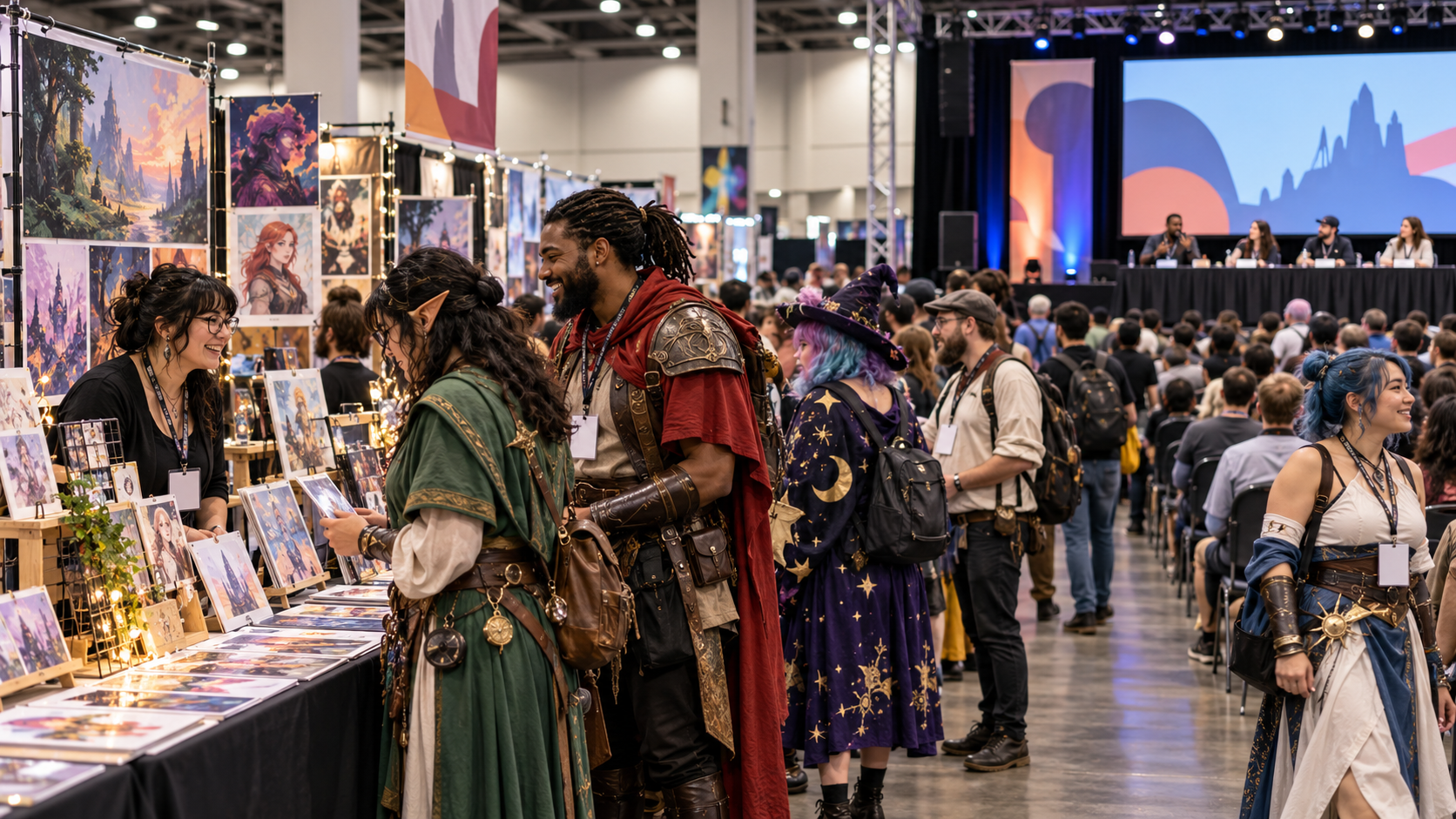
A fan convention is an organized gathering where people share interest in comics, science fiction, animation, games, film, television, books, or other cultural forms. Programming can include creator panels, screenings, workshops, gaming, competitions, autograph sessions, portfolio reviews, exhibits, and costume events. Some conventions focus tightly on one medium or community; others bring many fandoms into a large popular-culture marketplace. The defining feature is participation: attendees do not only watch a show but also discuss, collect, create, perform, and meet around it.
Convention organizers secure a venue, dates, insurance, permits, contractors, guests, exhibitors, programming, ticketing, security, accessibility, and technical services. The schedule must distribute crowds across rooms with different capacities. Exhibit halls need loading plans and sales rules, while panels need microphones, projection, moderation, and line management. Badge systems separate attendee types and access levels. Hotels, transit, food, and nearby public space can become part of the event's practical footprint even when they are not controlled directly by the organizer.
Comic-Con International's history illustrates how conventions can expand from focused gatherings into institutions that support exhibitions, awards, education, professional development, and many branches of popular art. Growth creates opportunity for creators and vendors but can also change a gathering's character. Large entertainment companies may command attention alongside independent artists and fan-run groups. The result is not purely commercial or purely grassroots; most conventions contain overlapping communities with different reasons for being there.
Codes of conduct define expectations for harassment, photography, costumes, props, queues, and prohibited behavior. Accessibility requires more than an entrance ramp: organizers consider seating, communication, mobility, sensory needs, service animals, and equal access to programs. Attendees also share responsibility by asking before photographs, keeping aisles clear, following staff directions, and respecting personal boundaries. A crowded celebratory environment does not suspend ordinary consent or make every costume a public object. The convention experience is shaped by scarcity. Popular panels have limited seats, guest appearances can change, and a badge may not guarantee access to every event. Experienced attendees plan priorities while leaving room for discovery. Smaller conventions may offer easier conversation and stronger local ties; large ones offer range and spectacle. Neither scale automatically creates a better community. A successful convention matches its promises to its capacity and gives fans, professionals, workers, and neighbors a safe structure in which enthusiasm can become shared culture. A practical way to read or discuss Fan Conventions is to separate the basic definition from the choices made in a particular example. Fan conventions combine scheduled programming with informal participation, allowing attendees to learn, shop, perform, create, meet, and discuss. Then identify who sets the relevant rules, which parts are creative decisions, and which parts follow from law, contracts, technology, or production limits. Examples that look similar on the surface can operate differently because their purpose, audience, timing, and surrounding agreements are different. A code of conduct should explain reporting and enforcement as well as prohibited behavior, because policy without a usable process offers limited protection. It is also useful to check whether a source is describing a formal industry category, an informal critical label, or one organization's current practice. Those distinctions prevent a memorable anecdote from becoming a false universal rule. The date and market matter too: tools, distribution systems, and standard agreements change, while older examples can preserve assumptions that no longer apply everywhere. When a claim sounds absolute, compare it with a second type of source and look for the conditions under which it is actually true. Finally, compare the visible result with the less visible work that produced it. The right scale depends on purpose: local events can offer intimacy and access, while large events provide breadth, infrastructure, and global attention. That approach keeps the explanation grounded while leaving room for reasonable disagreement about borderline cases.
Fan conventions combine scheduled programming with informal participation, allowing attendees to learn, shop, perform, create, meet, and discuss.
Venue capacity shapes badges, panel lines, fire limits, exhibit layouts, entrances, accessibility, security, and the number of simultaneous activities.
Guests and studios attract attention, while artist alleys, clubs, academic sessions, fan groups, and volunteers sustain many conventions' community character.
A code of conduct should explain reporting and enforcement as well as prohibited behavior, because policy without a usable process offers limited protection.
Admission grants entry under stated terms, not guaranteed access to every panel, autograph, product, or guest whose capacity is separately limited.
The right scale depends on purpose: local events can offer intimacy and access, while large events provide breadth, infrastructure, and global attention.
Explore more "Explainers"
Discover additional explainers across politics, science, business, technology, and other fields. Each explainer breaks down a complex idea into clear, everyday language—helping you better understand how major concepts, systems, and debates shape the world around us.