

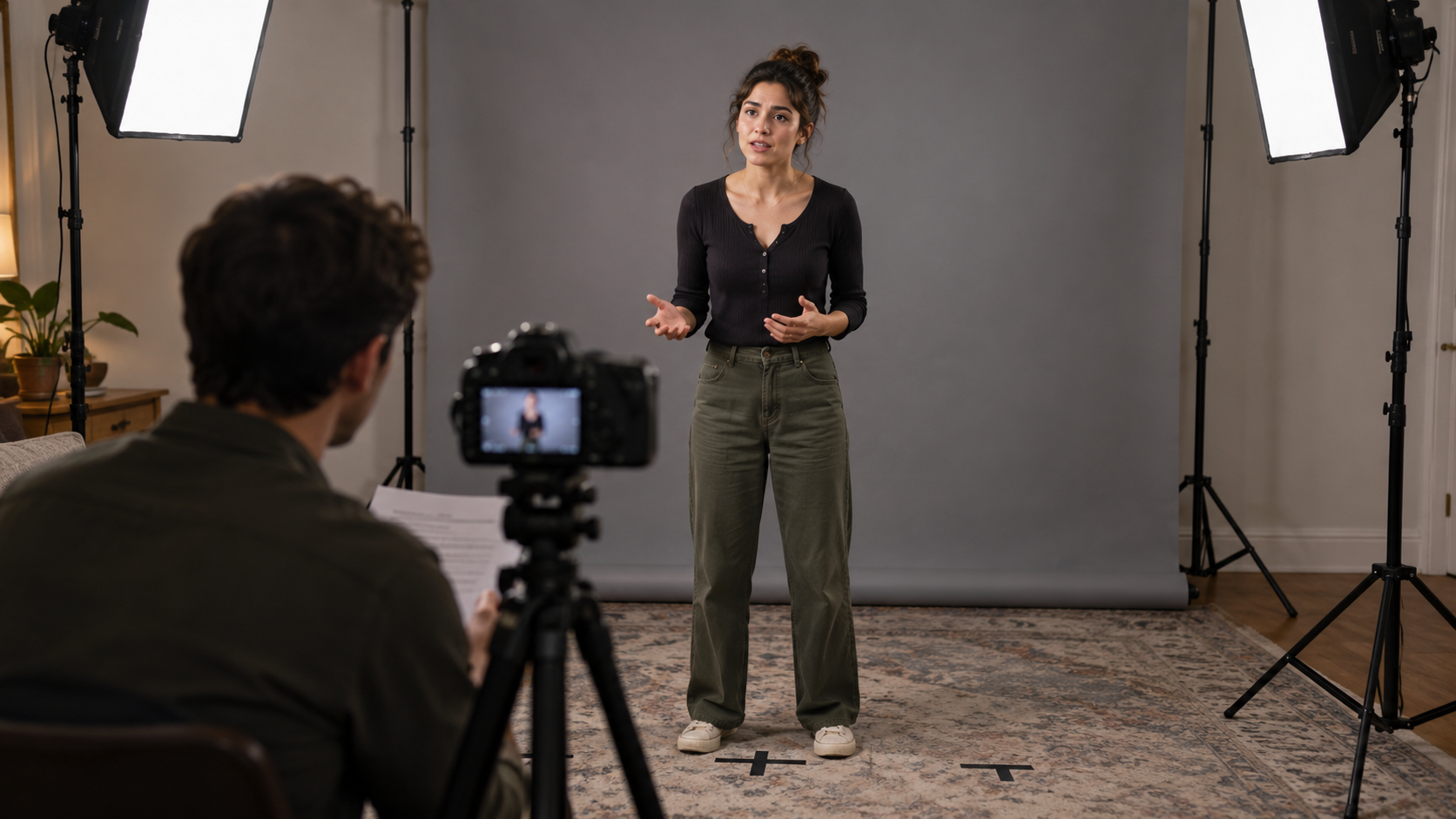
Acting Auditions Explainer
An acting audition is a structured opportunity for a performer to present an interpretation of a role to a casting team. It is not a neutral contest that ranks every actor from best to worst. The team is solving a particular production problem: who can play this character in the planned tone, schedule, budget, ensemble, and medium? Craft matters, but so do chemistry, age range, vocal or physical requirements, availability, and how a choice complements performers already cast.
The process often begins with a casting notice, role description, and sides selected from the script. A performer or representative submits materials, and selected actors may read in a room, on a live video call, or by self-tape. Instructions about framing, file naming, deadlines, scene partners, and requested takes help the team compare many submissions efficiently. Reading them closely is part of professional preparation, just as understanding the scene, making playable choices, and remaining responsive are part of the performance.
Casting directors organize the search and advise producers and directors, but final decisions may involve several people. An initial read can be followed by callbacks, chemistry reads, producer sessions, movement or music tests, and practical checks. Direction during a callback is not necessarily a correction; it may test range, adaptability, or a contrasting approach. A strong audition can still lose the role because another performer changes the ensemble balance or better satisfies a constraint that was invisible to applicants.
Self-taping widened access and flexibility, but it also shifted equipment, space, reading support, and file-management work toward performers. Clear sound, visible eyes, steady framing, and an uncluttered background matter more than elaborate production. Ethical rules and union agreements can also regulate notice, recording, retention, nudity, simulated sex, and other sensitive requirements. Legitimate casting should disclose necessary conditions without asking performers to create unsafe or exploitative material. The healthiest way to understand an audition is as a brief collaboration, not a prediction of an actor's entire career. Preparation improves control over the work, while the result remains partly outside the performer's control. Viewers of behind-the-scenes material should also remember that edited audition clips can omit context. The useful questions are what problem the production was trying to solve, what the actor communicated under the stated conditions, and how callbacks narrowed a field for one role rather than establishing a permanent hierarchy of talent. A practical way to read or discuss Acting Auditions is to begin with the basic definition and then identify the choices made in a particular example. Auditions evaluate an actor's interpretation in relation to a specific role, production style, schedule, and ensemble rather than talent in the abstract. Next, ask who sets the relevant rules, who performs the work, and which results follow from creative judgment, law, contracts, technology, budget, or production limits. Similar-looking examples can operate differently because their audience, market, format, timing, and agreements are different. Self-tapes should follow the requested technical instructions, but casting decisions usually depend more on clear performance than decorative production value. It also helps to distinguish a formal industry category from an informal critical label or one organization's current practice. That separation keeps a memorable anecdote from becoming a false universal rule. Dates and territories matter: tools, distribution systems, audience behavior, and standard agreements change, while older examples can preserve assumptions that no longer apply everywhere. When a claim sounds absolute, compare it with a second kind of source and look for the conditions under which the claim is true. Then trace the process from the visible result back through the less visible decisions, handoffs, and quality checks that produced it. Not booking a role can reflect fit, availability, or ensemble balance, so an audition result is not a comprehensive judgment of an actor's ability. Finally, compare the example with a contrasting case and note which part of the definition still holds. This method keeps the explanation grounded, highlights the people and systems behind the outcome, and leaves room for reasonable disagreement about hybrid or borderline cases.
Auditions evaluate an actor's interpretation in relation to a specific role, production style, schedule, and ensemble rather than talent in the abstract.
Casting teams may review headshots and reels before requesting sides, self-tapes, live reads, callbacks, chemistry sessions, or specialized tests.
A redirected take can reveal adaptability and range; it does not automatically mean the first interpretation was wrong.
Self-tapes should follow the requested technical instructions, but casting decisions usually depend more on clear performance than decorative production value.
Professional safeguards address consent, recording, sensitive material, and working conditions, and performers should be wary of requests that violate them.
Not booking a role can reflect fit, availability, or ensemble balance, so an audition result is not a comprehensive judgment of an actor's ability.
Explore more "Explainers"
Discover additional explainers across politics, science, business, technology, and other fields. Each explainer breaks down a complex idea into clear, everyday language—helping you better understand how major concepts, systems, and debates shape the world around us.