

Television Theme Songs Explainer
A television theme song is recurring music associated with a program, usually heard in an opening, closing, bumper, or title sequence. It can state genre, period, energy, or point of view before a scene begins. Some themes are instrumental signatures; others use lyrics that summarize a premise or attitude. Length varies from a brief sonic mark to a full song excerpt, and the same composition may have several arrangements as a series changes tone, cast, or running time.
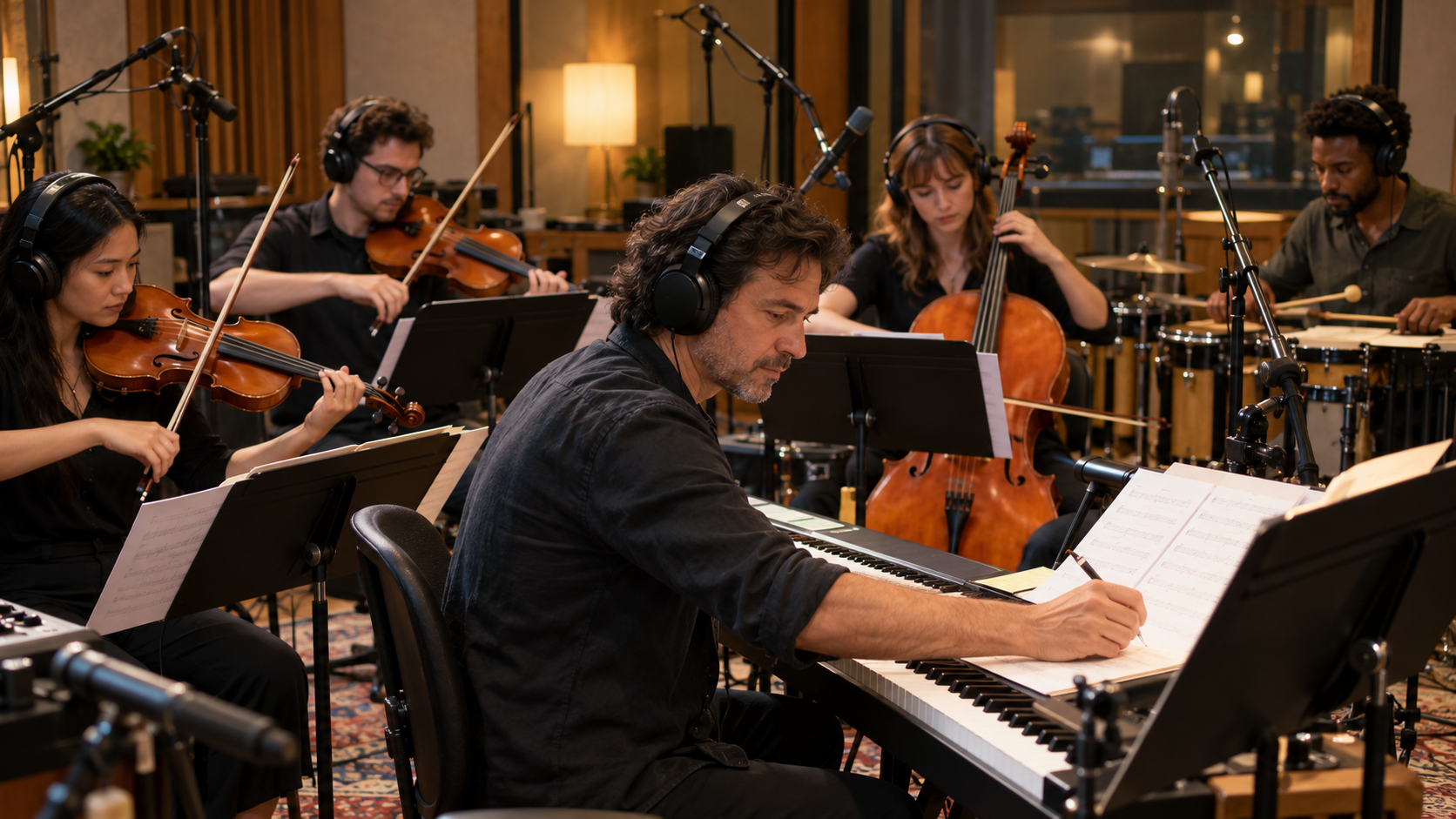
Composers and producers begin with the show's identity and the practical shape of the sequence. A melody must remain recognizable through different speakers and mixes, while rhythm may need to land on title reveals, cast credits, or visual cuts. Instrumentation can suggest intimacy, spectacle, comedy, suspense, or historical setting, but familiar conventions also create room for contrast. A cheerful theme can make a dark scene more unsettling when the juxtaposition is intentional.
The theme interacts with a larger title package made by editors, designers, directors, and visual-effects artists. Picture may be edited to existing music, music may be composed to locked timing, or both may evolve together. Networks and platforms can request shorter versions to preserve episode time or improve skip behavior. International, instrumental, holiday, or episode-specific variations can retain the melodic identity while changing orchestration and duration.
Legally and financially, the underlying composition and the particular sound recording are distinct works. A songwriter or composer creates the musical work, while performers and producers contribute to the recording. Commissioning, work-for-hire terms, synchronization, master-use rights, performance royalties, and credit depend on contracts and territory. Licensing a preexisting song can create a different cost and clearance path from commissioning an original theme. A successful theme is memorable, but memorability alone is not the whole job. It must coexist with dialogue, broadcast loudness, credits, and the program's evolving identity. Viewers can analyze how its melody, harmony, tempo, texture, and structure frame expectations. They can also notice when the series withholds, rearranges, or returns the theme: changing a familiar cue can make an episode feel unusual before the story explains why. A practical way to read or discuss Television Theme Songs is to begin with the basic definition and then identify the choices made in a particular example. A television theme is recurring music that identifies and frames a program in openings, closings, bumpers, or title sequences. Next, ask who sets the relevant rules, who performs the work, and which results follow from creative judgment, law, contracts, technology, budget, or production limits. Similar-looking examples can operate differently because their audience, market, format, timing, and agreements are different. The musical composition and the recorded performance are separate copyright-protected works that can be owned and licensed differently. It also helps to distinguish a formal industry category from an informal critical label or one organization's current practice. That separation keeps a memorable anecdote from becoming a false universal rule. Dates and territories matter: tools, distribution systems, audience behavior, and standard agreements change, while older examples can preserve assumptions that no longer apply everywhere. When a claim sounds absolute, compare it with a second kind of source and look for the conditions under which the claim is true. Then trace the process from the visible result back through the less visible decisions, handoffs, and quality checks that produced it. Changing or withholding a familiar theme can itself become a storytelling signal because repetition has trained the audience's expectations. Finally, compare the example with a contrasting case and note which part of the definition still holds. This method keeps the explanation grounded, highlights the people and systems behind the outcome, and leaves room for reasonable disagreement about hybrid or borderline cases.
A television theme is recurring music that identifies and frames a program in openings, closings, bumpers, or title sequences.
Melody, rhythm, arrangement, and timing must work with visual cuts, credit placement, dialogue, and the limited duration of the package.
Instrumental, lyrical, shortened, international, and episode-specific versions can share one recognizable musical identity.
The musical composition and the recorded performance are separate copyright-protected works that can be owned and licensed differently.
Original commissions and licensed preexisting songs create different approval, cost, credit, and long-term distribution questions.
Changing or withholding a familiar theme can itself become a storytelling signal because repetition has trained the audience's expectations.
Explore more "Explainers"
Discover additional explainers across politics, science, business, technology, and other fields. Each explainer breaks down a complex idea into clear, everyday language—helping you better understand how major concepts, systems, and debates shape the world around us.