

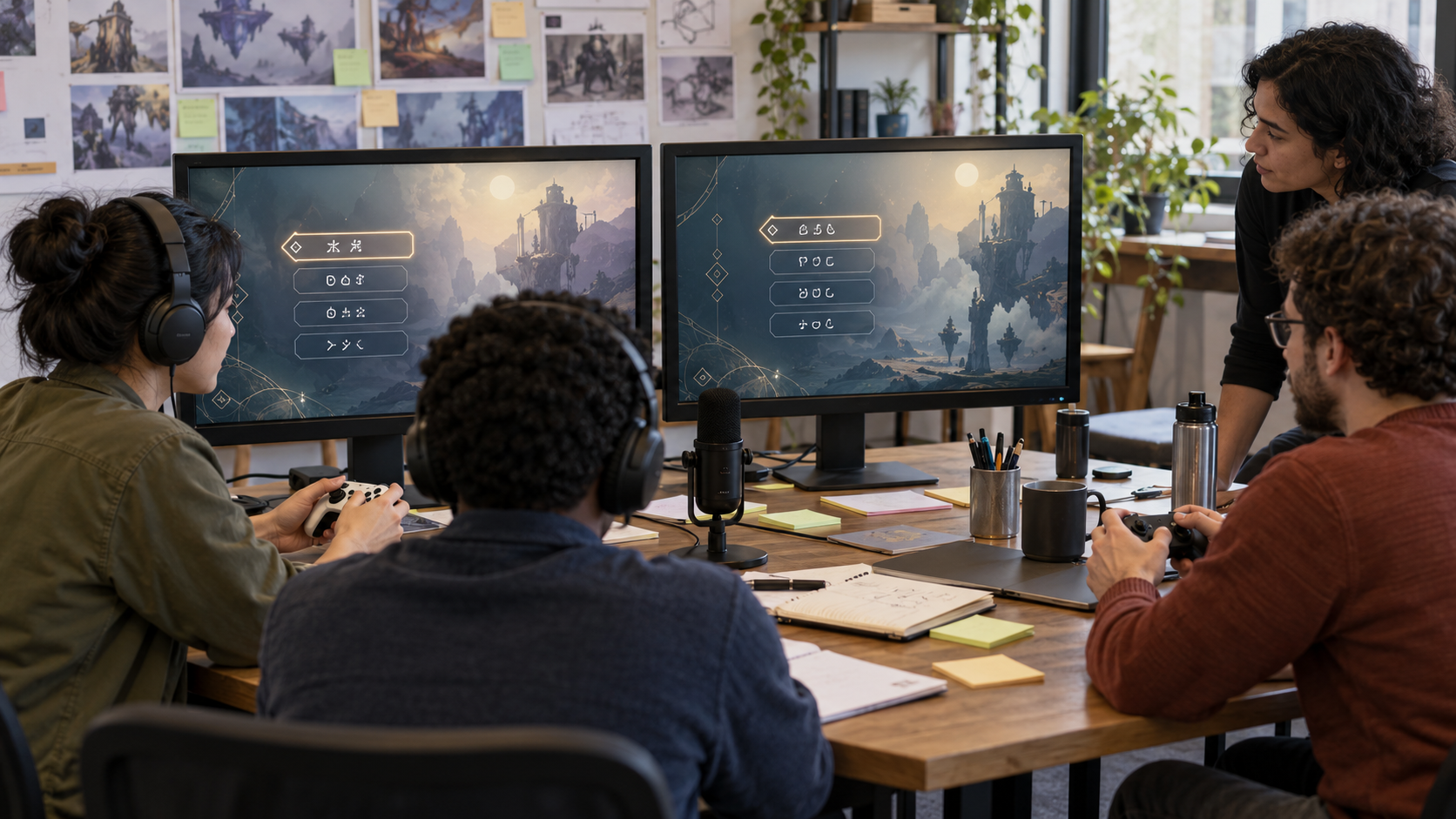
Game Localization Explainer
Game localization adapts a video game for players in another language or market. Translation is central, but the work can also include interface layout, subtitles, voice recording, graphics, store text, age-rating materials, input prompts, legal notices, cultural review, and technical testing. Because players act within a system, localized words must function in menus, tutorials, combat, dialogue choices, and branching stories rather than merely read well on a page.
The process begins with internationalization: designing code and content so languages can be changed without rebuilding the game. Text should be separated from executable logic, fonts must contain needed characters, and interfaces need room for expansion. Dates, numbers, names, sorting, plurals, and text direction vary across languages. Variables inserted into sentences can create grammatical problems when the original code assumes one word order or only singular and plural forms.
Translators need context. A short string such as charge could describe an attack, battery, price, accusation, or loading state. Screenshots, character notes, glossaries, style guides, previous translations, and access to the game reduce guessing. Consistency matters for item names, controls, and lore, but rigid word-for-word translation can damage humor or characterization. Transcreation may rebuild a joke or cultural reference so it performs the same function for the target audience.
Audio localization adds casting, direction, script adaptation, recording, editing, synchronization, and implementation. Subtitles need readable timing and line length, while dubbed dialogue may need to fit animation or gameplay windows. Localized assets must be reassembled without breaking triggers or file references. Linguistic testing finds mistranslations, truncation, missing characters, gender or number errors, overlapping interface elements, and lines that appear in the wrong situation. Localization is not a final cosmetic step. Decisions made in writing, interface design, code, and asset naming can make later languages easy or expensive. Cultural review should identify genuine barriers without assuming all players in a region share one view. A successful localization feels intentional because the language supports play, tone, and comprehension. It does not erase the work's origin; it builds a usable bridge to another audience and its expectations. A practical way to read or discuss Game Localization is to begin with the basic definition and then identify the choices made in a particular example. Game localization adapts language, interface, audio, graphics, store material, ratings information, and cultural context for another market. Next, ask who sets the relevant rules, who performs the work, and which results follow from creative judgment, law, contracts, technology, budget, or production limits. Similar-looking examples can operate differently because their audience, market, format, timing, and agreements are different. Transcreation preserves a joke or narrative function when literal wording would fail, while terminology consistency protects player comprehension. It also helps to distinguish a formal industry category from an informal critical label or one organization's current practice. That separation keeps a memorable anecdote from becoming a false universal rule. Dates and territories matter: tools, distribution systems, audience behavior, and standard agreements change, while older examples can preserve assumptions that no longer apply everywhere. When a claim sounds absolute, compare it with a second kind of source and look for the conditions under which the claim is true. Then trace the process from the visible result back through the less visible decisions, handoffs, and quality checks that produced it. Linguistic testing checks meaning in context along with truncation, missing glyphs, broken variables, layout overlap, and incorrect triggers. Finally, compare the example with a contrasting case and note which part of the definition still holds. This method keeps the explanation grounded, highlights the people and systems behind the outcome, and leaves room for reasonable disagreement about hybrid or borderline cases.
Game localization adapts language, interface, audio, graphics, store material, ratings information, and cultural context for another market.
Internationalization separates content from code and supports fonts, text direction, plurals, variables, dates, numbers, and flexible layouts.
Translators need screenshots, character context, glossaries, style guides, and gameplay access because isolated strings are often ambiguous.
Transcreation preserves a joke or narrative function when literal wording would fail, while terminology consistency protects player comprehension.
Localized voice production adds casting, adaptation, direction, recording, editing, synchronization, and implementation into the game build.
Linguistic testing checks meaning in context along with truncation, missing glyphs, broken variables, layout overlap, and incorrect triggers.
Explore more "Explainers"
Discover additional explainers across politics, science, business, technology, and other fields. Each explainer breaks down a complex idea into clear, everyday language—helping you better understand how major concepts, systems, and debates shape the world around us.