

Second Unit Filming Explainer
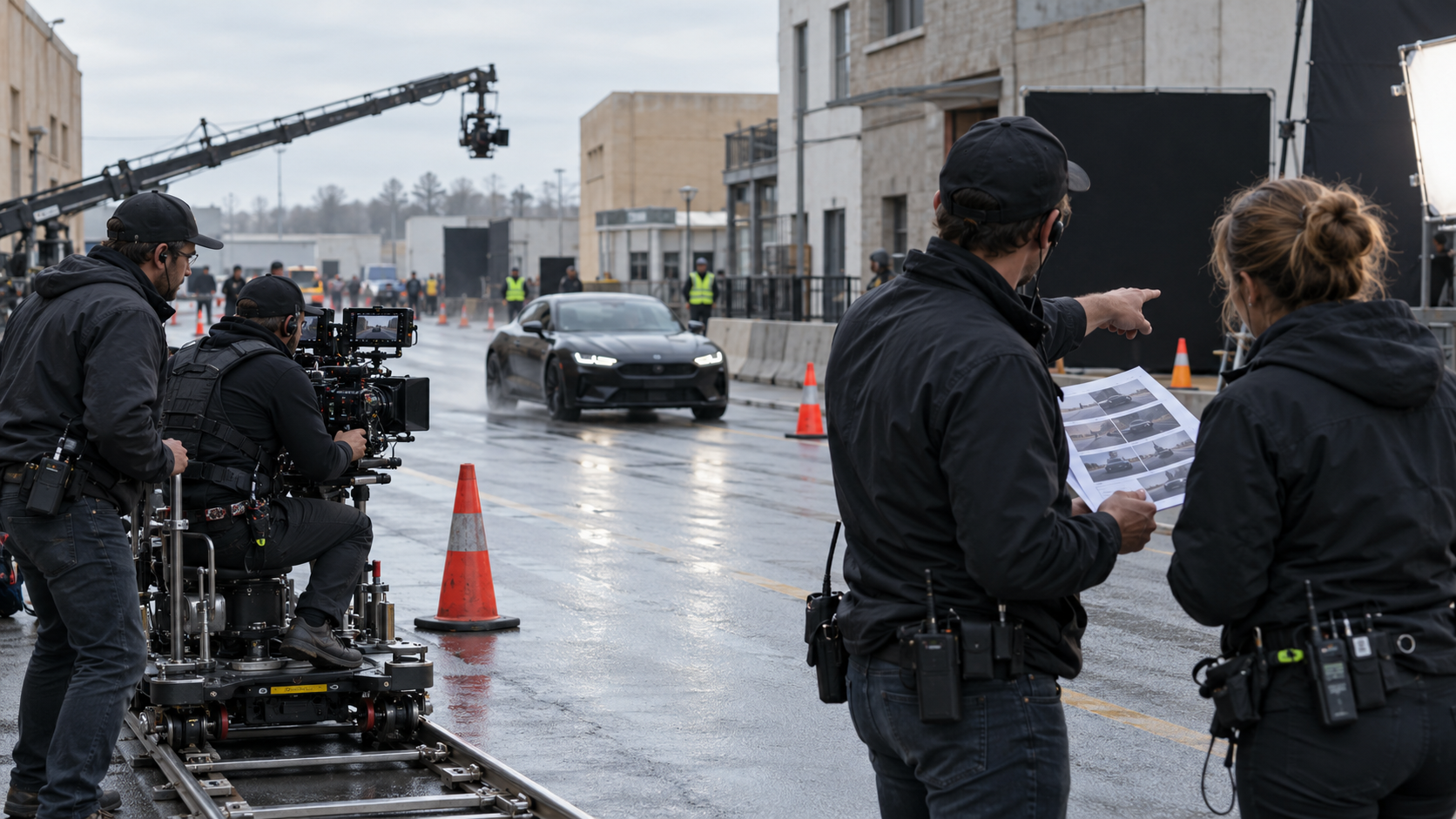
Second unit filming assigns selected material to a separate crew from the main production unit. The second unit may work at the same time, move to another location, or continue after principal photography. Typical assignments include action, stunts, vehicle work, landscapes, crowds, establishing views, inserts, visual-effects plates, and shots that do not require principal cast. The arrangement saves schedule time only when the separate work can be planned, staffed, and integrated without creating confusion or inconsistent footage.
The second unit has its own director and department leadership, but it works from the larger film's creative and technical plan. Storyboards, shot lists, lens information, camera and color settings, production design references, costume continuity, lighting tests, and editorial needs establish the target. The main director and producers decide what can be delegated. A complex action sequence may give the second-unit director substantial responsibility, while a small insert unit may capture only hands, props, or environmental details.
Parallel work creates logistical advantages and risks. The main unit can focus on dialogue and principal performance while another crew records material that would otherwise consume expensive days. Yet both units may need the same specialty equipment, location access, performers, vehicles, or effects personnel. Production management tracks budgets, travel, insurance, permits, safety, call sheets, and daily progress so that the solution does not duplicate costs or place connected shots on incompatible schedules.
Continuity is more than matching wardrobe. Weather, sun direction, camera height, lens distortion, movement speed, screen direction, set dressing, dust, damage, and performance intensity can reveal that shots were made by different teams. Editorial review and shared image pipelines help catch problems early. For hazardous stunts or aerial work, authority and communication must also be unmistakable: a second unit is not a lesser-safety unit, and its specialized crew may carry some of the production's highest risks. Audiences are not meant to notice the handoff between units. To evaluate the practice, look beyond the idea that one crew handles spectacle while another handles acting. Assignments vary by project, and principal actors may appear in second-unit work. The defining feature is organizational: a separate shooting unit completes approved portions of the same production. Its success depends on clear delegation, matching standards, accurate records, and a final edit that makes independently captured pieces feel like one continuous world. A practical way to read or discuss Second Unit Filming is to begin with the basic definition and then identify the choices made in a particular example. A second unit is a separate crew assigned to capture specific material for the same film or television production. Next, ask who sets the relevant rules, who performs the work, and which results follow from creative judgment, law, contracts, technology, budget, or production limits. Similar-looking examples can operate differently because their audience, market, format, timing, and agreements are different. Parallel filming can protect the main schedule, but shared cast, equipment, locations, and specialists still require careful coordination. It also helps to distinguish a formal industry category from an informal critical label or one organization's current practice. That separation keeps a memorable anecdote from becoming a false universal rule. Dates and territories matter: tools, distribution systems, audience behavior, and standard agreements change, while older examples can preserve assumptions that no longer apply everywhere. When a claim sounds absolute, compare it with a second kind of source and look for the conditions under which the claim is true. Then trace the process from the visible result back through the less visible decisions, handoffs, and quality checks that produced it. The unit succeeds when independently shot material cuts seamlessly into the film and meets the same creative and safety standards. Finally, compare the example with a contrasting case and note which part of the definition still holds. This method keeps the explanation grounded, highlights the people and systems behind the outcome, and leaves room for reasonable disagreement about hybrid or borderline cases.
A second unit is a separate crew assigned to capture specific material for the same film or television production.
Common work includes stunts, vehicles, landscapes, crowds, inserts, establishing shots, and visual-effects background plates.
The second-unit director follows the main production's story, visual references, technical settings, and editorial requirements.
Parallel filming can protect the main schedule, but shared cast, equipment, locations, and specialists still require careful coordination.
Continuity checks cover light, lenses, movement, design, weather, screen direction, and the exact state of costumes and props.
The unit succeeds when independently shot material cuts seamlessly into the film and meets the same creative and safety standards.
Explore more "Explainers"
Discover additional explainers across politics, science, business, technology, and other fields. Each explainer breaks down a complex idea into clear, everyday language—helping you better understand how major concepts, systems, and debates shape the world around us.