

Live Sports Broadcasting Explainer
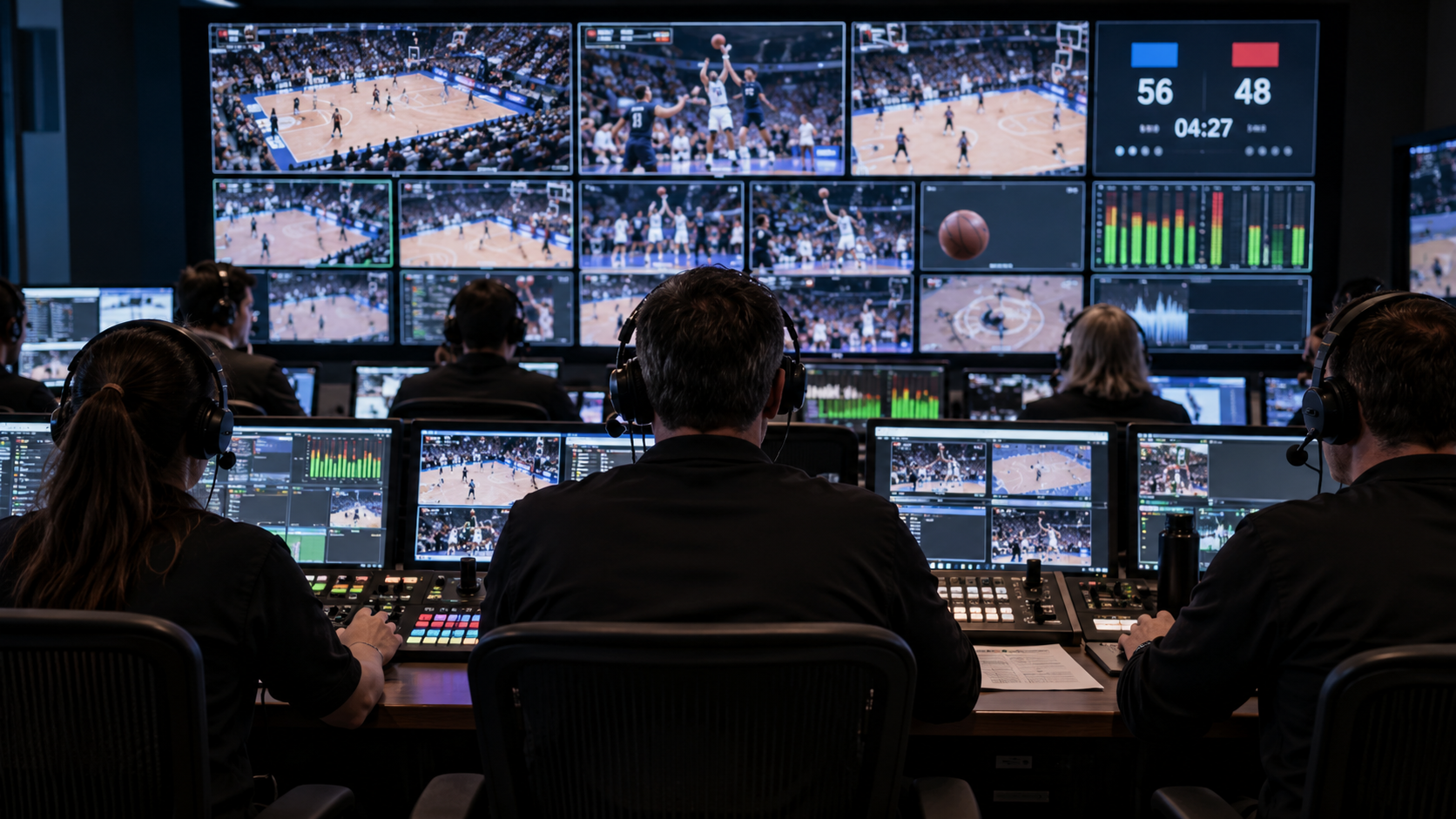
Live sports broadcasting transforms an event happening in real time into a coherent program for viewers elsewhere. The production may use handheld, hard, robotic, aerial, specialty, and high-frame-rate cameras; field microphones; commentary positions; replay servers; graphics; and a mobile or venue control room. Unlike scripted production, the crew cannot ask the competition to repeat a decisive moment. Preparation creates a flexible system capable of following action that remains genuinely unpredictable.
Before the event, the director and producer study the sport, venue, schedule, storylines, camera positions, communication plan, and commercial format. Engineers test signal paths, synchronization, color, audio, intercom, power, backup systems, and transmission. Camera operators receive coverage responsibilities so the director has both the main action and useful alternatives. Researchers and statisticians prepare verified information, pronunciations, records, and possible graphic elements without knowing which stories the game will activate.
During play, the director selects the live camera while the technical director switches sources and replay operators mark angles for immediate review. The producer manages timing, story priorities, breaks, and coordination with announcers. Audio mixers balance commentary, crowd, field sound, officials, music, and effects. Graphics operators add score, clock, names, statistics, and explanatory diagrams, but every element must be timely and accurate without covering important action.
Replay creates a second editorial layer. One angle may establish what happened; another may clarify technique, officiating, emotion, or injury. The team chooses speed, sequence, and return to live action under seconds of pressure. Broadcast delay can support technical routing or standards requirements, but it does not convert the program into a fully editable recording. The control room must recognize when the live event has resumed and avoid missing a restart while explaining the past play. The finished broadcast feels unified because specialized roles communicate through rehearsed language and intercom channels. Rights agreements determine where the event can be shown, which cameras or feeds are available, and how clips can be reused. Viewers can assess the craft by noticing whether coverage anticipates action, replays answer real questions, audio preserves atmosphere, and graphics clarify rather than distract. The best production makes an enormous real-time operation feel like an effortless point of view. A practical way to read or discuss Live Sports Broadcasting is to begin with the basic definition and then identify the choices made in a particular example. Live sports production follows an unscripted event with coordinated cameras, audio, replay, graphics, commentary, and transmission. Next, ask who sets the relevant rules, who performs the work, and which results follow from creative judgment, law, contracts, technology, budget, or production limits. Similar-looking examples can operate differently because their audience, market, format, timing, and agreements are different. Replay angles can establish the event, explain technique or officiating, and show reaction, but must not obscure resumed action. It also helps to distinguish a formal industry category from an informal critical label or one organization's current practice. That separation keeps a memorable anecdote from becoming a false universal rule. Dates and territories matter: tools, distribution systems, audience behavior, and standard agreements change, while older examples can preserve assumptions that no longer apply everywhere. When a claim sounds absolute, compare it with a second kind of source and look for the conditions under which the claim is true. Then trace the process from the visible result back through the less visible decisions, handoffs, and quality checks that produced it. Rights and feed arrangements determine distribution and reuse even when the on-site technical production is shared. Finally, compare the example with a contrasting case and note which part of the definition still holds. This method keeps the explanation grounded, highlights the people and systems behind the outcome, and leaves room for reasonable disagreement about hybrid or borderline cases.
Live sports production follows an unscripted event with coordinated cameras, audio, replay, graphics, commentary, and transmission.
Venue plans, camera assignments, research, communications, signal tests, power, and backups are prepared before competition begins.
The director chooses the live image while technical, replay, audio, graphics, and producing teams execute connected decisions.
Replay angles can establish the event, explain technique or officiating, and show reaction, but must not obscure resumed action.
Commentary and graphics depend on verified names, pronunciations, clocks, scores, statistics, and rapidly changing context.
Rights and feed arrangements determine distribution and reuse even when the on-site technical production is shared.
Explore more "Explainers"
Discover additional explainers across politics, science, business, technology, and other fields. Each explainer breaks down a complex idea into clear, everyday language—helping you better understand how major concepts, systems, and debates shape the world around us.