

Concert Setlists Explainer
A concert setlist is the planned order of songs or pieces in a live performance. It shapes pace, contrast, emotional progression, audience recognition, and the physical demands placed on performers. An opening number must establish the show quickly; slower or unfamiliar material may need careful placement; an encore can function as a final release rather than a literal surprise. The list is creative, but it is also a working document that coordinates lighting, video, sound, instrument changes, staging, and time.
Artists build sets around the occasion. A headline tour, festival slot, support appearance, club show, broadcast, and private event offer different durations, audience expectations, production resources, and curfews. New material may be balanced with familiar songs. Tempo, key, tuning, vocal range, choreography, costume changes, spoken moments, and travel fatigue affect sequence. Medleys or shortened arrangements can cover more repertoire, while extended improvisation requires space elsewhere in the schedule.
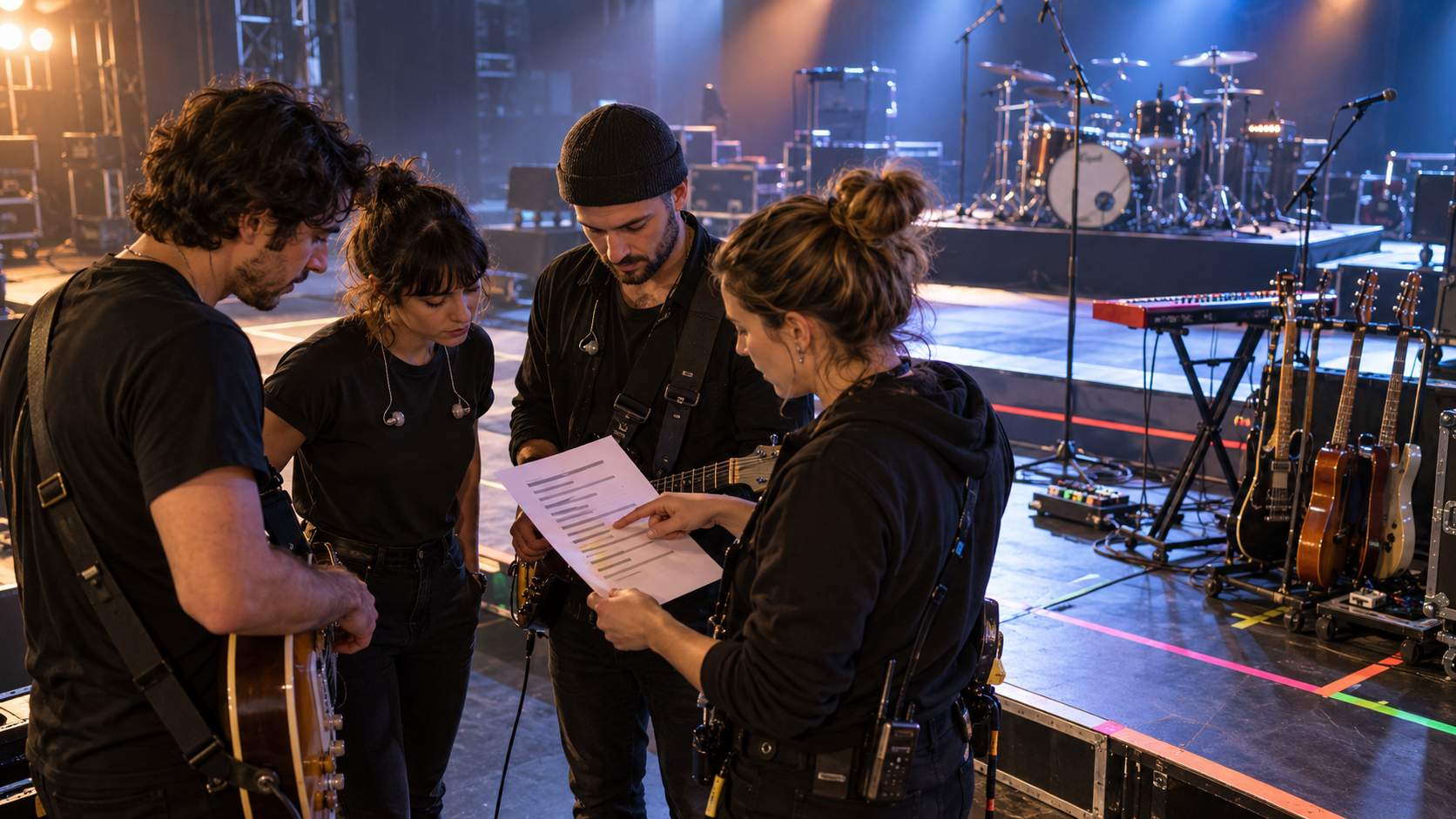
The production version of a setlist may contain far more than titles. It can mark count-ins, transitions, playback cues, lighting looks, video content, instrument swaps, special effects, guest appearances, and emergency cuts. Different departments may use synchronized cue numbers so a last-minute change is understood throughout the crew. Printed lists on stage are often concise, while show-control files, console scenes, and run-of-show documents hold detailed technical information.
A set can change because of audience response, weather, technical trouble, performer condition, venue limits, or artistic impulse. Some shows keep flexible slots or alternate songs ready. Freedom still depends on communication: an unannounced change can leave a guitar in the wrong tuning or trigger the wrong visual. Rehearsal establishes safe options so spontaneity does not surprise every department. Curfews and overtime costs also make the ending a practical deadline. Setlists have an administrative life after the performance. In many rights systems, accurate reporting helps performing-rights organizations distribute live royalties to songwriters and publishers. Covers, medleys, and improvised pieces may require correct identification. Fan-posted lists can document memory but are not necessarily the official performance report. To understand a setlist, read it as a design for audience experience, a cue map for a temporary production, and a record connecting performed music to its creators. A practical way to read or discuss Concert Setlists is to begin with the basic definition and then identify the choices made in a particular example. A setlist orders a live performance to manage energy, contrast, familiarity, narrative, and the physical needs of the artists. Next, ask who sets the relevant rules, who performs the work, and which results follow from creative judgment, law, contracts, technology, budget, or production limits. Similar-looking examples can operate differently because their audience, market, format, timing, and agreements are different. Flexible songs and rehearsed alternates allow response to the room without leaving technical departments unprepared. It also helps to distinguish a formal industry category from an informal critical label or one organization's current practice. That separation keeps a memorable anecdote from becoming a false universal rule. Dates and territories matter: tools, distribution systems, audience behavior, and standard agreements change, while older examples can preserve assumptions that no longer apply everywhere. When a claim sounds absolute, compare it with a second kind of source and look for the conditions under which the claim is true. Then trace the process from the visible result back through the less visible decisions, handoffs, and quality checks that produced it. Accurate set reporting helps music-rights organizations direct live-performance royalties to the relevant writers and publishers. Finally, compare the example with a contrasting case and note which part of the definition still holds. This method keeps the explanation grounded, highlights the people and systems behind the outcome, and leaves room for reasonable disagreement about hybrid or borderline cases.
A setlist orders a live performance to manage energy, contrast, familiarity, narrative, and the physical needs of the artists.
Venue type, slot length, curfew, audience, repertoire, vocal range, tuning, choreography, and production scale influence the sequence.
Crew versions can include cue numbers for lighting, video, playback, instruments, effects, guests, transitions, and contingency cuts.
Flexible songs and rehearsed alternates allow response to the room without leaving technical departments unprepared.
The performed list can differ from the printed plan when timing, safety, weather, health, or artistic judgment changes the show.
Accurate set reporting helps music-rights organizations direct live-performance royalties to the relevant writers and publishers.
Explore more "Explainers"
Discover additional explainers across politics, science, business, technology, and other fields. Each explainer breaks down a complex idea into clear, everyday language—helping you better understand how major concepts, systems, and debates shape the world around us.