

Touring Riders Explainer
A touring rider is a set of additional terms attached to a performance agreement. It translates the booking into practical requirements for staging, sound, lighting, power, instruments, labor, security, transport, dressing rooms, food, accessibility, schedules, and safety. Riders are often discussed through extravagant anecdotes, but their central purpose is operational: each venue needs enough information to prepare a show consistently, and the touring party needs to know which local resources will actually be available.
The technical rider may include stage dimensions, weight limits, electrical service, audio inputs, speaker coverage, microphone and stand lists, monitor mixes, backline, lighting positions, video formats, communications, rigging, and crew calls. A stage plot shows where performers and equipment are placed; an input list maps sources to the sound system. Larger productions add drawings, network requirements, truck access, barricades, pyrotechnic conditions, or detailed changeover procedures.
The hospitality rider addresses rooms, meals, water, dietary needs, towels, local transport, laundry, credentials, guest access, and other working conditions. These provisions support long days and frequent travel, but they remain part of a negotiation rather than an unlimited shopping list. Requirements should be current, proportional, and clear about quantities and timing. Waste and confusion increase when an old rider is copied forward after the production or personnel have changed.
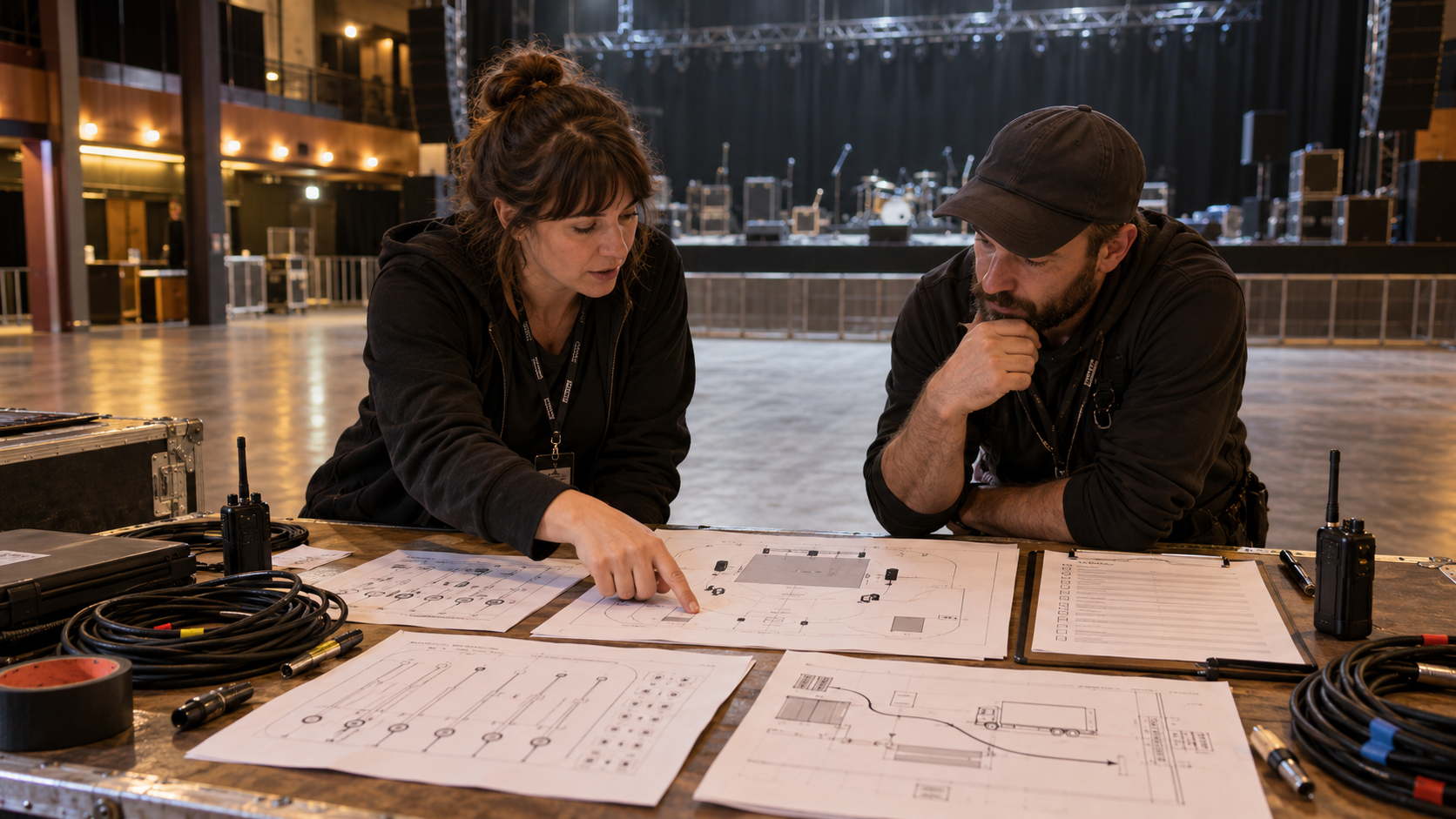
Advance work is the conversation that makes the document usable. Tour and venue representatives compare the rider with the building, identify substitutions, confirm costs, assign responsibilities, and record exceptions. A small venue may offer an equivalent console or different backline; the production decides what is acceptable before arrival. Unresolved structural, power, labor, or safety issues require more than a casual substitution because they can affect the show's feasibility and legal responsibilities. A rider does not replace risk assessment or local law. Travel, rest, noise, manual handling, special effects, crowd movement, and emergency planning require qualified review. To read a rider responsibly, separate essential show and welfare conditions from preferences, then check what the signed agreement incorporates. The successful rider is not the most demanding one. It is the document that gives both sides accurate, prioritized information and supports a safe performance without preventable surprises. A practical way to read or discuss Touring Riders is to begin with the basic definition and then identify the choices made in a particular example. A rider adds practical production and working conditions to the main performance contract for each tour date. Next, ask who sets the relevant rules, who performs the work, and which results follow from creative judgment, law, contracts, technology, budget, or production limits. Similar-looking examples can operate differently because their audience, market, format, timing, and agreements are different. The advance process compares the document with the venue and records approved equivalents, costs, responsibilities, and exceptions. It also helps to distinguish a formal industry category from an informal critical label or one organization's current practice. That separation keeps a memorable anecdote from becoming a false universal rule. Dates and territories matter: tools, distribution systems, audience behavior, and standard agreements change, while older examples can preserve assumptions that no longer apply everywhere. When a claim sounds absolute, compare it with a second kind of source and look for the conditions under which the claim is true. Then trace the process from the visible result back through the less visible decisions, handoffs, and quality checks that produced it. Contract language, risk assessment, local rules, and qualified safety decisions remain controlling when convenience conflicts with safety. Finally, compare the example with a contrasting case and note which part of the definition still holds. This method keeps the explanation grounded, highlights the people and systems behind the outcome, and leaves room for reasonable disagreement about hybrid or borderline cases.
A rider adds practical production and working conditions to the main performance contract for each tour date.
Technical sections can specify stage, power, sound, lighting, backline, inputs, rigging, video, communications, labor, and access.
Hospitality sections cover dressing rooms, food, water, transport, credentials, accessibility, towels, and other welfare needs.
The advance process compares the document with the venue and records approved equivalents, costs, responsibilities, and exceptions.
Outdated or unprioritized riders cause waste, so touring teams should revise requirements as personnel and production change.
Contract language, risk assessment, local rules, and qualified safety decisions remain controlling when convenience conflicts with safety.
Explore more "Explainers"
Discover additional explainers across politics, science, business, technology, and other fields. Each explainer breaks down a complex idea into clear, everyday language—helping you better understand how major concepts, systems, and debates shape the world around us.