

Concert Soundchecks Explainer
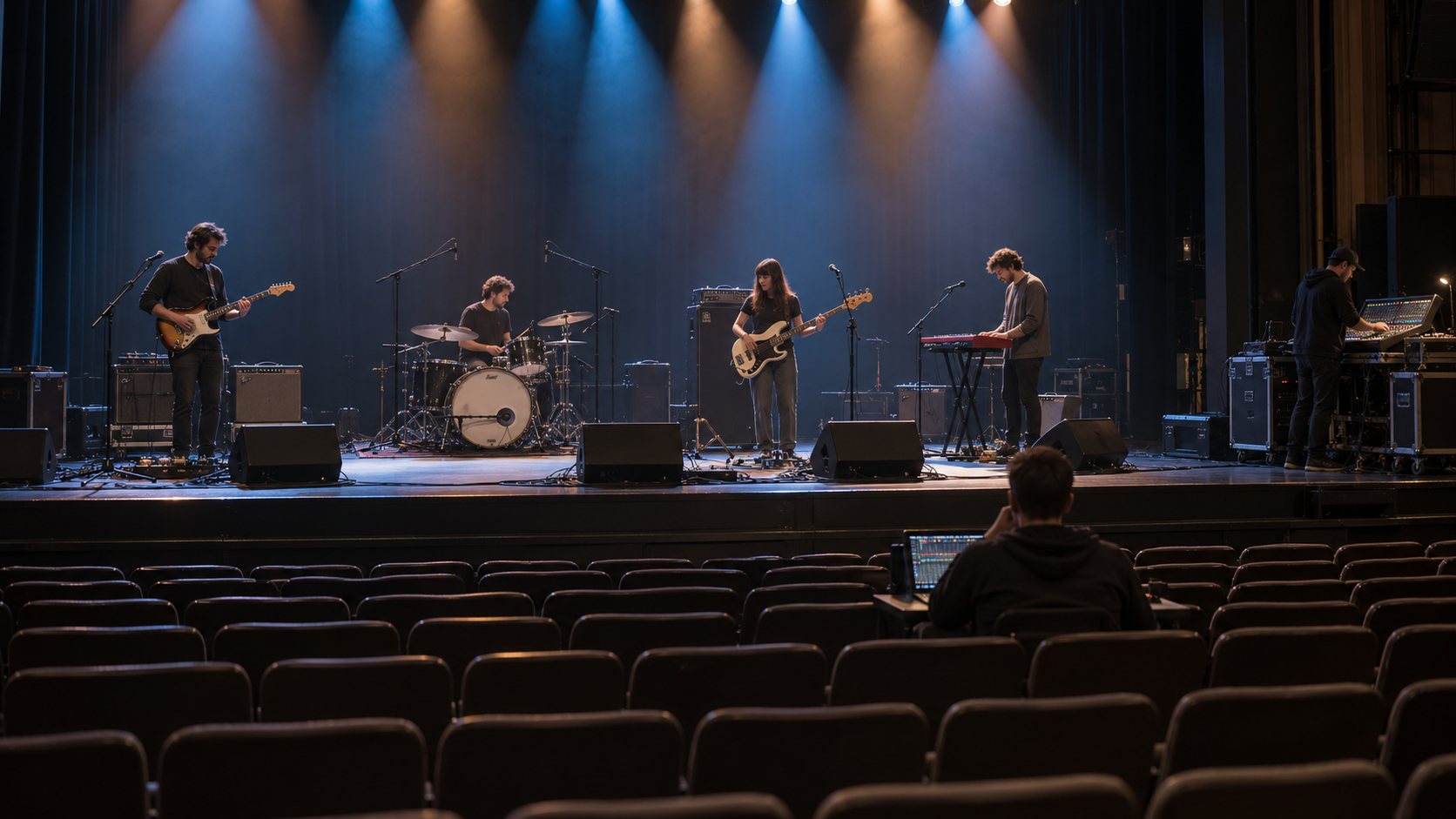
A concert soundcheck is a pre-show process in which performers and audio crews test the performance system in the actual venue. It confirms that microphones, instruments, direct boxes, cables, stage boxes, consoles, amplifiers, speakers, and monitors are connected and functioning. It also gives the front-of-house engineer and performers a chance to shape workable mixes before an audience arrives. A line check is usually a narrower signal verification.
Crews commonly begin one input at a time. The engineer sets gain so each source has useful level without avoidable noise or clipping, checks polarity and routing, and listens for hum, distortion, or faulty hardware. The band then plays together so balance, equalization, dynamics, effects, and transitions can be judged in context. A song with representative vocals, dynamics, and instrumentation is more useful than random playing because it tests realistic demands.
Stage monitoring is a separate listening problem. Wedges or in-ear systems must give performers the cues they need without creating excessive volume, feedback, or isolation. Requests are communicated precisely—more vocal in one mix is different from more vocal everywhere. The monitor engineer manages those individual balances while front of house shapes the audience mix. Small venues may combine roles, but the two perspectives remain different.
An empty room does not behave exactly like a full one. People absorb sound, temperature changes equipment and instruments, and show volume can differ from rehearsal. The soundcheck therefore establishes a controlled starting point rather than a frozen final mix. Engineers save console scenes, mark microphone positions, verify playback and talkback, rehearse cues, and note problem frequencies. Festivals may allow only a short check or line check between acts. Soundcheck also tests communication and stage discipline. Musicians need to arrive, set up, and respond in sequence; engineers need accurate stage plots and input lists; production needs enough time before doors. Running every song can waste time, while skipping the difficult elements leaves predictable risks. A successful check ends when signal paths, monitoring, key balance, and show cues are dependable enough for the crew to adapt once the room and performance become live. A practical way to read or discuss Concert Soundchecks is to begin with the basic definition and then identify the choices made in a particular example. Soundcheck verifies the complete performance system and develops starting mixes for the stage and audience. Next, ask who sets the relevant rules, who performs the work, and which results follow from creative judgment, law, contracts, technology, budget, or production limits. Similar-looking examples can operate differently because their audience, market, format, timing, and agreements are different. Monitor mixes serve performer needs, while the front-of-house mix serves listeners in the room. It also helps to distinguish a formal industry category from an informal critical label or one organization's current practice. That separation keeps a memorable anecdote from becoming a false universal rule. Dates and territories matter: tools, distribution systems, audience behavior, and standard agreements change, while older examples can preserve assumptions that no longer apply everywhere. Because the concept sits inside a larger workflow, examine what comes before and after it, which records move between stages, and where responsibility changes hands. This broader view prevents one visible task from being mistaken for the entire system. When a claim sounds absolute, compare it with a second kind of source and look for the conditions under which the claim is true. Then trace the process from the visible result back through the less visible decisions, handoffs, and quality checks that produced it. Accurate riders, timely arrival, concise communication, and representative material make limited check time more useful. Finally, compare the example with a contrasting case and note which part of the definition still holds. This method keeps the explanation grounded, highlights the people and systems behind the outcome, and leaves room for reasonable disagreement about hybrid or borderline cases.
Soundcheck verifies the complete performance system and develops starting mixes for the stage and audience.
A line check confirms individual signal paths; a fuller soundcheck evaluates the ensemble in realistic musical context.
Gain, routing, polarity, noise, feedback, equalization, dynamics, effects, playback, and cues may all be tested.
Monitor mixes serve performer needs, while the front-of-house mix serves listeners in the room.
An empty venue differs from a full one, so saved settings remain a starting point for active show mixing.
Accurate riders, timely arrival, concise communication, and representative material make limited check time more useful.
Explore more "Explainers"
Discover additional explainers across politics, science, business, technology, and other fields. Each explainer breaks down a complex idea into clear, everyday language—helping you better understand how major concepts, systems, and debates shape the world around us.