

Opening Acts Explainer
An opening act, also called a support act, performs before the featured headliner on a concert bill. The role can help introduce an artist to a larger or related audience, establish the evening's energy, and add value to the event. It is not a single standardized career stage: local artists, established peers, label partners, contest winners, and specially invited performers can all open under different agreements.
Selection involves musical compatibility, audience overlap, market strategy, relationships, availability, and cost. A support act may join an entire tour, one leg, or a single local date. Billing size and placement communicate hierarchy, but the contract governs actual obligations. Announcements, ticket links, interviews, social posts, and guest-list commitments may be coordinated across teams. The opener should never assume access or promotional treatment that has not been agreed.
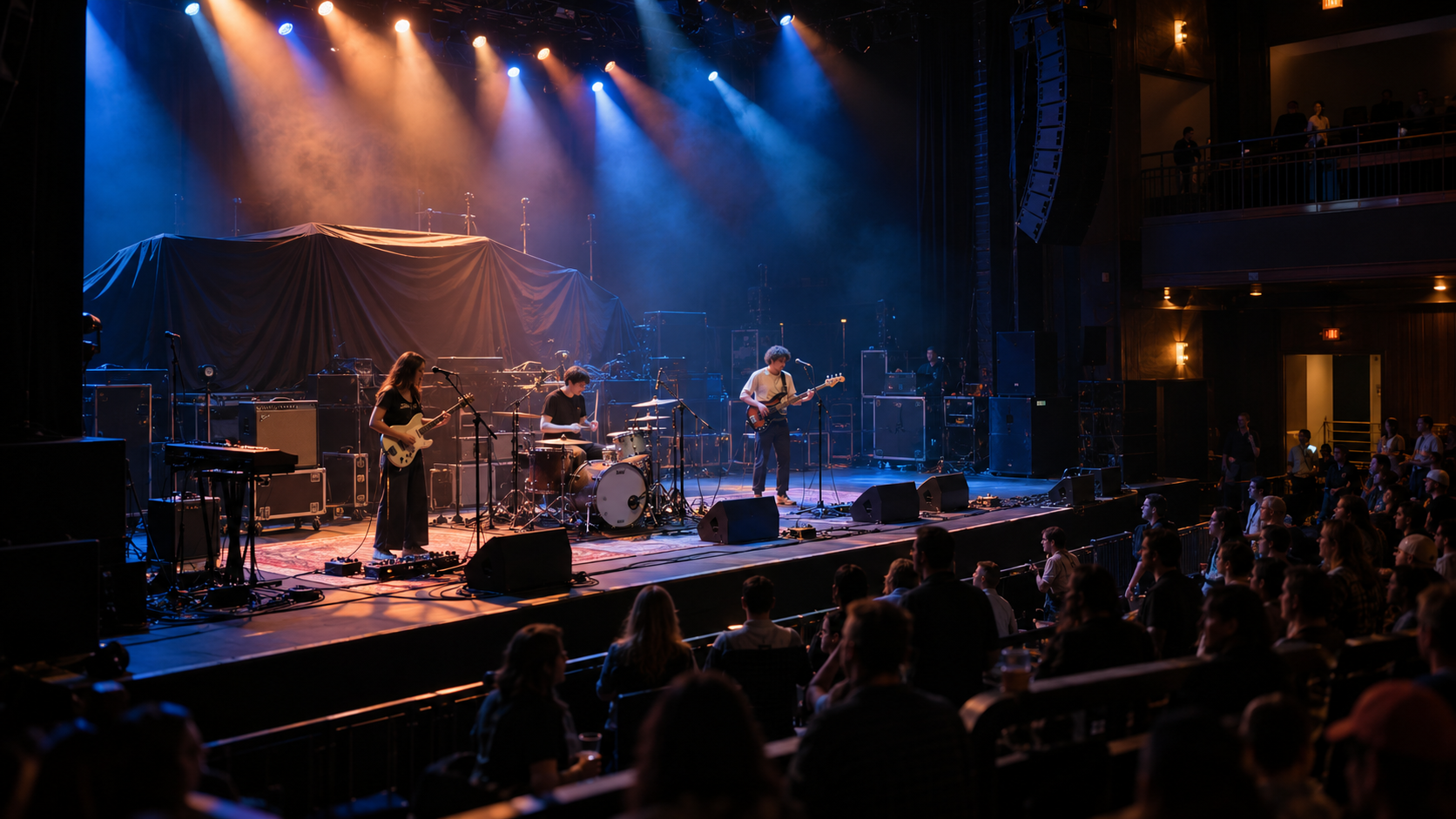
The show-day schedule is tightly structured. Support acts commonly receive shorter sets, less stage space, smaller production packages, and limited soundcheck time. Backline may be shared to speed changeovers, while personal instruments and essential items travel with the artist. Set length, start time, hard stop, clear-stage time, credentials, parking, dressing space, hospitality, recording, and merchandise terms should be confirmed during the advance.
Compensation varies widely. An opener might receive a flat fee, expense support, a negotiated tour deal, a share, or in some controversial arrangements pay for access to the bill. Whatever the model, travel, crew, accommodation, equipment, commissions, taxes, and merchandise conditions affect the real outcome. Exposure is uncertain and cannot substitute for clear accounting. Artists and managers should evaluate the whole opportunity rather than the audience size alone. Opening well is a craft of focus. The act must deliver a persuasive identity within limited time, respect stage and curfew rules, communicate with local crews, and clear equipment efficiently. That does not require imitating the headliner or suppressing personality. The strongest support relationship sets accurate expectations, gives the opener the tools promised, and treats the early audience as part of the show rather than as an obstacle before the main event. A practical way to read or discuss Opening Acts is to begin with the basic definition and then identify the choices made in a particular example. Opening or support acts perform before the headliner and can join one date, one tour leg, or the full route. Next, ask who sets the relevant rules, who performs the work, and which results follow from creative judgment, law, contracts, technology, budget, or production limits. Similar-looking examples can operate differently because their audience, market, format, timing, and agreements are different. Limited soundcheck, stage space, and changeover time make preparation and shared-backline details especially important. It also helps to distinguish a formal industry category from an informal critical label or one organization's current practice. That separation keeps a memorable anecdote from becoming a false universal rule. Dates and territories matter: tools, distribution systems, audience behavior, and standard agreements change, while older examples can preserve assumptions that no longer apply everywhere. Because the concept sits inside a larger workflow, examine what comes before and after it, which records move between stages, and where responsibility changes hands. This broader view prevents one visible task from being mistaken for the entire system. When a claim sounds absolute, compare it with a second kind of source and look for the conditions under which the claim is true. Then trace the process from the visible result back through the less visible decisions, handoffs, and quality checks that produced it. Professional support sets protect the schedule while allowing the opening artist to present a clear creative identity. Finally, compare the example with a contrasting case and note which part of the definition still holds. This method keeps the explanation grounded, highlights the people and systems behind the outcome, and leaves room for reasonable disagreement about hybrid or borderline cases.
Opening or support acts perform before the headliner and can join one date, one tour leg, or the full route.
Audience fit, music, market strategy, relationships, availability, cost, and promotion influence the selection.
Support deals should define set length, billing, production, access, hospitality, merchandise, recording, and payment.
Limited soundcheck, stage space, and changeover time make preparation and shared-backline details especially important.
A large audience does not guarantee financial or career value once travel, crew, commissions, and other costs are counted.
Professional support sets protect the schedule while allowing the opening artist to present a clear creative identity.
Explore more "Explainers"
Discover additional explainers across politics, science, business, technology, and other fields. Each explainer breaks down a complex idea into clear, everyday language—helping you better understand how major concepts, systems, and debates shape the world around us.