

Concert Stage Managers Explainer
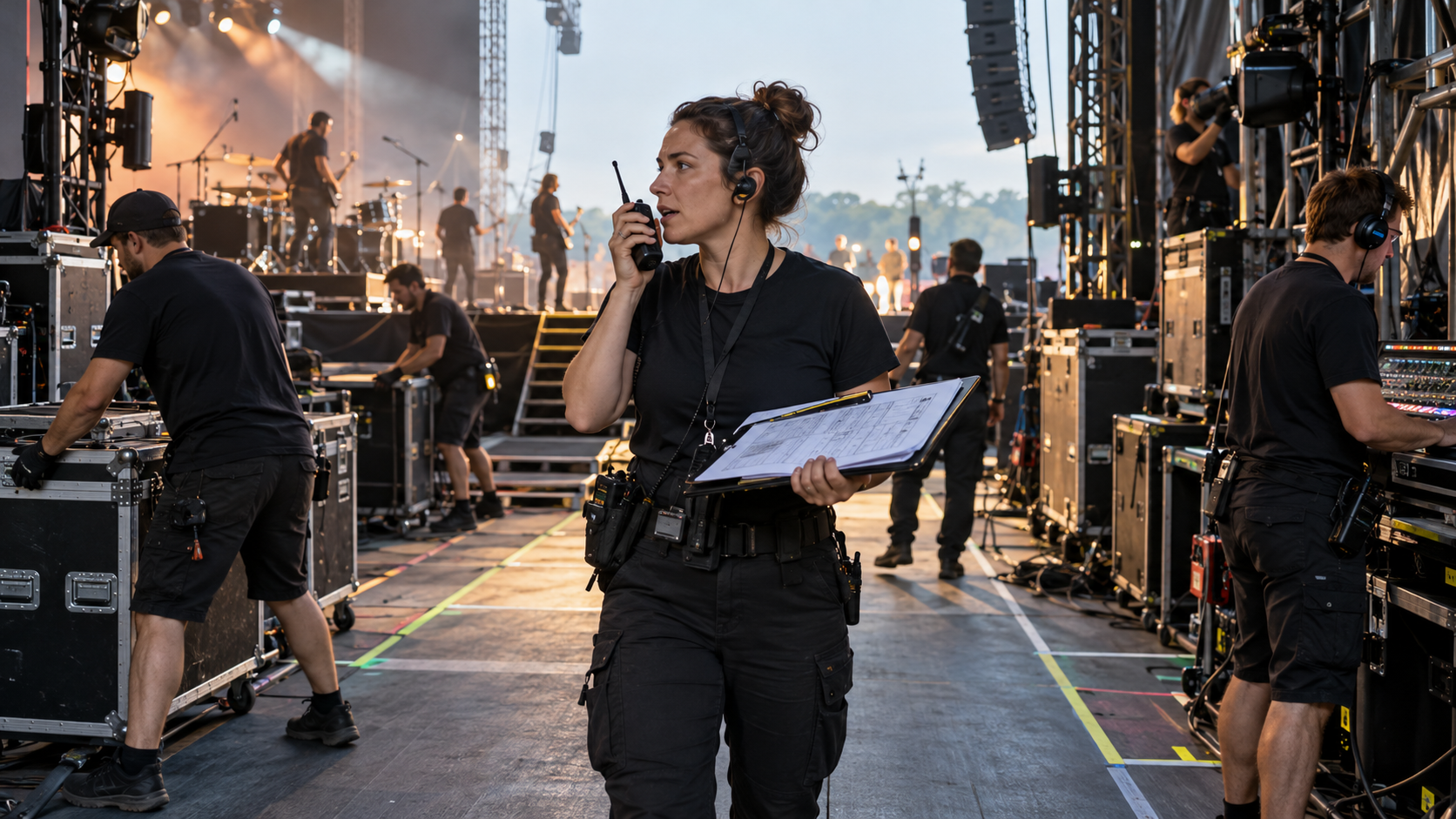
Concert Stage Managers describes a specific part of the entertainment workflow, but the visible result can hide the system behind it. A concert stage manager coordinates activity on and immediately around a live music stage. The role turns schedules and production plans into orderly access, setup, soundcheck, performer movement, cues, changeovers, and show timing while maintaining a safe working area. Looking first at the function rather than a famous example makes it easier to see what the term includes and what belongs to a neighboring role or process.
In practice, the work proceeds through a sequence of information, decisions, checks, and handoffs. The stage manager reviews riders and plots, confirms load-in sequence and credentials, coordinates department setup, runs checks and briefings, controls who enters the stage, calls or relays cues, tracks set length and curfew, manages changeovers, and documents incidents and carryover needs. The exact tools may change, but a dependable workflow always makes the current instruction, responsible person, and approved result clear enough for someone else to verify.
Responsibility is distributed rather than concentrated in a single job title. Artists, tour and production managers, venue staff, stagehands, audio, lighting, video, backline, rigging, security, hospitality, runners, medics, promoters, fire officials, and accessibility teams depend on clear stage authority. This network matters because entertainment projects combine creative judgment with contracts, technology, labor, safety, money, and deadlines, and no one department can independently control all of those constraints.
The term also has important boundaries. A stage manager cannot compress safe rigging, electrical work, rest, or changeovers simply because doors are open. Crowd behavior, weather, curfew, noise limits, special effects, heavy equipment, blocked exits, performer readiness, and unclear command chains can require delay or stoppage. Descriptions therefore need context: practices differ by country, company, budget, format, and date, and an informal custom should not be presented as though it were a law or a universal technical standard. The larger value becomes clear when the process works consistently. Disciplined stage management keeps dozens of moving tasks from colliding in public view. Shared cues and stop-work authority protect performers and crew while preserving the timing and confidence an audience experiences as a seamless show. A useful explainer follows the underlying records and decisions from the beginning of the workflow to the audience-facing result, while leaving room for different but legitimate implementations. A practical way to read or discuss Concert Stage Managers is to begin with the basic definition and then identify the choices made in a particular example. A concert stage manager coordinates activity on and immediately around a live music stage. The role turns schedules and production plans into orderly access, setup, soundcheck, performer movement, cues, changeovers, and show timing while maintaining a safe working area. Next, ask who sets the relevant rules, who performs the work, and which results follow from creative judgment, law, contracts, technology, budget, or production limits. Similar-looking examples can operate differently because their audience, market, format, timing, and agreements are different. A stage manager cannot compress safe rigging, electrical work, rest, or changeovers simply because doors are open. Crowd behavior, weather, curfew, noise limits, special effects, heavy equipment, blocked exits, performer readiness, and unclear command chains can require delay or stoppage. It also helps to distinguish a formal industry category from an informal critical label or one organization's current practice. That separation keeps a memorable anecdote from becoming a false universal rule. Dates and territories matter: tools, distribution systems, audience behavior, and standard agreements change, while older examples can preserve assumptions that no longer apply everywhere. Because the concept sits inside a larger workflow, examine what comes before and after it, which records move between stages, and where responsibility changes hands. This broader view prevents one visible task from being mistaken for the entire system. When a claim sounds absolute, compare it with a second kind of source and look for the conditions under which the claim is true. Then trace the process from the visible result back through the less visible decisions, handoffs, and quality checks that produced it. A reliable explanation of Concert Stage Managers separates the formal process from one organization's habits, identifies who holds each decision, and checks current rules, contracts, technology, and territorial practice before drawing a universal conclusion. Finally, compare the example with a contrasting case and note which part of the definition still holds. This method keeps the explanation grounded, highlights the people and systems behind the outcome, and leaves room for reasonable disagreement about hybrid or borderline cases.
A concert stage manager coordinates activity on and immediately around a live music stage. The role turns schedules and production plans into orderly access, setup, soundcheck, performer movement, cues, changeovers, and show timing while maintaining a safe working area.
The stage manager reviews riders and plots, confirms load-in sequence and credentials, coordinates department setup, runs checks and briefings, controls who enters the stage, calls or relays cues, tracks set length and curfew, manages changeovers, and documents incidents and carryover needs.
Artists, tour and production managers, venue staff, stagehands, audio, lighting, video, backline, rigging, security, hospitality, runners, medics, promoters, fire officials, and accessibility teams depend on clear stage authority.
A stage manager cannot compress safe rigging, electrical work, rest, or changeovers simply because doors are open. Crowd behavior, weather, curfew, noise limits, special effects, heavy equipment, blocked exits, performer readiness, and unclear command chains can require delay or stoppage.
Disciplined stage management keeps dozens of moving tasks from colliding in public view. Shared cues and stop-work authority protect performers and crew while preserving the timing and confidence an audience experiences as a seamless show.
A reliable explanation of Concert Stage Managers separates the formal process from one organization's habits, identifies who holds each decision, and checks current rules, contracts, technology, and territorial practice before drawing a universal conclusion.
Explore more "Explainers"
Discover additional explainers across politics, science, business, technology, and other fields. Each explainer breaks down a complex idea into clear, everyday language—helping you better understand how major concepts, systems, and debates shape the world around us.