

How Electric Motors Turn Current into Motion Explainer
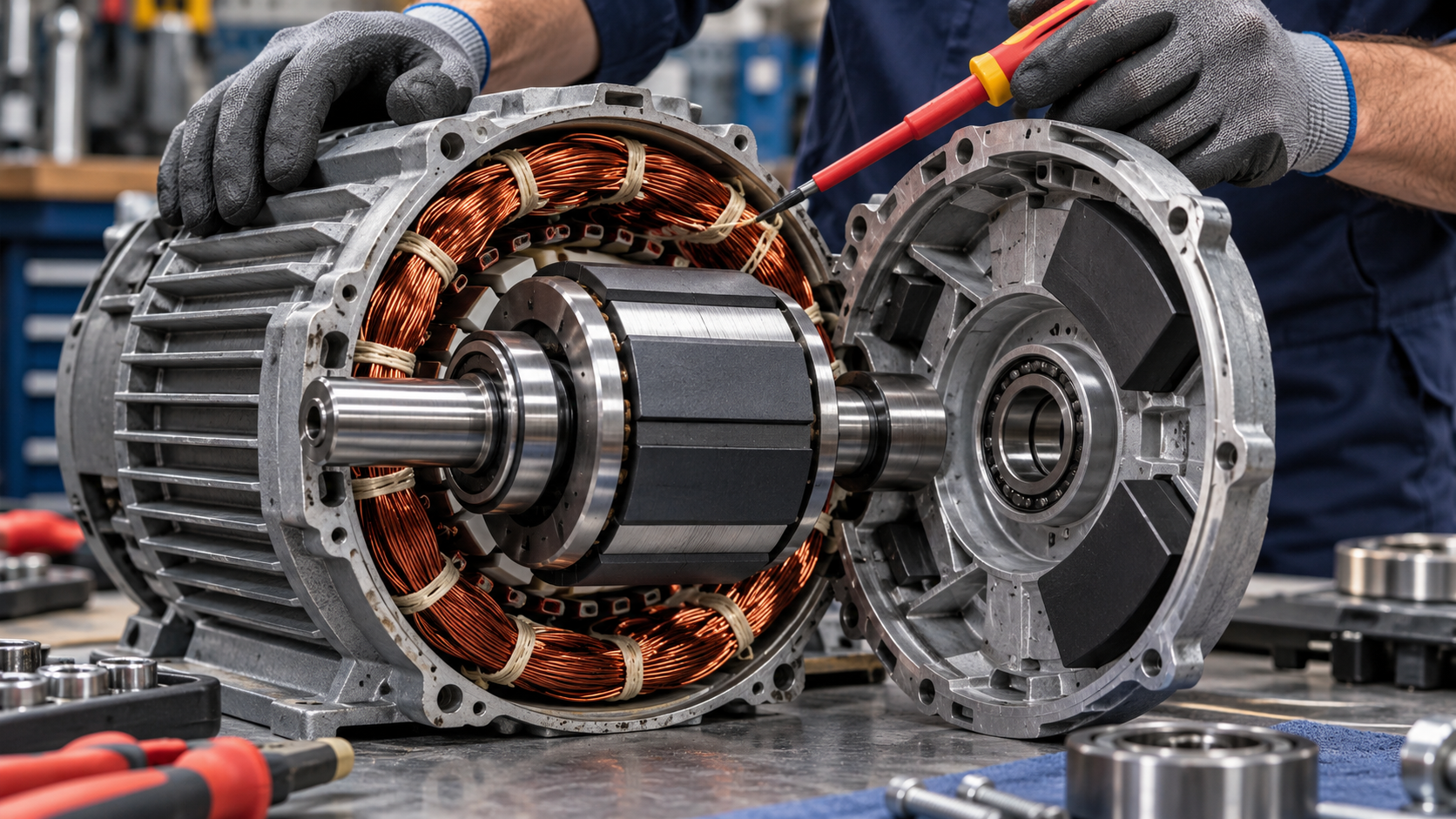
An electric motor converts electrical energy into mechanical rotation through the interaction of current and magnetic fields. A current-carrying conductor in a magnetic field experiences a force. Arrange conductors around a shaft and coordinate the current direction, and the forces form a torque that turns a rotor inside a stationary part called the stator.
In a simple direct-current motor, current flows through a loop mounted on the rotor. Opposite sides of the loop feel forces in opposite directions, producing rotation. If the current never changed direction, the torque would reverse after half a turn. A commutator and brushes switch the current at the right time so torque continues in the desired direction.
Brushless and alternating-current motors use electronics or alternating currents to create a rotating magnetic field in the stator. A permanent-magnet rotor follows that field in a synchronous motor. In an induction motor, the changing stator field induces currents in the rotor. Those currents create their own magnetic field, and the interaction produces torque.
Back electromotive force appears as the spinning motor generates a voltage that opposes the applied supply. At startup, when speed and back EMF are low, current can be high. As the motor accelerates, back EMF grows and limits current. Mechanical load slows the rotor slightly, allowing more current and torque to develop until losses or design limits are reached.
Motor controls adjust voltage, current, and frequency to regulate speed and torque. Sensors may report rotor position so an inverter can energize the correct windings. Efficiency is reduced by electrical resistance, magnetic hysteresis and eddy currents, friction, air drag, and stray fields. Heat removal often limits how much power a motor can deliver continuously.
Motors range from microscopic actuators to machines driving trains, pumps, factories, and electric vehicles. Their designs differ, but the conversion principle is consistent: electrical energy establishes controlled magnetic fields, those fields exert force on current or magnetized material, and a rotor turns while bearings and controls keep the motion useful.
Magnetic fields exert forces on current-carrying conductors, and a motor arranges those forces to create torque.
Commutators, alternating current, or electronic inverters keep the torque acting in a useful direction.
Permanent-magnet, synchronous, and induction rotors respond to rotating stator fields in different ways.
Back EMF rises with speed and opposes the supply, helping determine current and torque under load.
Controllers adjust voltage, frequency, and phase, often using rotor-position feedback.
Resistance, magnetic losses, friction, drag, and heat reduce efficiency and limit continuous power.
Explore more "Explainers"
Discover additional explainers across politics, science, business, technology, and other fields. Each explainer breaks down a complex idea into clear, everyday language—helping you better understand how major concepts, systems, and debates shape the world around us.