

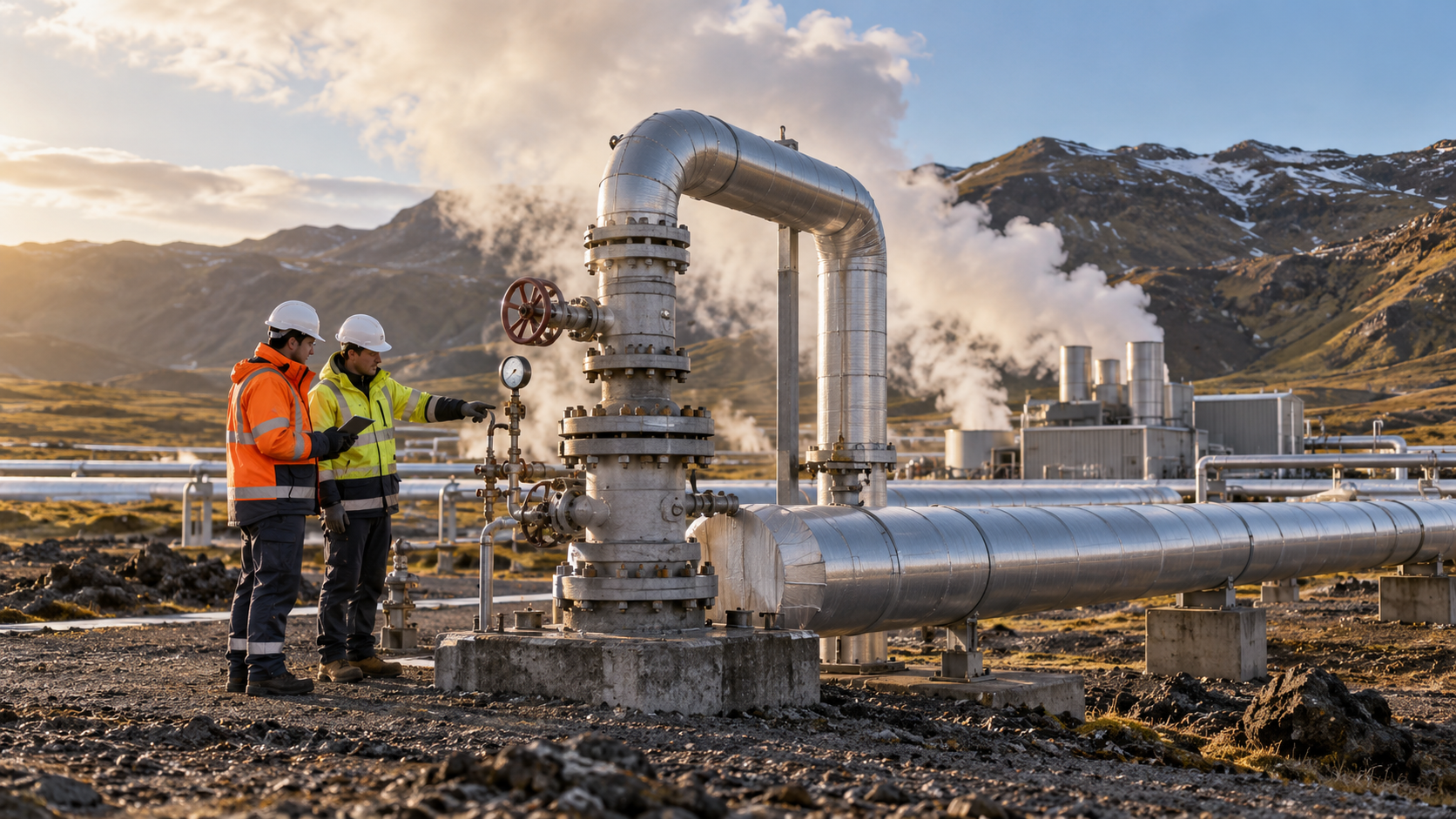
How Geothermal Systems Bring Heat to the Surface Explainer
Geothermal energy is heat from within Earth. Some comes from the planet’s formation and much is continually produced by radioactive decay in rocks. Temperature generally rises with depth, but accessible resources are especially favorable where magma, faults, circulating water, or thin crust bring heat closer to the surface. Hot springs and geysers reveal some systems; many others have no obvious surface sign.
A conventional hydrothermal reservoir needs heat, fluid, and permeability. Water moves through pores and fractures, absorbs heat from rock, and can be trapped beneath less permeable layers. Wells drilled into the reservoir bring hot water or steam upward because of pressure differences and pumping. Geologists use mapping, chemistry, geophysics, temperature measurements, and test wells to locate and characterize the resource.
Dry-steam plants send reservoir steam directly through a turbine. Flash plants reduce pressure on very hot water so some becomes steam. Binary plants pass heat through a heat exchanger to a second fluid with a lower boiling point, allowing use of cooler resources. The turbine drives a generator, and the working fluids are condensed after releasing useful energy.
Cooled geothermal water is commonly reinjected to help maintain reservoir pressure and reduce surface disposal. Reinjection location and rate require care because cold water can reach production wells too quickly or pressure changes can trigger small earthquakes. Minerals and gases in geothermal fluids may cause scaling, corrosion, or emissions, so plants use treatment and monitoring suited to local chemistry.
Geothermal heat can also serve buildings directly. District systems distribute hot water, and ground-source heat pumps exchange heat with the stable shallow subsurface almost anywhere. These heat pumps do not require a hot volcanic reservoir; they use the ground as a winter heat source and summer heat sink. Direct use, electricity generation, and heat pumps therefore tap different temperature ranges.
Enhanced geothermal systems target hot rock that lacks enough natural fluid flow. Operators inject fluid under controlled conditions to open or reactivate fractures and create a reservoir between wells. The approach could expand geographic access but requires management of induced seismicity, water, cost, and long-term heat drawdown. A geothermal resource is renewable only when extraction and reinjection are managed within the reservoir’s capacity.
Earth’s internal heat is concentrated near accessible depth by geology and circulating fluids.
Hydrothermal reservoirs combine hot rock, water or steam, and connected permeability.
Production wells feed dry-steam, flash, or binary cycles that turn heat into electricity.
Reinjection supports pressure but requires chemistry, temperature, and seismic monitoring.
Direct heating and shallow ground-source heat pumps use lower-temperature resources.
Enhanced systems create fluid pathways in hot rock while managing seismic and water risks.
Explore more "Explainers"
Discover additional explainers across politics, science, business, technology, and other fields. Each explainer breaks down a complex idea into clear, everyday language—helping you better understand how major concepts, systems, and debates shape the world around us.