

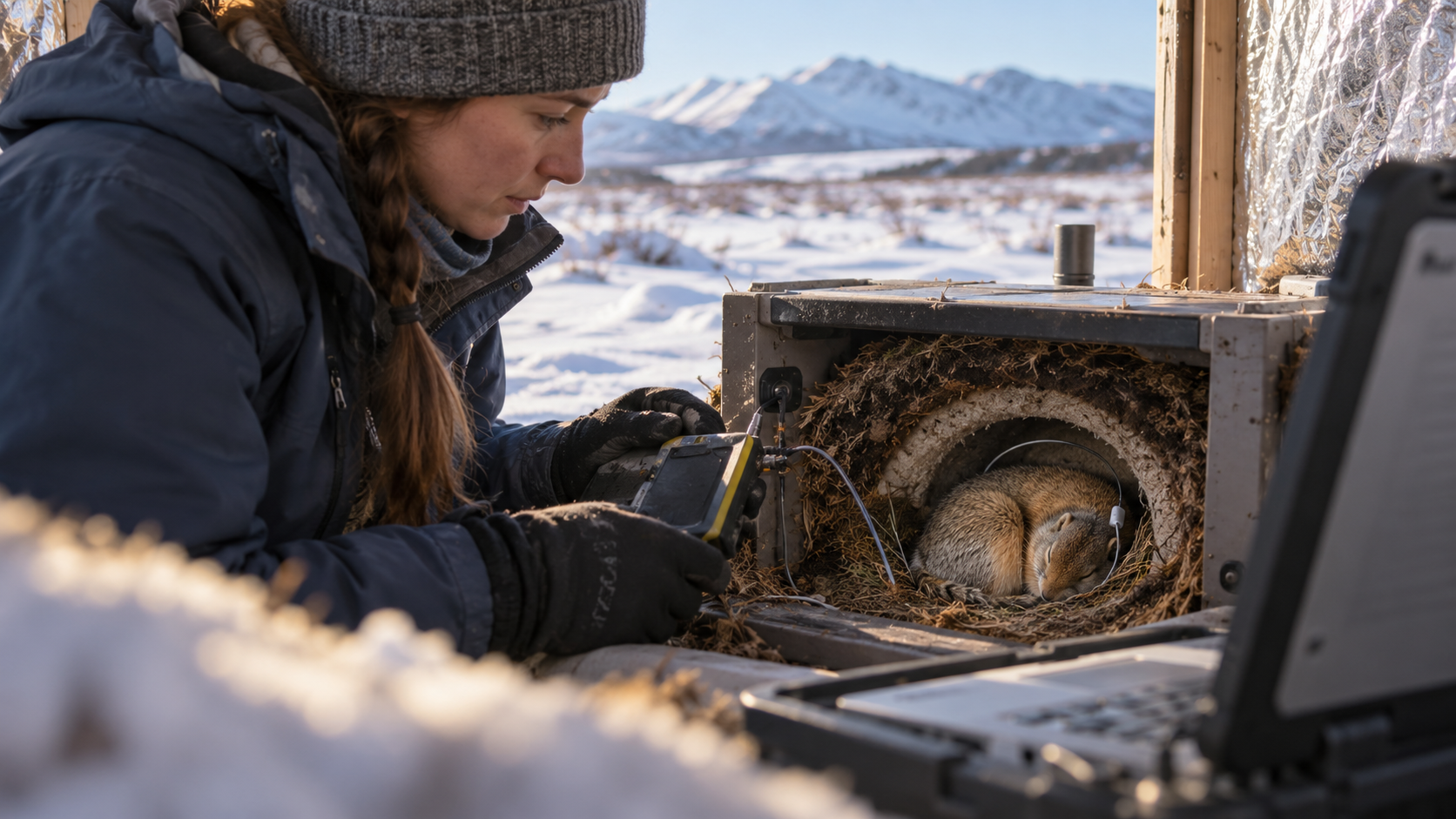
How Hibernation Changes Animal Metabolism Explainer
Hibernation is a controlled form of seasonal dormancy that sharply reduces energy use. A true hibernator lowers metabolic rate and heart rate and usually allows body temperature to fall. This is not ordinary sleep: neural activity, temperature control, circulation, and fuel use enter a distinct physiological state. Species vary widely, so a bear and a small ground squirrel do not follow identical patterns.
Before hibernation, many animals build fat reserves or cache food. Hormonal and neural changes shift appetite, fuel storage, and daily rhythms. During torpor, cells reduce energy-demanding processes and rely largely on fat. Lower body temperature slows chemical reactions, while reduced breathing and circulation match the smaller oxygen demand. Organs remain supplied enough to preserve function over long intervals.
Small hibernators may cool close to ambient temperature and remain torpid for days or weeks. They periodically arouse, warming rapidly through brown-fat heat production and shivering. These arousals consume a large share of stored energy, and their exact purpose is still studied. They may support sleep, immune function, waste handling, memory, or repair that cannot proceed normally at very low temperature.
Bears reduce metabolism and heart rate but maintain a higher body temperature than many small mammals. They can recycle nitrogen, conserve muscle and bone, and survive for months without eating or drinking. Some scientists describe their state as hibernation and others emphasize its differences from deep torpor. The broader lesson is that dormancy exists on a physiological spectrum.
Day length, food, temperature, internal clocks, and body condition help time entry and emergence. Warming winters can alter snow cover, food availability, predator risk, and the energy cost of arousals. Waking too early or too often may exhaust reserves before spring, while a changing environment can also create new feeding opportunities. Effects differ among species and regions.
Research on hibernators may inform medicine because these animals tolerate low blood flow, immobility, fat use, and repeated cooling without the damage expected in humans. Translating those adaptations is difficult: the mechanisms evolved across whole bodies and seasons, not as one switch. Hibernation is a coordinated reprogramming of metabolism, temperature, circulation, and behavior.
Hibernation is regulated dormancy with reduced metabolism, heart rate, and often body temperature.
Animals prepare through fat storage, food caching, hormonal changes, and seasonal timing.
Torpor conserves energy while periodic arousals restore warm physiological function at high cost.
Bears and small rodents use different temperature and metabolic strategies along a dormancy spectrum.
Weather, food, snow, body condition, and biological clocks influence entry and emergence.
Medical interest focuses on natural protection during cooling, immobility, and low blood flow.
Explore more "Explainers"
Discover additional explainers across politics, science, business, technology, and other fields. Each explainer breaks down a complex idea into clear, everyday language—helping you better understand how major concepts, systems, and debates shape the world around us.