

How Permafrost Stores and Releases Carbon Explainer
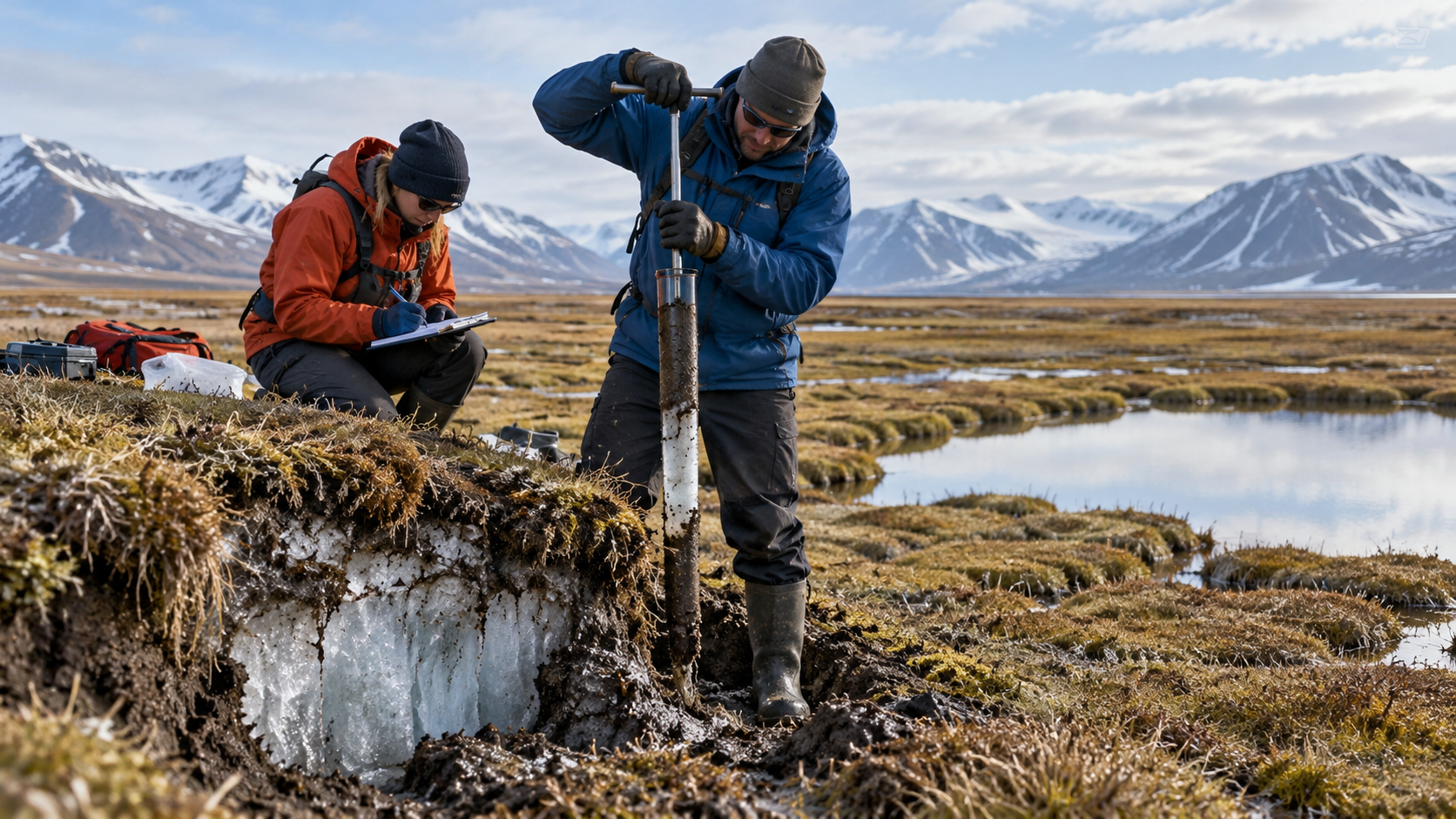
Permafrost is ground that remains at or below freezing for at least two consecutive years. It can contain mineral soil, sediment, rock, ground ice, and large amounts of partly decomposed plant and animal material. Cold conditions slow microbial activity, so organic carbon accumulates over centuries or millennia instead of quickly returning to the atmosphere.
The surface active layer thaws each summer and refreezes in winter. As climate warms, that layer can deepen and previously frozen material becomes available to microbes. In oxygen-rich soil, decomposition releases mostly carbon dioxide. In waterlogged, oxygen-poor environments, methane-producing microbes can release methane. Drainage therefore helps determine which gas is produced and how quickly.
Ground ice gives permafrost physical structure. When it melts, the surface may slump, collapse, or form thermokarst ponds and lakes. Abrupt thaw can expose deep carbon much faster than gradual surface warming. Flowing water can carry dissolved and particulate carbon into rivers, lakes, and coasts, where further decomposition or burial changes its fate.
Plants complicate the balance. A longer growing season can increase carbon uptake, and new vegetation may insulate or shade the ground. At the same time, warmer soils increase respiration, and shrubs can trap snow that insulates winter ground. Wildfire releases vegetation carbon, darkens the surface, and removes insulating organic layers, often accelerating thaw after the burn.
Permafrost carbon forms a feedback rather than a single sudden release. Human-caused warming thaws ground; decomposition adds greenhouse gases; those gases contribute additional warming. The magnitude and timing vary by landscape, moisture, ice content, vegetation, fire, and future climate. Carbon models therefore combine field chambers, soil cores, towers, aircraft, satellites, and long-term temperature records.
Thaw also damages roads, buildings, pipelines, and cultural sites, linking the carbon problem with local adaptation. Preventing all thaw is impossible in already warming regions, but reducing global greenhouse-gas emissions limits future warming and the amount of carbon exposed. Permafrost is a frozen archive whose stability depends on climate, hydrology, ecology, and disturbance.
Persistent cold stores old organic matter by slowing microbial decomposition.
A deepening active layer exposes frozen carbon to oxygen-rich or oxygen-poor decay.
Carbon dioxide dominates many drained soils, while waterlogged conditions can favor methane.
Melting ground ice causes abrupt collapse, ponds, erosion, and rapid exposure of deep material.
Vegetation, snow, drainage, and wildfire can strengthen or offset parts of the carbon balance.
Permafrost emissions amplify warming gradually, and their size depends on future climate and landscape change.
Explore more "Explainers"
Discover additional explainers across politics, science, business, technology, and other fields. Each explainer breaks down a complex idea into clear, everyday language—helping you better understand how major concepts, systems, and debates shape the world around us.