

How El Niño Changes Weather Around the World Explainer
El Niño is the warm phase of the El Niño–Southern Oscillation, or ENSO, a coupled fluctuation of the tropical Pacific Ocean and atmosphere. It is not a storm traveling toward a continent. During an event, sea-surface temperatures in the central and eastern equatorial Pacific become persistently warmer than average, trade winds weaken, and tropical rainfall shifts eastward from its usual pattern.
Under typical conditions, easterly trade winds push warm surface water toward the western Pacific and help cold, nutrient-rich water rise near South America. If the winds weaken, warm water spreads east and the thermocline—the boundary over deeper cold water—flattens and deepens in the east. Reduced upwelling reinforces surface warming, while the changed ocean temperatures further alter winds and rainfall.
Tropical thunderstorms release large amounts of latent heat high in the atmosphere. Moving the main region of tropical convection changes broad overturning circulations and launches atmospheric wave patterns. These teleconnections can shift the Pacific jet stream and storm tracks thousands of kilometers away. The ocean anomaly therefore changes the odds of temperature and precipitation patterns well beyond the tropical Pacific.
Typical Northern Hemisphere winter impacts can include wetter conditions across parts of the southern United States and milder or drier conditions in some northern areas. Other regions may face drought, heavy rain, fire risk, or marine ecosystem changes. These are probabilities, not guarantees. The location, strength, season, and evolution of each event interact with other climate patterns and ordinary weather variability.
El Niño often suppresses Atlantic hurricane activity by increasing vertical wind shear while supporting some central and eastern Pacific storms, but individual seasons can depart from the tendency. Weakened upwelling can reduce nutrients and disrupt fisheries near western South America. Global average surface temperature may temporarily rise because more ocean heat is released to the atmosphere.
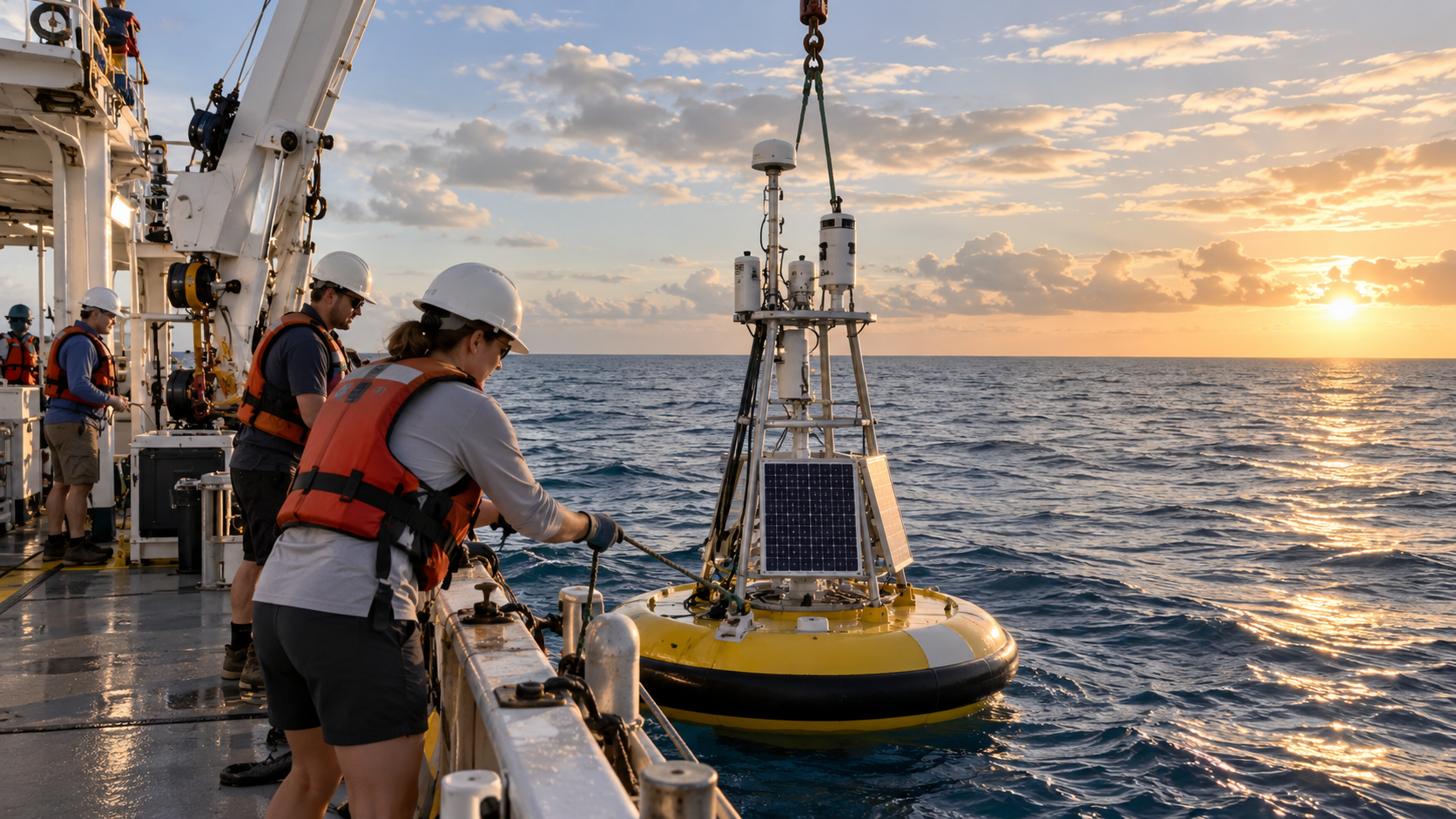
Scientists monitor ENSO with satellites, moored buoys, ships, ocean profiles, winds, pressure, and rainfall. Operational definitions require both sustained ocean warming and a matching atmospheric response. Forecasts improve months ahead but remain uncertain, especially across seasonal transition periods. El Niño matters because a regional rearrangement of ocean heat can reorganize the planetary circulation without dictating the weather on any particular day.
El Niño combines persistent tropical Pacific warming with a coupled atmospheric response.
Weaker trade winds let warm water shift east and reduce cold-water upwelling.
Eastward-moving tropical rainfall changes where heat is released into the atmosphere.
Teleconnections shift jet streams and alter regional odds of rain, drought, warmth, and storms.
Impacts vary among events because strength, location, season, and other patterns differ.
Buoys, satellites, ocean profiles, winds, and rainfall are combined for monitoring and forecasts.
Explore more "Explainers"
Discover additional explainers across politics, science, business, technology, and other fields. Each explainer breaks down a complex idea into clear, everyday language—helping you better understand how major concepts, systems, and debates shape the world around us.