

How Friction Converts Motion Into Heat Explainer
Friction opposes relative motion between contacting surfaces, but the apparent surfaces touch only at microscopic high points called asperities. The true contact area is much smaller than the visible footprint. Under load, asperities deform, stick through interatomic forces, and plow across one another, creating forces that resist sliding.
As motion breaks and reforms microscopic junctions, organized kinetic energy is redistributed. Surface atoms vibrate more strongly, subsurface material deforms, tiny cracks form, and wear particles may detach. These disordered motions increase internal energy. Thermal conduction then spreads that energy through the objects and surrounding air, which can raise measurable temperature.
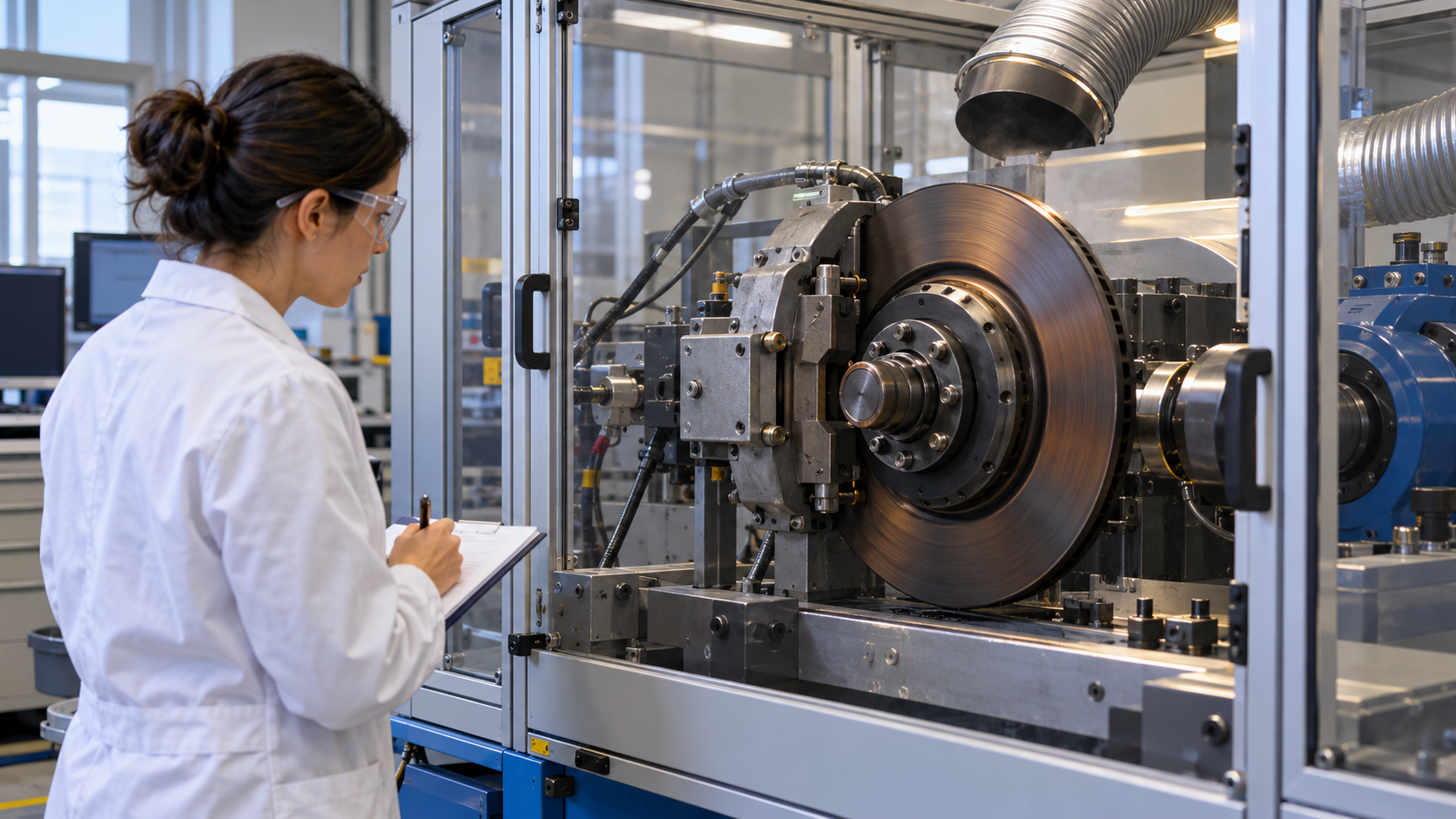
The total heat produced equals the mechanical energy lost from the system, but its location depends on material, speed, contact geometry, and cooling. In a brake, pads and rotor share heating while airflow and conduction carry energy away. At very high speed, changing surface films, softening, or phase changes can alter the friction coefficient during the stop.
Static friction prevents slipping until a threshold is exceeded. Kinetic friction acts during sliding, and rolling resistance often comes from deformation rather than surface sliding alone. Fluid friction dissipates motion through viscosity and turbulence. These categories describe different mechanisms, so one simple constant cannot predict every interface or speed.
Lubricants reduce direct asperity contact by separating surfaces with a film, though shearing the fluid still consumes energy. Additives form protective layers, and bearings replace sliding with rolling where possible. Roughness is not the only control: an extremely smooth, clean pair can adhere strongly, while a textured surface may retain lubricant and reduce wear.
Engineers measure force, temperature, vibration, surface chemistry, and wear in tribometers and full-scale rigs. Friction is essential for walking, gripping, and braking even as unwanted friction wastes energy. Designing an interface means balancing traction, heat removal, durability, noise, lubrication, and environmental conditions rather than eliminating resistance everywhere.
Visible surfaces meet at a smaller true area of microscopic asperities.
Adhesion, deformation, vibration, and wear dissipate organized motion.
Lost mechanical energy becomes internal energy distributed across the contact.
Static, sliding, rolling, and fluid friction involve different mechanisms.
Lubricants separate surfaces but still dissipate energy through fluid shear.
Real designs balance useful traction against heat, wear, and efficiency.
Explore more "Explainers"
Discover additional explainers across politics, science, business, technology, and other fields. Each explainer breaks down a complex idea into clear, everyday language—helping you better understand how major concepts, systems, and debates shape the world around us.