

How Sinkholes Form Explainer
Sinkholes are closed depressions formed when ground moves downward into a void or enlarged opening below. They are common in karst landscapes underlain by soluble rocks such as limestone, dolomite, or gypsum. Slightly acidic groundwater follows fractures and bedding planes, dissolving minerals over long periods and widening a hidden drainage network.
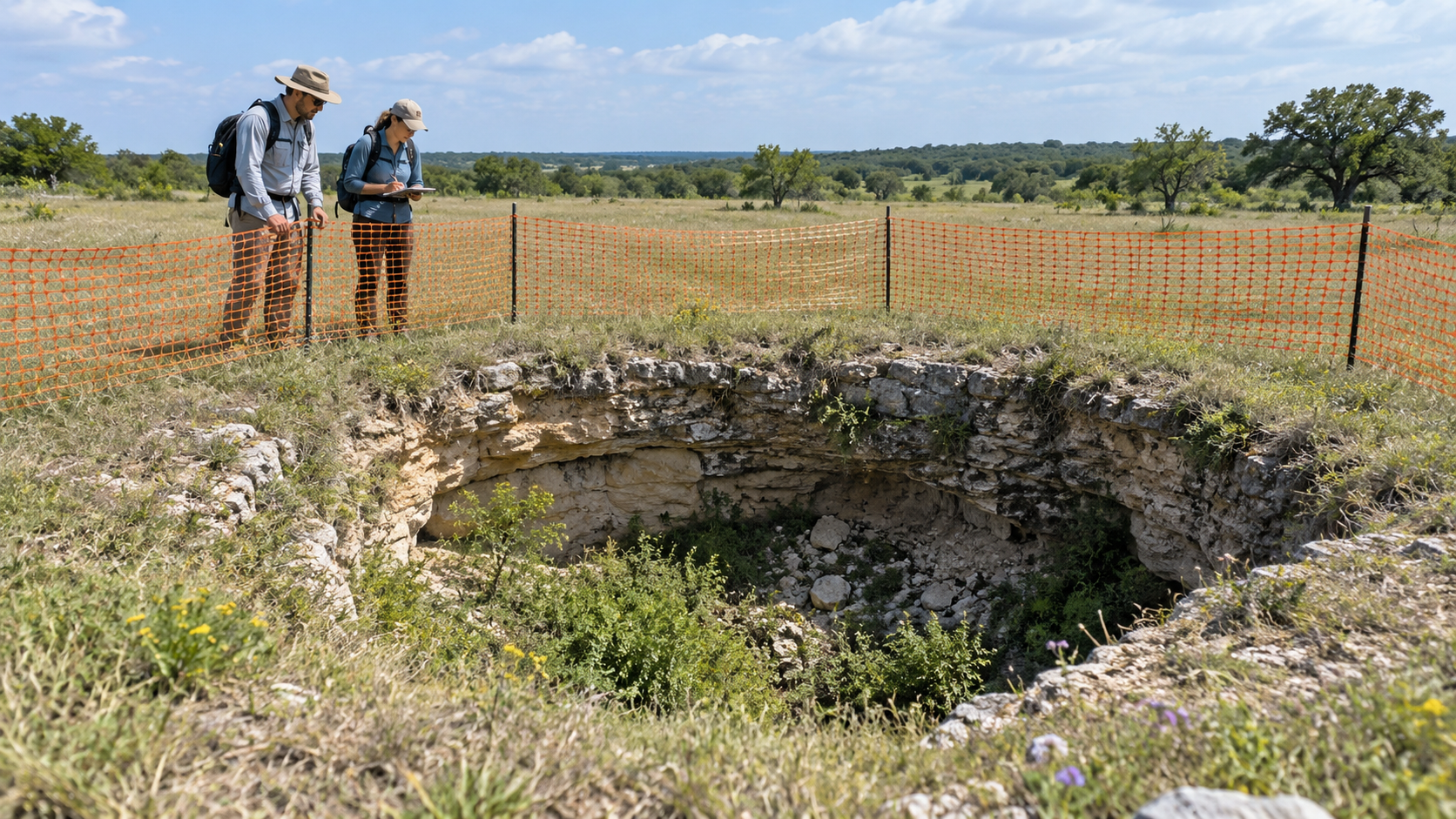
In exposed bedrock, dissolution can gradually create shallow depressions. Where loose sediment covers karst, grains may wash slowly into openings, producing cover-subsidence sinkholes that broaden over time. If cohesive clay bridges a cavity, the roof can remain temporarily intact and then fail, producing a steep cover-collapse sinkhole with little surface warning.
Groundwater helps support underground materials and controls where water carries sediment. Heavy rain, drought followed by rain, leaking pipes, concentrated storm drainage, construction, or pumping can change water levels and flow paths. These changes do not create soluble bedrock, but they can accelerate sediment removal or remove support from an already vulnerable cavity.
Not every ground depression is karst. Abandoned mines, broken utilities, poorly compacted fill, buried debris, thawing ground, or erosion can produce similar failures. A circular shape alone cannot identify the cause. Geologists use bedrock maps, drilling, electrical resistivity, ground-penetrating radar, water observations, and excavation depending on site conditions.
Cracks, sticking doors, sagging ground, muddy well water, or ponding can accompany movement, but many have ordinary explanations and some collapses show few precursors. People should stay back from a new opening, keep runoff away, and involve local authorities or qualified geotechnical professionals rather than entering, filling, or probing it themselves.
Risk management maps susceptible geology, controls drainage, inspects utilities, and designs foundations for site conditions. Filling a hole at the surface without treating the subsurface pathway can move the problem. Sinkholes are part of natural groundwater landscapes, but development can increase exposure and make careful distinction between hazard, trigger, and cause essential.
Slightly acidic groundwater enlarges fractures in soluble bedrock.
Loose cover may subside gradually as grains wash into openings.
Cohesive cover can bridge a cavity and later collapse abruptly.
Rain, drainage, leaks, and pumping can trigger failure in susceptible ground.
Mines, utilities, fill, and erosion can mimic karst sinkholes.
Mapping and subsurface investigation guide safe drainage and foundation decisions.
Explore more "Explainers"
Discover additional explainers across politics, science, business, technology, and other fields. Each explainer breaks down a complex idea into clear, everyday language—helping you better understand how major concepts, systems, and debates shape the world around us.