

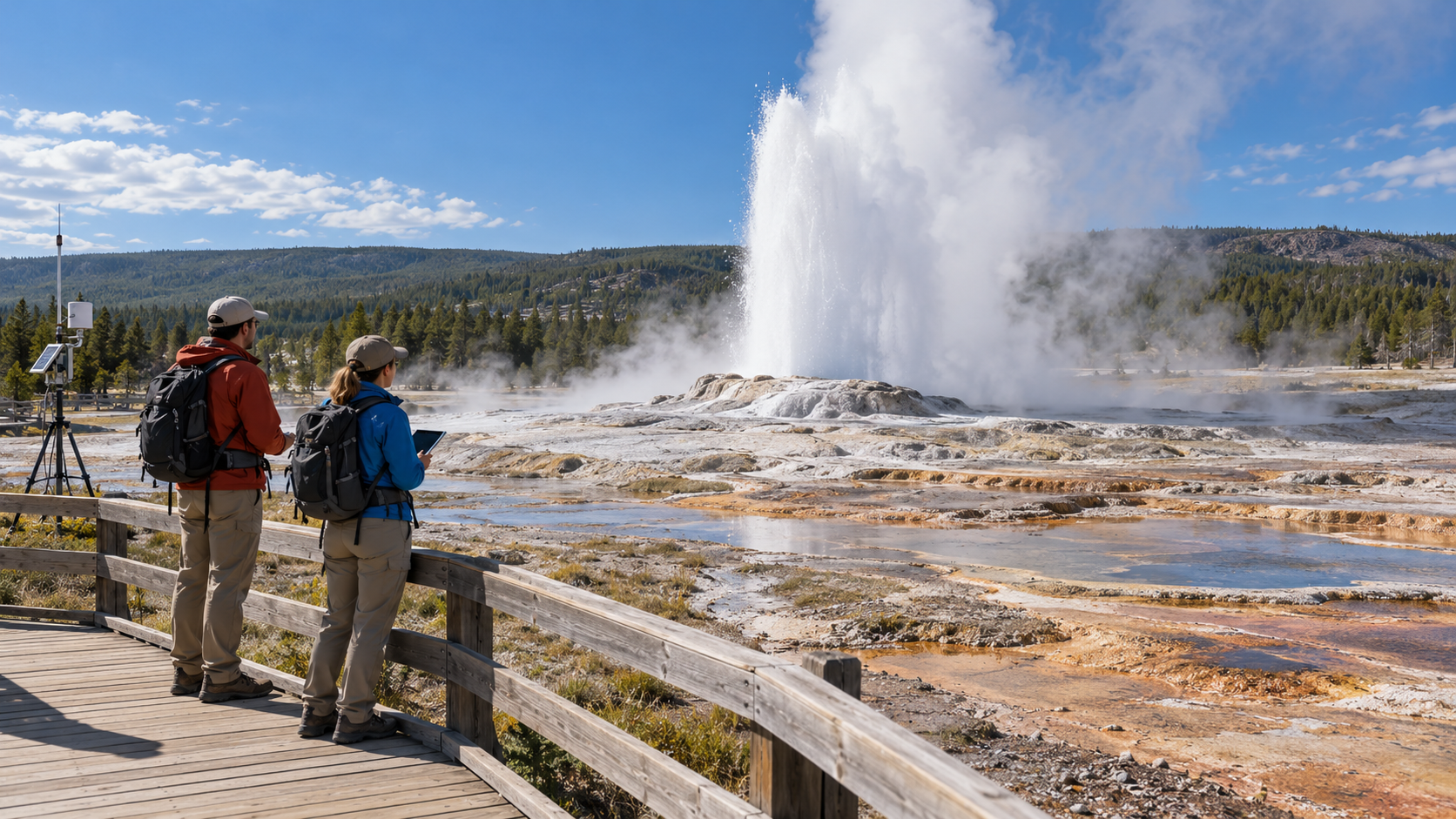
How Geysers Erupt Explainer
A geyser requires a rare combination of abundant water, a strong underground heat source, and plumbing with constrictions that can hold pressure. Rain and snow seep downward, while hot rock or magma-heated groundwater raises the temperature at depth. The mechanism links local conditions to larger circulation, chemistry, or geologic structure.
Water deep in the system is under pressure from the column above it, so it can remain liquid above the normal surface boiling temperature. Bubbles form in upper passages and may push water out of the vent during a preplay stage. Water, heat, rock, and air move along gradients, but terrain and timing shape the route.
As water spills or bubbles escape, pressure on deeper superheated water falls. Some of that water flashes into steam, expands dramatically, and pushes more water upward, creating a runaway pressure drop and the visible eruption. Feedbacks can strengthen or weaken the process, which is why similar settings do not produce identical outcomes.
After the chamber empties and cools, groundwater refills the passages and heating begins again. Reservoir size, heat supply, conduit shape, groundwater level, mineral deposition, and recent eruptions determine the interval and character of the next event. Observations must cover enough space and time to distinguish a persistent pattern from a brief event.
Geologists measure temperature, pressure, seismic vibrations, water chemistry, discharge, and surface deformation. Cameras and remote sensors reduce exposure because hydrothermal ground can be thin, unstable, and hot even when a vent appears quiet. Researchers combine field instruments, remote sensing, samples, and models because no single view captures every stage.
Not every hot spring erupts: open circulation can release heat and pressure steadily. Geyser behavior can change after earthquakes, sediment shifts, mineral sealing, drought, or human disturbance, so regularity does not imply a perfectly predictable clock. The explanation is strongest when those independent lines of evidence agree within measured uncertainty.
Surface water enters fractures and underground reservoirs.
Geothermal heat raises deep water above its surface boiling point.
Constricted plumbing maintains pressure.
Initial boiling lowers pressure on superheated water below.
Rapid steam expansion drives water from the vent.
Refilling and reheating reset the cycle.
Explore more "Explainers"
Discover additional explainers across politics, science, business, technology, and other fields. Each explainer breaks down a complex idea into clear, everyday language—helping you better understand how major concepts, systems, and debates shape the world around us.