

How Gap Junctions Pass Signals Between Cells Explainer
Gap junctions are clusters of channels that directly connect the cytoplasm of neighboring animal cells. They pass inorganic ions and small water-soluble molecules while excluding large proteins, nucleic acids, and most other macromolecules. Cells regulate the pathway in context, so the outcome reflects both molecular recognition and cellular state. This distinction prevents a regulated pathway from being mistaken for a single all-or-nothing switch.
Six connexin proteins assemble into a membrane hemichannel called a connexon. A connexon in one cell docks with a compatible connexon in the adjacent cell, creating a continuous aqueous pore across both plasma membranes. Location matters because membranes and molecular partners determine which reactions can occur together. Measurements of rate and location are as important as detecting a component at all.
The channel permits passive movement driven by electrochemical and concentration gradients. Ions can electrically couple heart or smooth-muscle cells, while metabolites and second messengers such as calcium signals or cyclic nucleotides can coordinate local responses. The sequence is coordinated rather than automatic, and checkpoints can redirect or stop it.
Different connexin combinations give channels different conductance, selectivity, and regulation. Voltage, pH, calcium, phosphorylation, and mechanical conditions can change opening, and cells continually assemble and remove junction plaques. Different organisms tune the same core machinery to suit their structure, metabolism, and surroundings.
Direct coupling is fast but local because it requires close membrane contact. It complements secreted signals rather than replacing them, and undocked hemichannels have distinct behavior that should not be confused with complete intercellular junctions. Researchers separate cause from correlation with imaging, molecular perturbations, and measurements over time.
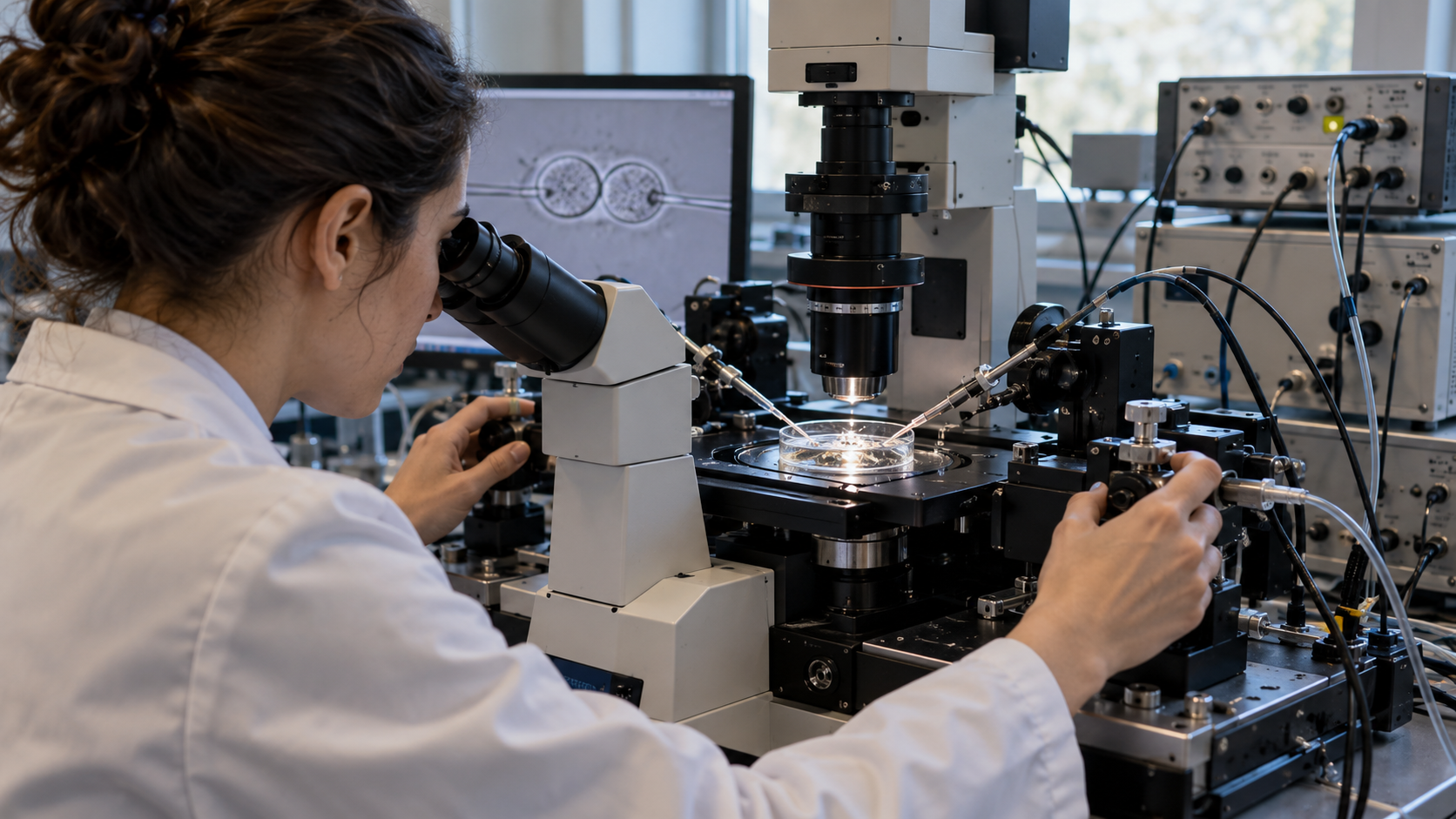
Researchers inject fluorescent tracers, record current between cell pairs, and alter specific connexins to test communication. Detecting connexin protein is not enough; aligned channels must form and pass the expected molecules under physiological conditions. That evidence supports a general mechanism while leaving room for variation among species and conditions.
Six connexins assemble into a hemichannel called a connexon.
Connexons in adjacent cells dock across the membrane gap.
The joined pore connects the two cytoplasms.
Ions and small metabolites move down existing gradients.
Connexin composition and cell conditions regulate permeability.
Tracer transfer and paired recordings test functional coupling.
Explore more "Explainers"
Discover additional explainers across politics, science, business, technology, and other fields. Each explainer breaks down a complex idea into clear, everyday language—helping you better understand how major concepts, systems, and debates shape the world around us.