

How Track Photo Finishes Work Explainer
A track photo finish is not an ordinary photograph of the entire finish area at one instant. The camera is precisely aligned with the finish line and repeatedly records a very narrow vertical slice at that plane. Software arranges those slices across the image as time passes. The result lets judges compare exactly when each athlete reaches the line, but it can make bodies and background objects look stretched because the horizontal direction represents time rather than ordinary distance.
Placings are determined when the leading edge of an athlete’s torso reaches the vertical plane of the nearer edge of the finish line. The head, neck, arms, hands, legs, and feet do not decide the place. A judge positions a reading line against the relevant part of each torso and uses the synchronized image to assign an official time. When athletes overlap, additional cameras from the opposite side can help reveal a torso that is partly hidden.
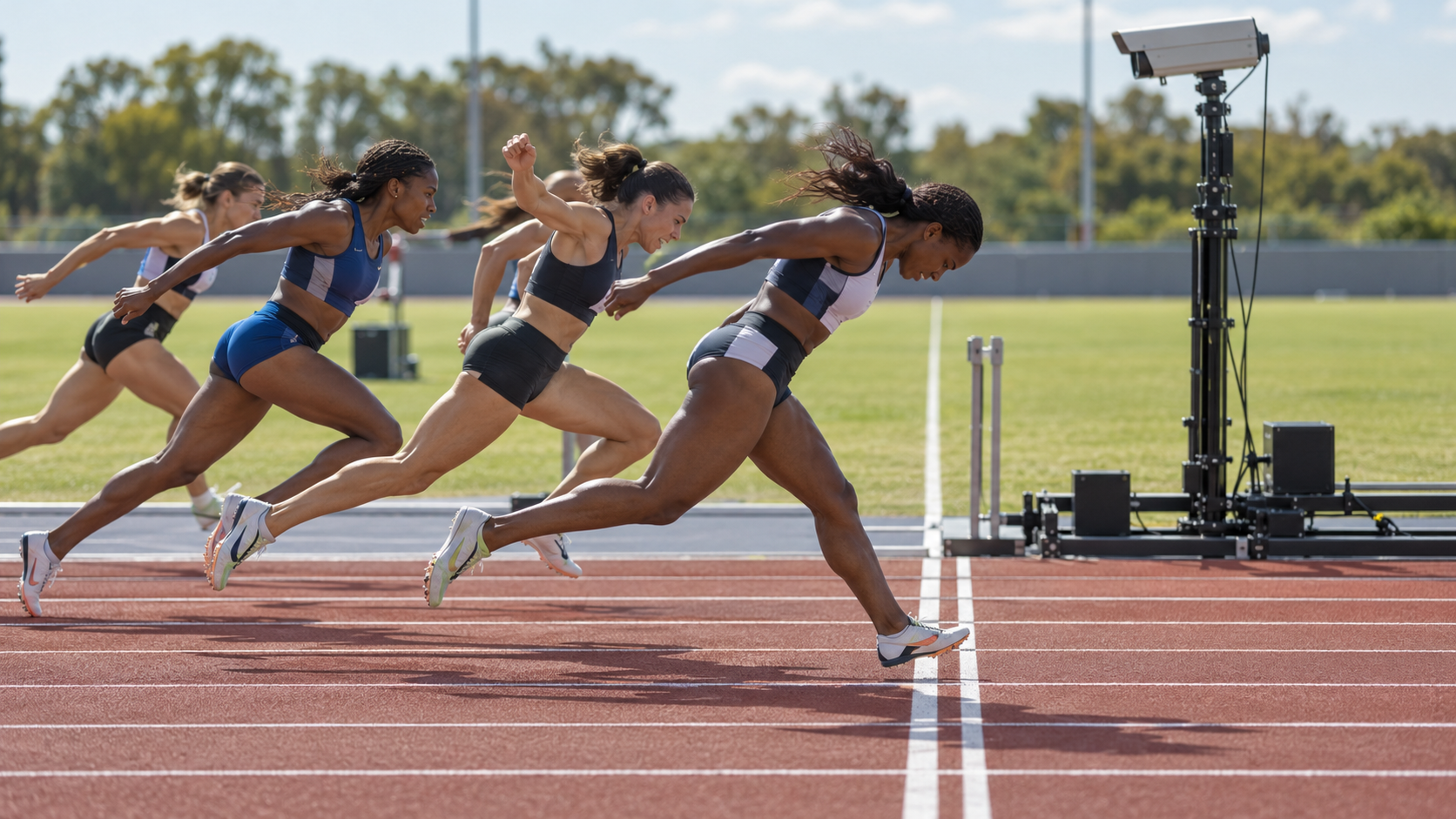
Imagine one sprinter throwing both arms forward while another keeps a compact form. The first runner’s hands may appear farthest across the painted line, yet the second runner wins if the torso reaches the finish plane first. The image can also distort fast-moving limbs or stretch a stationary object that remains in the camera’s narrow view. Those effects are a normal consequence of slit-scan recording, not evidence that the finish line or athletes moved strangely.
The photo system is synchronized with the start signal so elapsed times can be measured from the same event. Judges still inspect the image, choose the correct torso point, and apply the sport’s recording and rounding rules; fully automatic timing does not eliminate human interpretation. Backup cameras and timing systems protect against obstruction or equipment failure. The technology is trusted because it preserves a time-ordered record at the precise finish plane, which is the question the rules require officials to answer.
A photo-finish camera views one narrow plane aligned with the finish line. It builds an image from repeated slices recorded over time.
Because horizontal position represents time, the picture is not a conventional snapshot. Distorted limbs and stretched background objects are expected.
The decisive body part is the torso. A head, hand, arm, leg, or foot crossing first does not determine the official placing.
Judges place a reading line at the leading edge of each torso and use the synchronized scale to assign times. Opposite-side views can resolve overlaps.
The camera supplies evidence, but officials still identify the torso and apply timing and rounding rules. Very close races require careful image reading.
Backup cameras and timing systems support the primary equipment. A visual lean helps only when it moves the torso—not merely the head or arms—across first.
Explore more "Explainers"
Discover additional explainers across politics, science, business, technology, and other fields. Each explainer breaks down a complex idea into clear, everyday language—helping you better understand how major concepts, systems, and debates shape the world around us.