

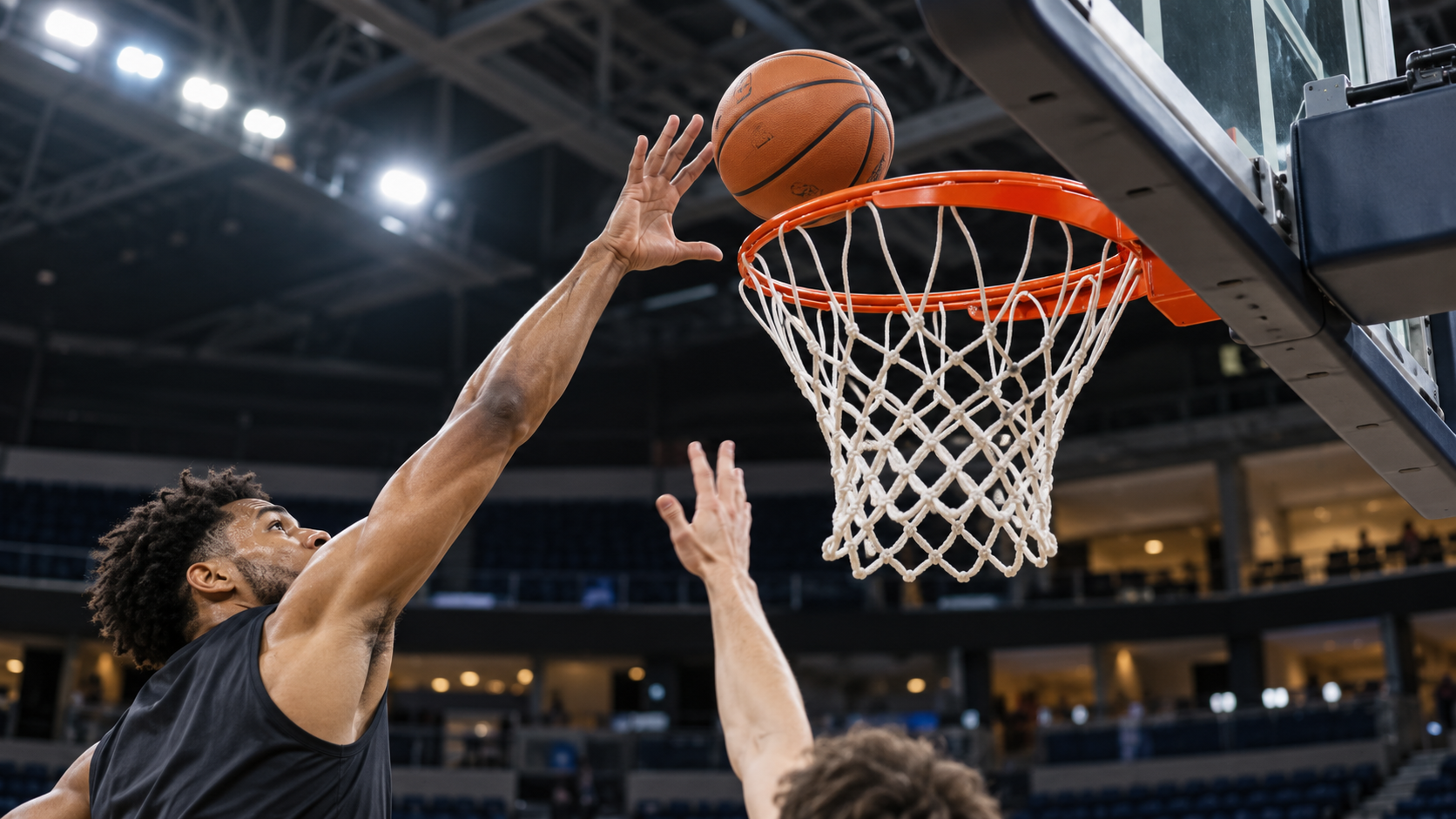
How Basketball Goaltending Works Explainer
Goaltending occurs when a player illegally touches a field-goal attempt after it has reached a protected stage of flight. In the NBA, a defender may not touch a shot on its downward path when it has a chance to score, or after it has touched the backboard above the rim while still on its way toward the basket.
Basket interference covers related contact with the ball or basket around the cylinder. Players may not touch a ball that is on or within the basket, and generally may not touch the rim or net in a way that causes the basket to move while the ball has a chance to score. Exact wording varies by league.
If the defense violates, the offense is awarded the points the shot would have produced. If an offensive player commits interference, the basket is disallowed and the defense receives the ball. The official judges the ball’s direction, location, chance to score, and the timing of the contact.
The rule protects a shot after it has become difficult or impossible to defend legally, while still allowing blocks on the way up. Because college, international, and professional rules differ around the cylinder and after a rim touch, the competition’s own rulebook controls.
A defender cannot touch a qualifying shot on its downward path or in another protected position near the basket.
A clean block made before that stage remains legal.
Illegal contact with the ball, rim, or basket can also cancel or award a score.
Officials evaluate both the ball’s position and the effect of the contact.
Defensive goaltending awards the attempted points.
Offensive interference wipes out the basket and gives possession to the defense.
Explore more "Explainers"
Discover additional explainers across politics, science, business, technology, and other fields. Each explainer breaks down a complex idea into clear, everyday language—helping you better understand how major concepts, systems, and debates shape the world around us.