

How Hockey Power Plays Work Explainer
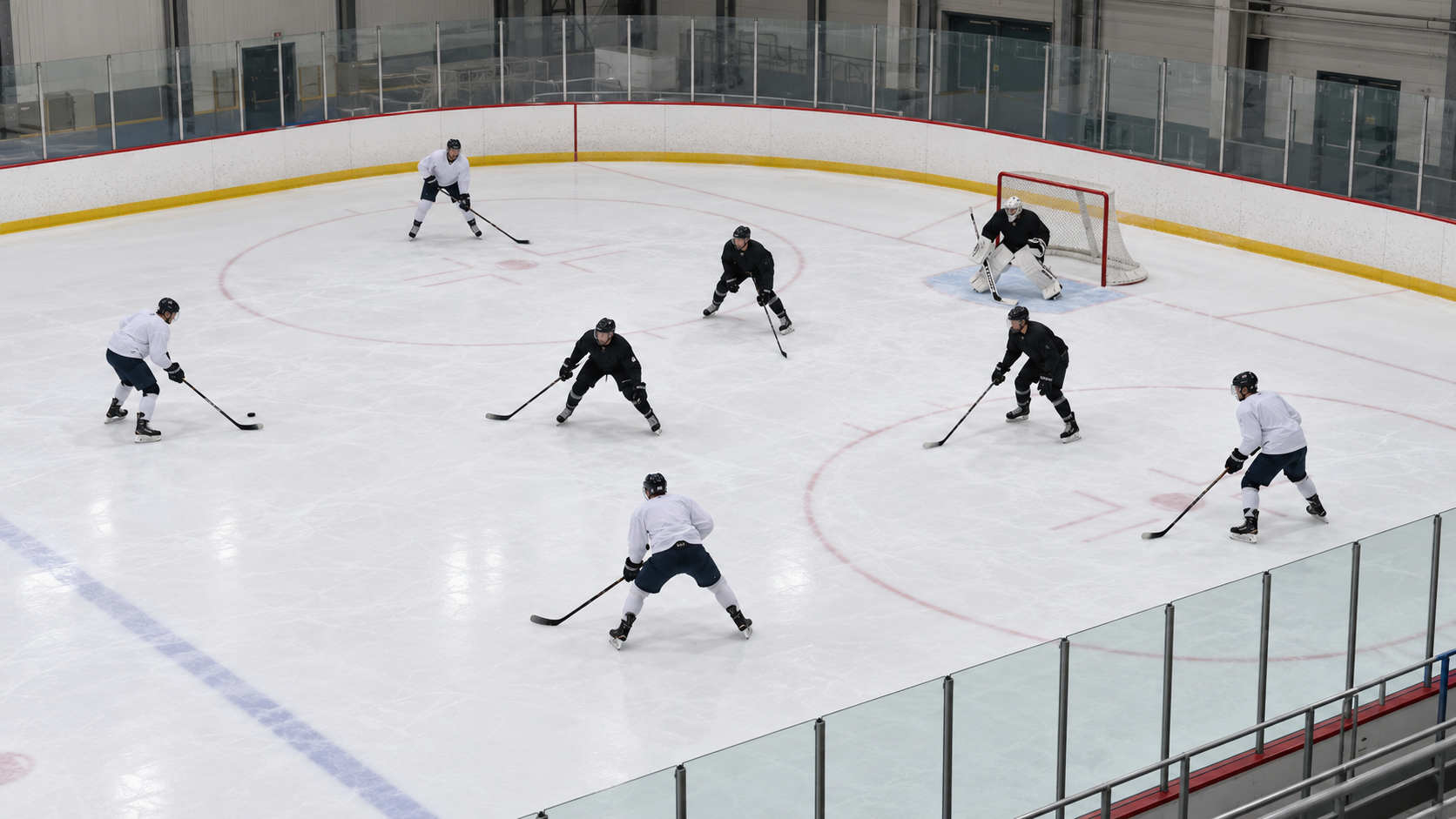
A power play begins when a penalty leaves one hockey team with fewer skaters on the ice than its opponent. The penalized player serves time in the penalty box, and the other team uses the temporary manpower advantage to create passing lanes, screens, and higher-quality shots.
A minor penalty usually lasts two minutes. If the advantaged team scores, the minor normally ends and the penalized player may return, with special handling when multiple penalties are being served. A major penalty lasts five minutes and does not end when the power-play team scores.
Coincidental penalties can remove players from both teams without creating the usual advantage. A double minor is treated in segments, while misconducts and match-related penalties have separate effects on team strength. Delayed penalties allow the non-offending team to replace its goalie with an extra attacker until play stops.
Teams organize power-play units around puck movement, net-front traffic, and controlled zone entries. The short-handed team counters with a penalty kill, clearing the puck and protecting dangerous areas. Scoreboard strength and penalty clocks show the situation, but the officials’ penalty sequence determines who may return and when.
A penalty can leave one team skating with fewer players, creating a power play for the opponent.
The exact strength depends on every penalty being served at the time.
A minor usually ends after two minutes or an opponent’s power-play goal.
A major runs for its full five minutes even if goals are scored.
Before the whistle, the non-offending team may pull its goalie for an extra attacker.
The penalized team cannot end the sequence simply by touching the puck; it must gain control under the rule.
Explore more "Explainers"
Discover additional explainers across politics, science, business, technology, and other fields. Each explainer breaks down a complex idea into clear, everyday language—helping you better understand how major concepts, systems, and debates shape the world around us.