

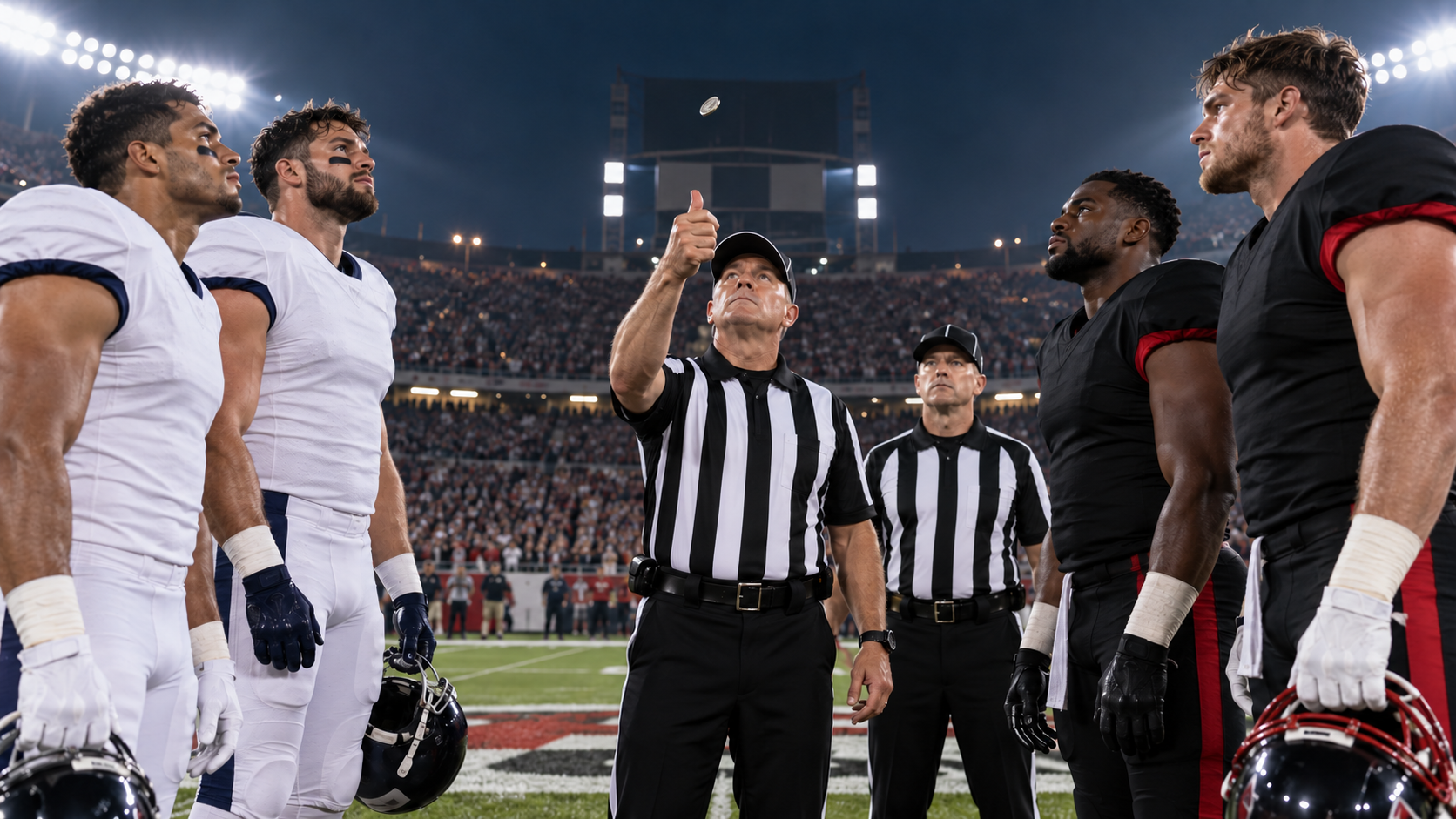
How NFL Overtime Works Explainer
NFL overtime begins with a coin toss and a timed extra period. Under the current regular-season format, the period lasts 10 minutes and both teams have an opportunity to possess the ball, subject to the rulebook’s game-ending situations. If the score remains tied when the period expires, the regular-season game ends in a tie.
A team can win after the required possession opportunities are satisfied by holding a lead at the end of a play. A defensive score can also end the game immediately. Because possession and scoring sequences matter, a first-drive touchdown no longer means fans should automatically assume the game is over.
Postseason games cannot end tied. They use 15-minute overtime periods and continue until a winner is determined, with intermissions and possession procedures governed by the playoff rules. Strategy changes because coaches know another period is available if the clock expires before the outcome is settled.
The cleanest way to follow overtime is to track three things: which team has possessed the ball, whether both clubs have completed their required opportunity, and who leads after the latest score. NFL overtime rules have changed over time, so the current rulebook—not memory of an older game—is the best guide.
The current regular-season overtime period is 10 minutes.
Yes. If the score is tied when the overtime period ends, the game is recorded as a tie.
Postseason games use 15-minute periods and continue until a winner is determined.
Explore more "Explainers"
Discover additional explainers across politics, science, business, technology, and other fields. Each explainer breaks down a complex idea into clear, everyday language—helping you better understand how major concepts, systems, and debates shape the world around us.