

How Cricket No-Balls Work Explainer
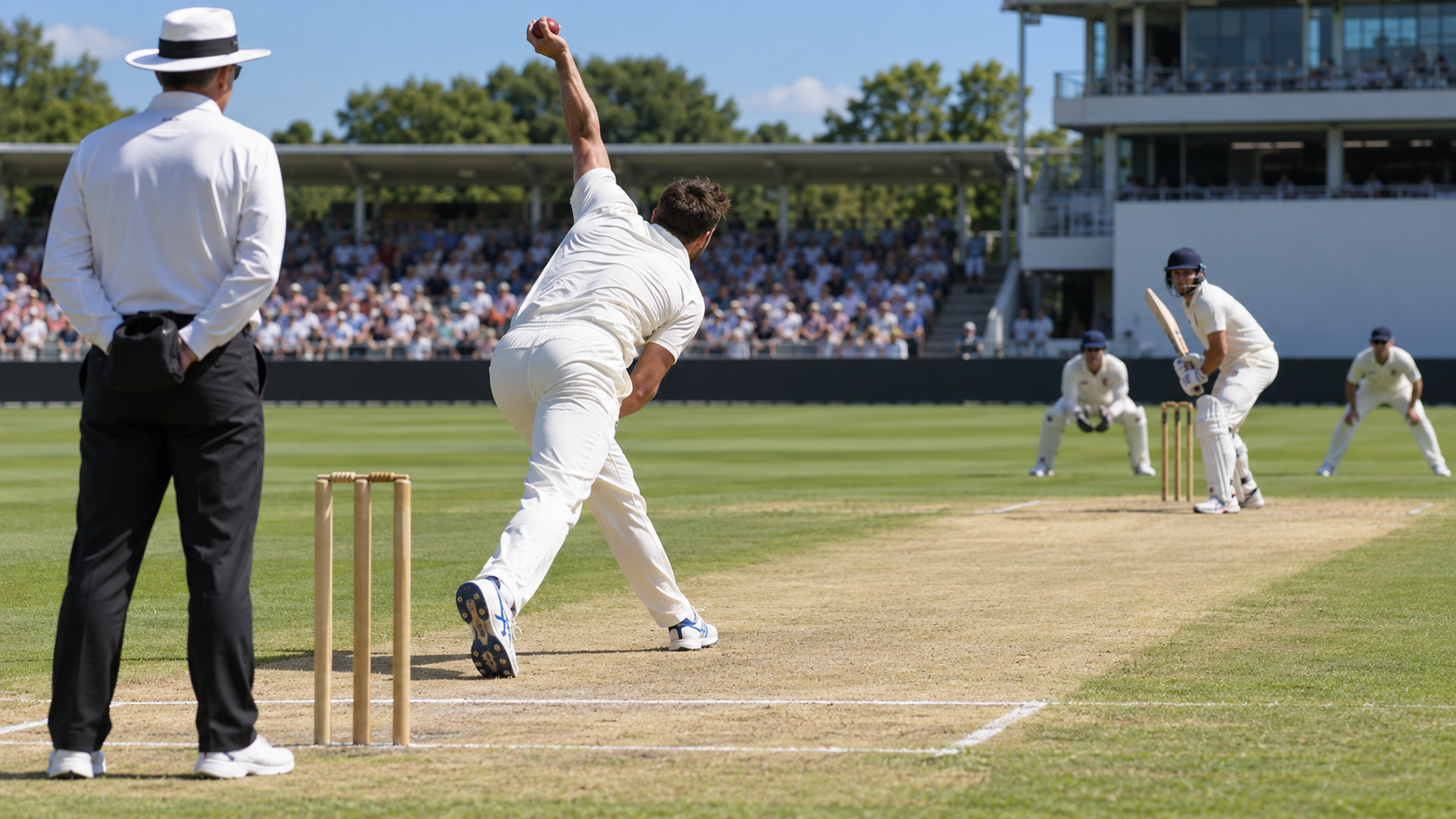
A no-ball is an illegal cricket delivery. The most familiar cause is the bowler's front foot landing beyond the popping crease, but the Laws also cover the back foot, throwing, dangerous bowling, illegal field placement, and other prohibited actions.
The batting side receives one no-ball run, and the delivery does not count among the six legal balls in the over. Runs completed by the bat, by running, or from additional penalties are added as the Laws require, so a single no-ball can produce several runs.
The striker cannot be dismissed from a no-ball in most ordinary ways. Run out, obstructing the field, and hit the ball twice remain possible in defined circumstances. In many limited-overs competitions, the next delivery after certain no-balls is also a free hit with restricted dismissal methods.
The umpire signals by extending one arm horizontally and calls the offence promptly. Some elite matches use video assistance for front-foot decisions. Viewers should separate the one-run penalty, the extra legal delivery, and any runs made from the ball; all contribute to the final total.
No. Another legal delivery must be bowled to complete the set of six.
The batting side receives one no-ball run, plus any other runs scored from the play.
Only through the limited dismissal methods that remain available on a no-ball, such as run out in the relevant circumstances.
Explore more "Explainers"
Discover additional explainers across politics, science, business, technology, and other fields. Each explainer breaks down a complex idea into clear, everyday language—helping you better understand how major concepts, systems, and debates shape the world around us.