

How Volleyball Net-Touch Faults Work Explainer
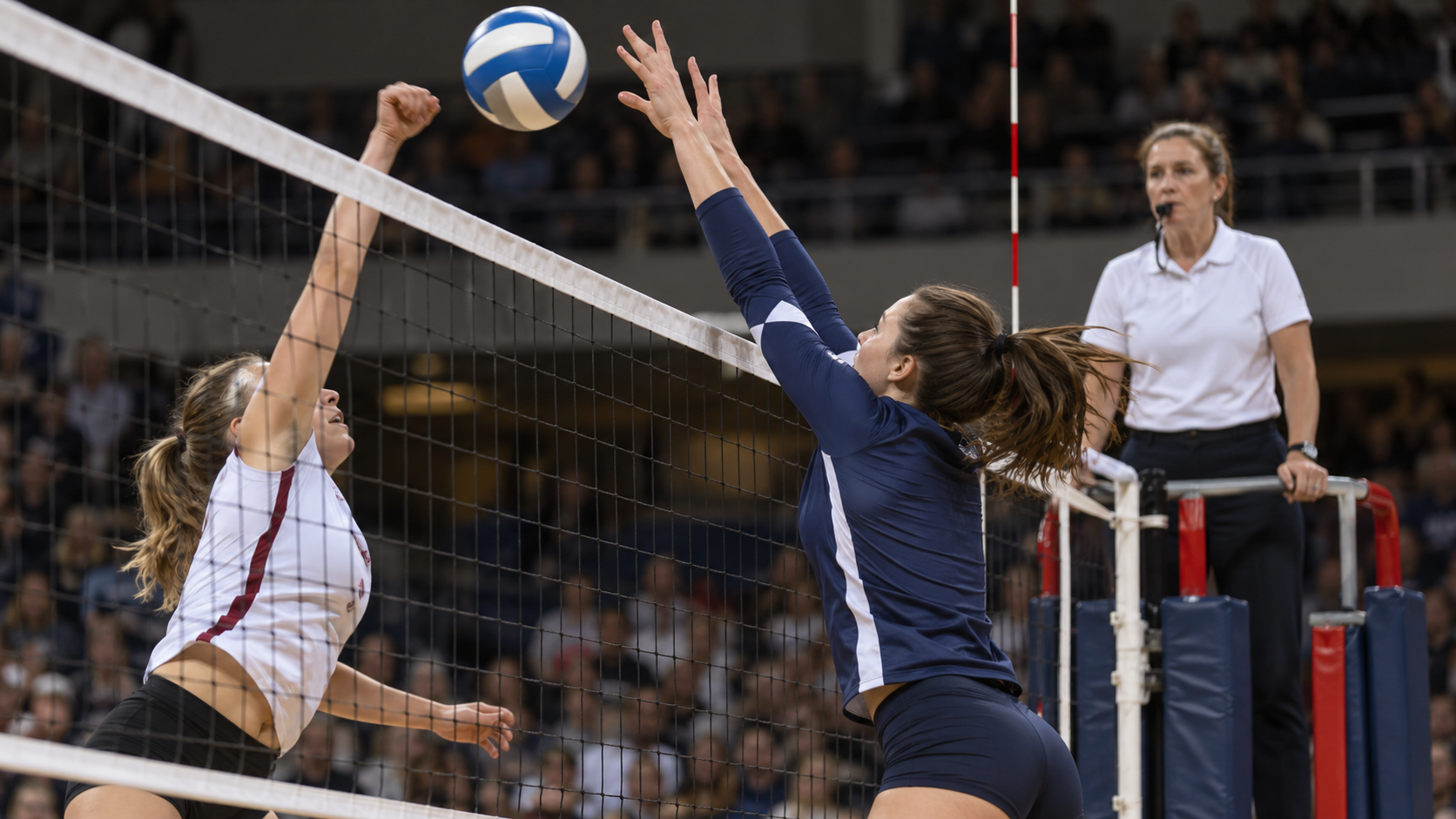
A player commits a net fault by touching the net between the antennae during the action of playing the ball. The action can include takeoff, an attempt to hit or block, and a safe landing, so contact just after the strike may still be penalized.
Not every brush with equipment is illegal. Touching the net outside the antennae, the posts, ropes, or another object is normally allowed when it does not interfere with play. A ball driven into the net may also push it into a player without creating a fault.
Using the net for support, creating an unfair advantage, or interfering with an opponent is illegal regardless of how light the contact appears. Players may reach beyond the net only under the separate rules governing attacks and blocks, without disrupting the opponent's play.
Officials watch the top band closely because blockers and hitters operate nearest it. Modern nets may move dramatically after legal ball contact, so the sequence matters: player into net during the action is different from net into a stationary player.
No. The main fault is touching the net between the antennae during the action of playing the ball or interfering with play.
That contact is normally not a fault.
Usually yes, if the contact is outside the antennae and does not interfere with play.
Explore more "Explainers"
Discover additional explainers across politics, science, business, technology, and other fields. Each explainer breaks down a complex idea into clear, everyday language—helping you better understand how major concepts, systems, and debates shape the world around us.