

How Rugby Conversions Work Explainer
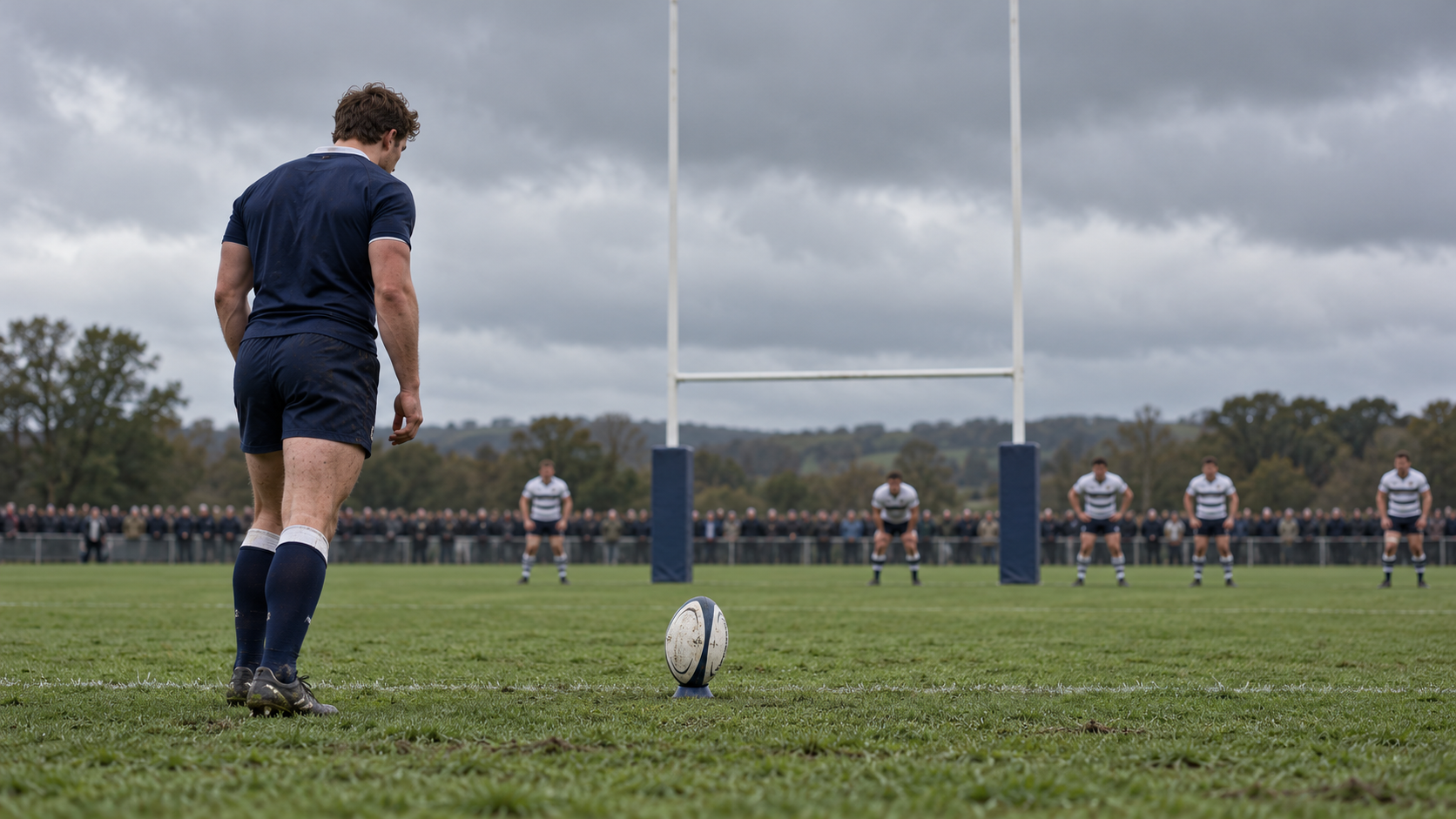
After a try, the scoring team earns a conversion attempt worth two additional points. The kick may be a place-kick or drop-kick. It is taken from any point on a line through the place where the try was scored, running parallel to the touchlines.
That geometry rewards a try grounded near the posts because the kicker can choose a favorable distance and angle. A try near the sideline forces a much sharper angle. Teams sometimes carry the ball inward before grounding it when doing so does not risk losing the try.
The kicker must complete the attempt within the allowed time and may place the ball on sand, sawdust, or an approved tee. The opposing team waits behind its goal line, then may charge after the kicker begins the approach, subject to the law's timing restrictions.
The ball scores only if it passes over the crossbar and between the uprights. If it falls from the tee after the approach starts, the kicker may still kick it or try a drop-kick. Watch the original grounding point to understand why the conversion angle looks difficult.
Two points.
From any point on a line through the try's grounding spot, parallel to the touchlines.
They may charge only after the kicker begins the approach, under the procedure in Law 8.
Explore more "Explainers"
Discover additional explainers across politics, science, business, technology, and other fields. Each explainer breaks down a complex idea into clear, everyday language—helping you better understand how major concepts, systems, and debates shape the world around us.