

How Volleyball Block Touches Work Explainer
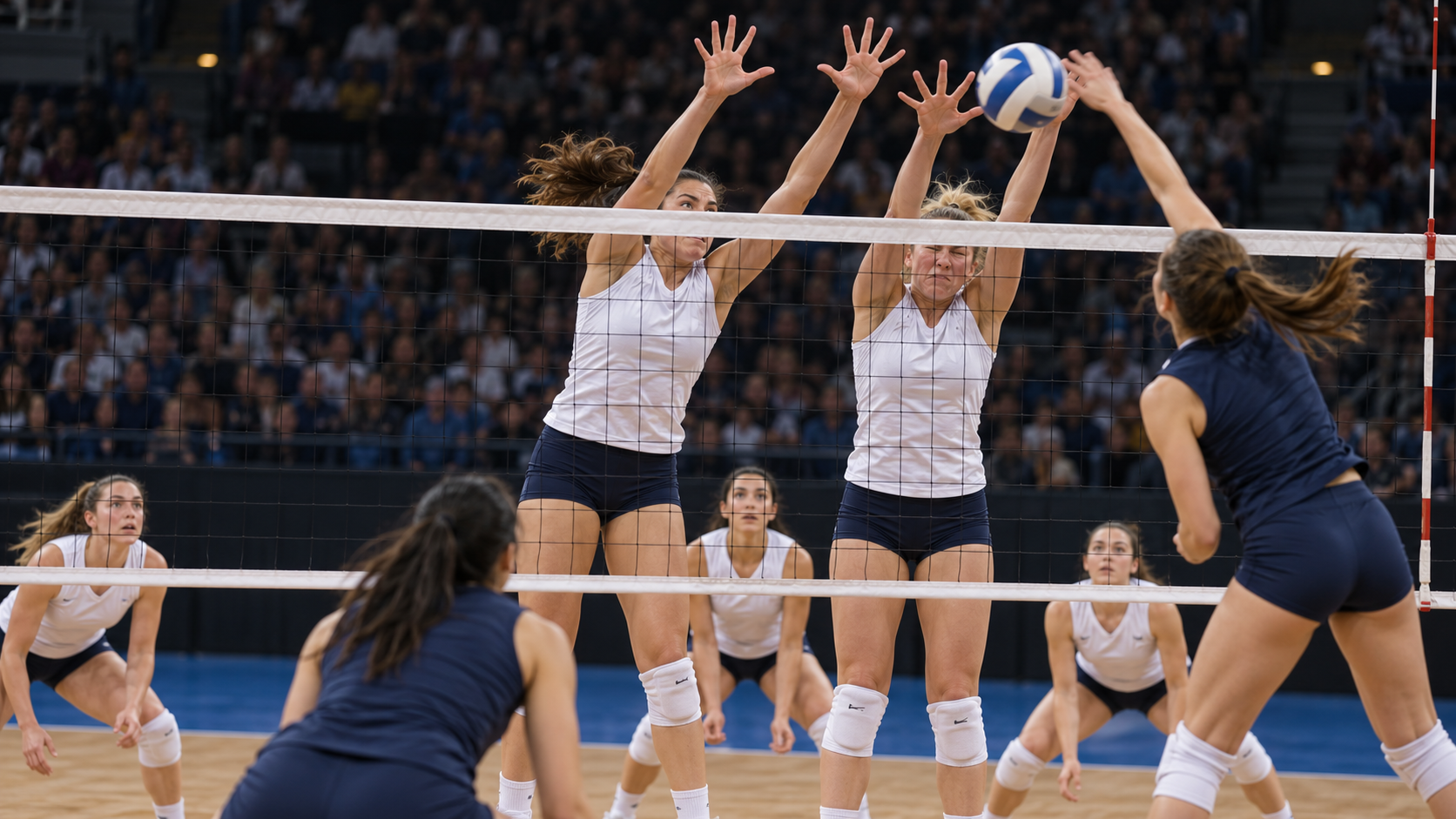
In indoor volleyball, contact by a completed block does not count as one of the team's three hits. After the ball glances off one or more blockers, that team still has as many as three contacts to return it across the net.
The first hit after the block may be played by any teammate, including the blocker who just touched the ball. That sequence is not an illegal double contact because the block is treated separately. Quick consecutive contacts during one blocking action also may remain a single block action.
Only front-row players may complete a block. A back-row player or libero commits a fault by completing or participating in a completed block. Blocking an opponent's serve is also forbidden, and a blocker may not interfere with the opponent's play before the attack hit.
Beach volleyball differs because its block touch counts as the first of the team's three contacts. In indoor matches, count after the deflection rather than before it: block, dig, set, and attack can form a legal four-contact-looking sequence because the block is excluded.
Not in indoor volleyball. The team still has up to three contacts after the block.
Yes. The blocker may take the first team hit after the block.
No. A block contact counts as a team hit in beach volleyball.
Explore more "Explainers"
Discover additional explainers across politics, science, business, technology, and other fields. Each explainer breaks down a complex idea into clear, everyday language—helping you better understand how major concepts, systems, and debates shape the world around us.