

How Basketball Free-Throw Lane Violations Work Explainer
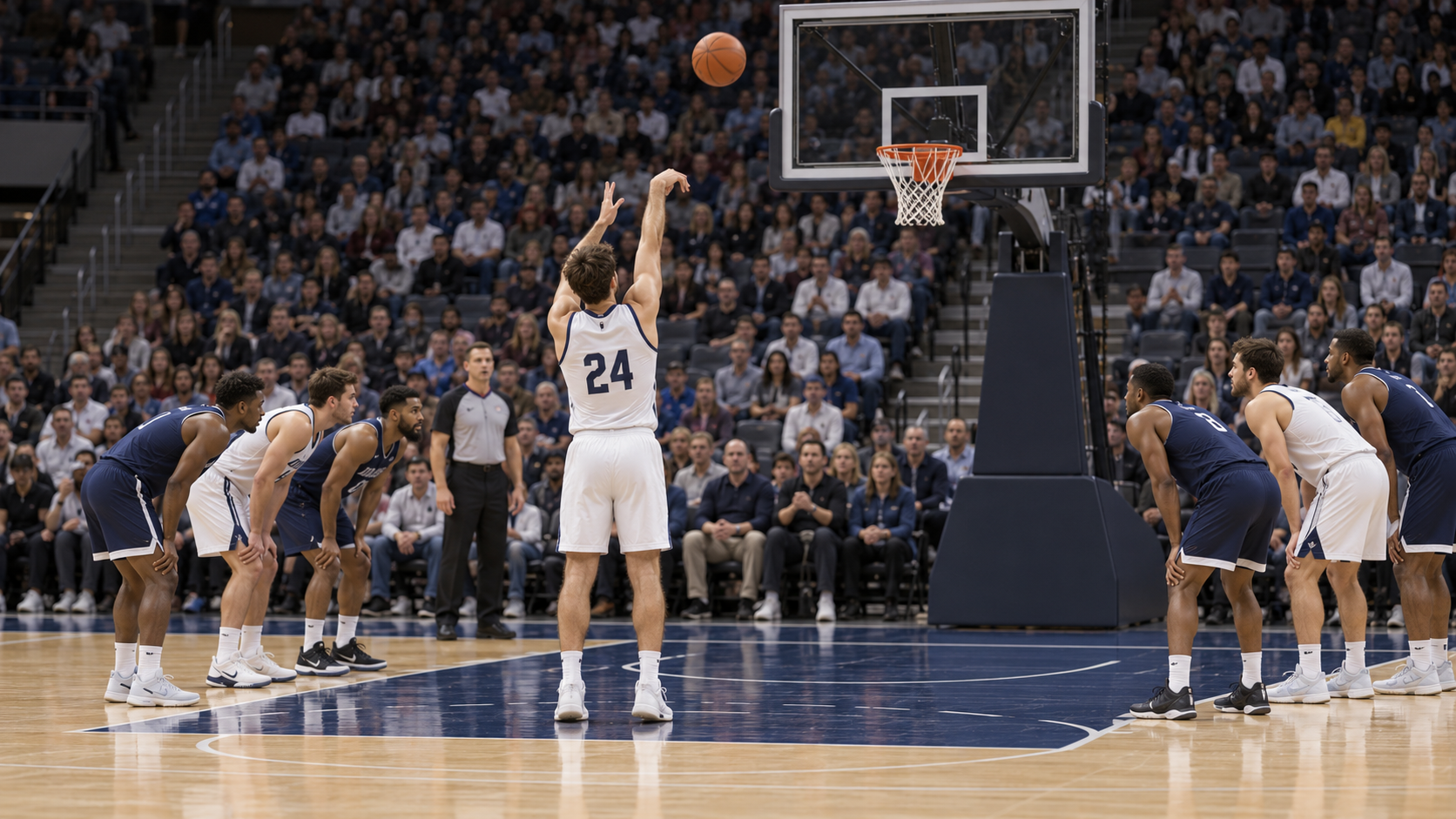
On an NBA free throw, players assigned to lane spaces must hold their legal positions until the shooter releases the ball. Players outside the lane area remain above the free-throw-line extended and behind the three-point line until the ball is released.
The shooter must stay behind the free-throw line until the ball touches the rim, backboard, or the free throw ends. The attempt must be released within ten seconds and must enter the basket or touch the ring. Crossing early can erase an otherwise successful attempt.
Penalties depend on who violates and whether the shot is made. A teammate's violation can nullify a made free throw, while a defender's violation generally produces a substitute attempt if the shot misses. Simultaneous violations can result in another attempt or a jump ball under the rule.
Officials watch feet, not just bodies leaning into the lane. Broadcast viewers can use the ball's release as the key moment for lined-up players, then keep watching the shooter until rim contact. The exact remedy also depends on whether more free throws remain.
After the free-throw shooter releases the ball.
After the ball touches the rim or backboard, or the free throw otherwise ends.
No. The result depends on which team violated, whether the shot was made, and whether more attempts remain.
Explore more "Explainers"
Discover additional explainers across politics, science, business, technology, and other fields. Each explainer breaks down a complex idea into clear, everyday language—helping you better understand how major concepts, systems, and debates shape the world around us.