

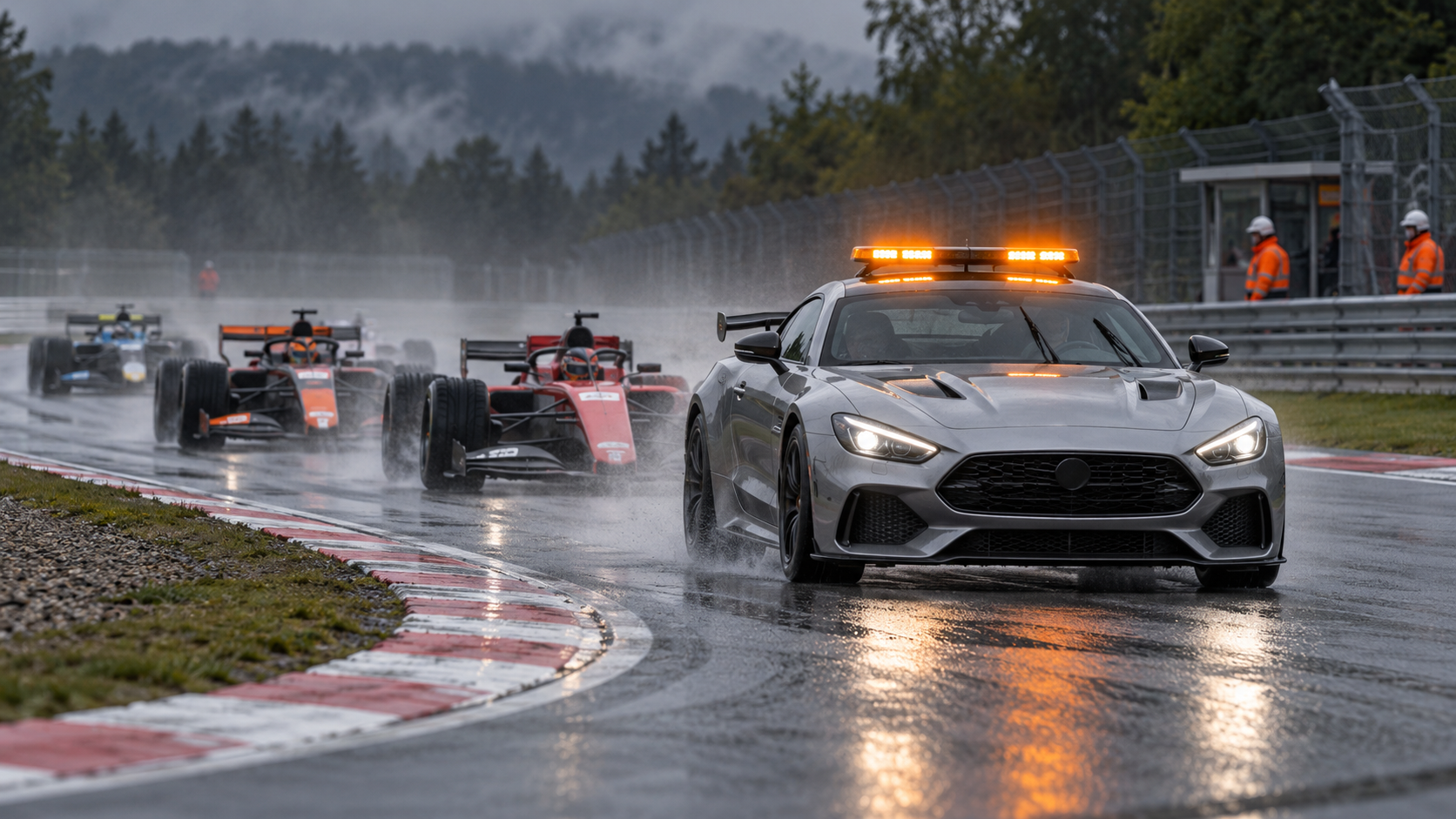
How the Formula 1 Safety Car Works Explainer
Formula 1 deploys the Safety Car when danger requires the field to slow and bunch behind a controlled vehicle but the race does not need to be stopped. Drivers reduce speed under the required delta procedure, overtaking is tightly restricted, and the Safety Car collects the leader to form a queue.
The pits may remain open, so teams can change tires while the field circulates more slowly. A stop can cost less time than it would under green-flag racing, but track position and traffic still matter. That possibility turns a safety intervention into an important strategy decision without changing its primary purpose.
Race control may permit lapped cars to overtake and rejoin at the back under the current procedure, or may announce that overtaking will not be permitted. Drivers must maintain safe conduct, avoid erratic acceleration, and follow the official messages. Regulations govern the spacing and actions before the restart.
When conditions are safe, the lights on the Safety Car are extinguished and it returns to the pits. The leader controls the pace within the rules until racing resumes at the line. No one may overtake prematurely, making the final corners a contest of timing, tire preparation, and reaction.
The field is under neutralized conditions so marshals and recovery crews can work safely.
Often yes, subject to race-control instructions and the applicable regulations.
The race leader does after the Safety Car turns off its lights and prepares to pit.
Explore more "Explainers"
Discover additional explainers across politics, science, business, technology, and other fields. Each explainer breaks down a complex idea into clear, everyday language—helping you better understand how major concepts, systems, and debates shape the world around us.